

Real-World Evidence: Why Pharma Companies Need Advanced Data Analytics in 2025
December 5, 2025
AI-Driven Scientific Literature Data Collection for Evidence, Claim And R&D Decision Making
December 9, 2025Top 10 Machine Learning Algorithms Expected to Shape the Future of AI
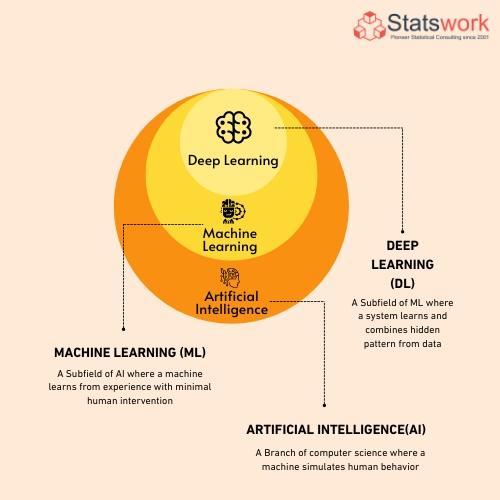
Machine learning has made remarkable progress since its inception and continues to evolve at an exceptional pace in the fields of data science, predictive analytics, and artificial intelligence. New machine learning algorithms that are predicted to shape the future of AI are constantly emerging across data analysis, automation, and intelligent systems. By utilizing the power of machine learning, businesses can make more accurate predictions, smarter data-driven decisions, and provide personalized experiences to their customers through advanced analytics and data modeling. In this post, we will take a closer look at the top 10 machine learning algorithms that are expected to dominate the field by the year 2024.
Machine-learning-algorithms-expected-shape-future-AI
Importance of staying updated with the latest algorithms
It is important to keep yourself current with the latest AI algorithms in the changing field of machine learning and data analytics technologies. As technology progresses, new algorithms are frequently created, and existing ones are enhanced for better model performance and statistical accuracy. Missing these updates can put you at a considerable disadvantage and hinder your ability to remain competitive in the rapidly evolving AI, data science, and business intelligence space.
Keeping yourself updated with the latest techniques and approaches can significantly improve the performance of your models and analytical workflows. Advanced algorithms offer better accuracy, efficiency, and scalability, allowing you to solve more complex problems and gain a deeper understanding of your data through predictive modeling and statistical analysis.
As new algorithms gain popularity, they become the norm or best practice for particular tasks in machine learning projects and research analytics. It’s important to stay informed about these advancements so that you can keep your skillset and knowledge up to date with the industry’s expectations. This will make you more attractive to potential employers or clients within the AI, data analysis services, and machine learning industry.
If you aim to contribute to the progress and innovation in machine learning, it is essential to keep up with the latest algorithms and data-driven methodologies. By doing so, you can actively engage in discussions, research, and collaborations, which will not only benefit your professional development but also contribute to the growth of machine learning.
Top 10 Machine Learning Algorithms for 2024
1. Deep Neural Networks (DNN):
Deep neural networks (DNNs) have been key to many recent improvements in artificial intelligence and deep learning applications. Their capacity to handle complex data and provide extremely accurate predictions, from image recognition to natural language processing and predictive data analysis, has made them valuable tools. DNNs are expected to become even more powerful, allowing us to address even more complex issues in data modeling and pattern recognition.
2. Generative Adversarial Networks (GANs):
GANs, short for Generative Adversarial Networks, are a type of deep learning algorithm that can create new data like the training data provided, widely used in data generation and image analytics. GANs have already demonstrated impressive results in image synthesis, and we can expect them to be further refined, resulting in even more realistic and immersive content for AI-based applications.
3. Reinforcement Learning:
Reinforcement learning is an algorithm that allows machines to learn by interacting with their environment and receiving feedback in the form of rewards or penalties, commonly used in automation and intelligent decision systems. This method has been effectively used in autonomous vehicles, robotics, and game-playing agents. In 2024, we anticipate further advances in reinforcement learning, as it can solve complex decision-making problems in predictive systems.
4. Transfer Learning:
Transfer learning is a useful technique that allows models to leverage the knowledge they have acquired from past tasks to enrich their performance on new, related tasks in machine learning workflows. As problems become more complex, transfer learning is expected to have a significant impact by enabling faster and more efficient training, reducing the need for large, labeled datasets in data science projects.
5. Explainable AI:
As machine learning models become more complex, it has become increasingly important to understand the reasoning behind their predictions in transparent data analysis. Explainable AI (XAI) algorithms have been developed to provide clear and concise explanations for the decisions made by machine learning models, which helps to ensure transparency and build trust with users. XAI is expected to gain even more significance in critical domains such as healthcare and finance where data interpretation is crucial.
6. Federated Learning:
Federated learning is a method that allows machine learning models to be trained on multiple devices or servers without transferring raw data to a central location, ensuring data privacy and secure analytics. This technique maintains data privacy while still delivering a high level of model performance. Federated learning is estimated to become more popular as it provides a balanced solution for industries that handle sensitive information, such as healthcare and finance.
7. Bayesian Networks:
A Bayesian network is a type of model that represents the relationships between different variables and makes use of probabilistic reasoning in statistical modeling. These networks have been widely utilized in various tasks, such as prediction and decision-making. Bayesian networks are expected to play an important role in analyzing complex systems where the data is incomplete, uncertain, or limited.
8. Evolutionary Algorithms:
Evolutionary algorithms use natural selection as a model to improve solutions in optimization problems and feature engineering. These algorithms have been proven effective in optimizing various problems, including scheduling, feature selection, and optimization. In the year 2024, these algorithms are expected to advance even further, providing innovative solutions to address complex optimization challenges in data analysis.
9. Long Short-Term Memory (LSTM):
LSTM stands for Long Short-Term Memory, which is a type of Recurrent Neural Network (RNN) that is highly effective in processing and predicting sequences of data in time-series analysis. It is particularly useful in analyzing time-series data, natural language processing, and speech recognition tasks. In the coming years, LSTM algorithms are expected to advance further, resulting in even better predictions and insights into sequential data.
10. Semi-supervised Learning:
Semi-supervised learning algorithms are designed to use both labeled and unlabeled data during training, which reduces the need for extensive labeling efforts in large-scale data projects. With a huge amount of unlabeled data available and labeling being a costly and time-consuming process, semi-supervised learning is expected to become increasingly valuable. This will enhance the scalability of machine-learning approaches in data science and analytics.
Conclusion: The Future of Machine Learning Algorithms in AI
As we foresee the year 2024, the field of machine learning is on the brink of revolutionary developments in AI, data mining, and predictive analytics. With the start of advanced deep neural networks, GANs, reinforcement learning, and other sophisticated algorithms, we are at the point of experiencing unprecedented advancements in artificial intelligence. These top 10 machine learning algorithms for 2024 are expected to drive AI forward into uncharted territories, marking a significant milestone in our pursuit of building intelligent and adaptable machines.
Statswork – Your Partner in Data Analysis & Data Mining Services
Our team at Statswork is dedicated to providing impeccable data analysis and data mining services with expertise in statistical analysis, data modeling, and predictive analytics. We understand the importance of accurate and reliable data analysis for making informed decisions and solving complex problems. With our expertise in statistical analysis and advanced data mining techniques, we offer complete solutions. Whether you need assistance with data cleaning, data modeling, or statistical testing, we have you covered. Contact us today to learn more about how we can assist you in your data analysis journey.


