







Tables Interpretation and Quantitative Results Analysis Services

Tables are at the core of quantitative research, surveys, market studies, healthcare research, academic analysis, and business reports. However, raw statistical tables containing frequencies, percentages, chi-square values, cross tabulations, and descriptive statistics do not create value unless they are professionally interpreted through statistical table interpretation and survey table interpretation services.

statswork
 

At Statswork, we specialize in tables interpretation services, SPSS table interpretation, and quantitative results analysis, helping researchers, organizations, and institutions convert complex SPSS, R, Excel, and survey data tables into clear, decision-ready explanations through expert statistical results interpretation and data table analysis, including SPSS table interpretation.

Sample Tables Interpretation – Survey on Phoochka Consumption Behaviour

Table 1: Age Group Distribution

From the table above, the majority of the respondents are from the category of 20–30 years (41.7%) and 30–40 years (31.3%). However, the least represented category is the age group of 50–60 years, which makes up only 3.0%. This survey results interpretation is part of our research table analysis through survey table interpretation.

Age Group Distribution

Table 2: Gender Distribution

Females comprise 53.7% of the respondents, while males make up 46.3%. This implies that female respondents are marginally more represented in the sample through statistical table interpretation.

Table 3: Location Distribution

Here, the highest registered participation is from the South region (32.0%), followed by the East and West regions. Meanwhile, the North and Central regions have a lower registered participation (13.7%). This is a cross tabulation data table analysis using cross tabulation interpretation.

Table 4: Education Level

Graduates (42.7%) and Post-Graduates (38.7%) form most of the sample. From the results above, most of the respondents are highly educated, which might influence awareness of hygiene, quality, and health through survey table interpretation.

Table 5: Occupation

Private sector employees constitute the major share of the participants' occupations at 42.3%, while students constitute 26.3%. Retired participants form the smallest group through this descriptive statistical table interpretation.

Table 6: Income Distribution

Most respondents fall in the ₹10,000–20,000 (26.0%) and ₹20,000–30,000 ranges. This data table analysis shows purchasing power distribution through quantitative results analysis.

Table 7 & Graph: Phoochka Consumption

A significant 91.0% consume phoochka, indicating strong popularity across the sample based on survey results interpretation.

Phoochka Consumption


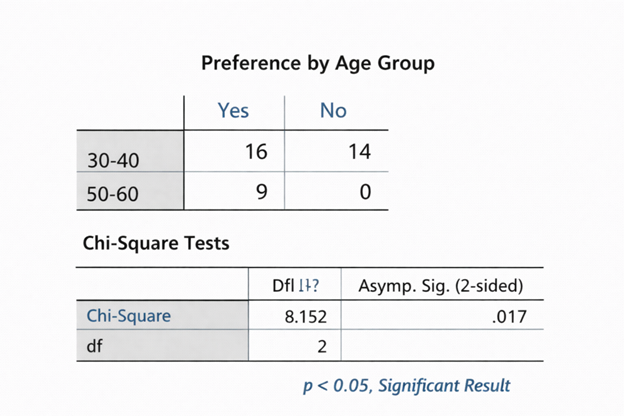
Table 8: Age vs Phoochka Consumption (p = 0.017

This chi-square table interpretation shows a statistically significant relationship between age and consumption. The 50–60 age group shows 100% consumption through statistical results interpretation.

Age vs Phoochka Consumption

Table 9: Gender vs. Consumption (p = 0.069)

Although females show slightly higher consumption, this chi-square test statistical table interpretation indicates no statistical significance.

Table 10: Location vs Consumption (p = 0.019)

In the South region, the highest level of consumption (95.8%) is recorded, while the lowest consumption level is 78%, explained using cross tabulation interpretation.

Table 11: Education vs Consumption (p = 0.054)

Higher secondary respondents show 100% consumption, while graduates show slightly more non-consumption through research table analysis.

Table 12: Occupation vs Consumption (p = 0.039)

Retired respondents show 100% consumption, indicating occupational influence through statistical table interpretation.

Table 13: Income vs Consumption (p = 0.022)

Respondents in ₹40,000–50,000 show 100% consumption. This income vs behaviour data table analysis reveals spending patterns.

Consumption Pattern, Preferences, and Behavior (Tables 14–21)

As shown in these tables through survey table interpretation:

Phoochka as a snack preference

  • Frequency of eating
  • Satisfaction Level
  • Price sensitivity
  • Preference for branded vs roadside phoochka
  • Importance of hygiene, packaged water, gloves, and masks
  • Expected Qualities from Branded Phoochka: Cleanliness, Quality

These insights, derived through statistical results interpretation, help businesses understand consumer expectations.

Branding, Advertisement & Flavor Preferences (Tables 22–31)

These tables offer insights through research table analysis into:

  • Advertisement channels (social media most effective)
  • Preferred flavor (dominant classic style at 67.9
  • Health importance (58.3% strongly
  • Hygiene expectations
  • Maximum price willingness (₹20-₹
  • Emotional Liking towards Ph
  • Key factors in taste that affect consumption (tamarind water & potato mix)

Branding, Advertisement & Flavor Preferences


Factors of Dissatisfaction (Table 32)

Other primary reasons for dissatisfaction include:

  • Unhygienic road-side stalls
  • Poor hygiene
  • Dirty preparation conditions

This provides useful insight through survey results interpretation for businesses aiming at branded snack models.

 Why Table Interpretation is Critical in Quantitative Research

Raw tables only show figures. This is where tables interpretation services and statistical table interpretation become essential.

Professional statistical table interpretation and quantitative results analysis:

  • Explains what the numbers mean
  • Recognizes patterns and relationships
  • Links statistical results to real-world decisions
  • Convert survey data into business, healthcare, academic, and market insights through research table analysis

Why Choose Statswork for Tables Interpretation?

  • Expert statisticians and research analysts
  • Experience in academic, healthcare, market research, and other fields
  • Interpretation of SPSS, R, SAS, Excel, and survey outputs through statistical results interpretation
  • Clear, meaningful, publication-ready data table analysis
  • Accurate explanation of chi-square, correlation, regression, and descriptive tables through survey table interpretation

Get Expert Statistical Table Interpretation from Statswork Today.