

Professional Secondary Quantitative Research & Insights

Utilize existing data to provide accurate and data-driven insights. Secondary quantitative studies of the highest quality are analysed and reported carefully with actionable and outcome-focused results.

Professional Secondary Quantitative Research for Evidence-Based Decisions

Secondary quantitative research utilizes pre-existing data sources to provide insights and meet evidence-based decision-making data collection and mining. It affords organizations the opportunity to engage in understanding trends, patterns and outcomes, without the public or private draw-back of collecting primary data.
Secondary quantitative research, similarly, to its primary research counterpart, can also have applications in business analytics, market research, social research, and healthcare studies.

Professional Secondary Quantitative Research

Secondary quantitative research is a relatively inexpensive approach to understanding trends, understanding variances for benchmarking performance and informing strategy using validated data sources to provide insights that support evidence-based decision-making

At Statswork, we offer customized secondary quantitative research services to meet your specific research objectives. Our team will manage all aspects of secondary quantitative research, including identifying eligible secondary datasets, data extraction, statistical analysis, and reporting. Your detailed report will provide actionable insights and recommendations to support informing strategy, improve performance, and support evidence-based decision making.

The outputs we create from Secondary Quantitative Research

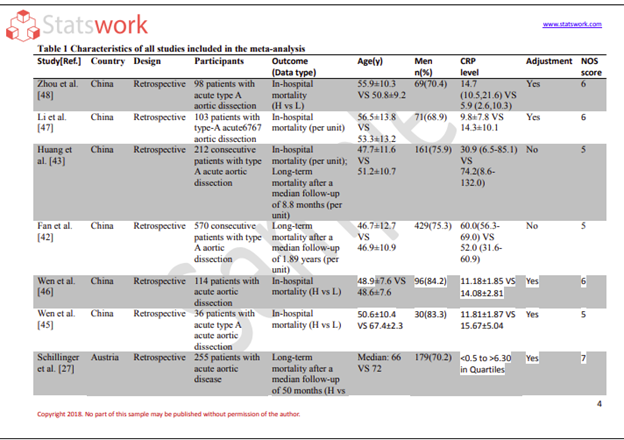
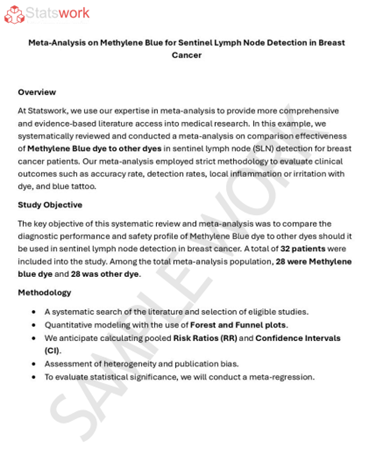
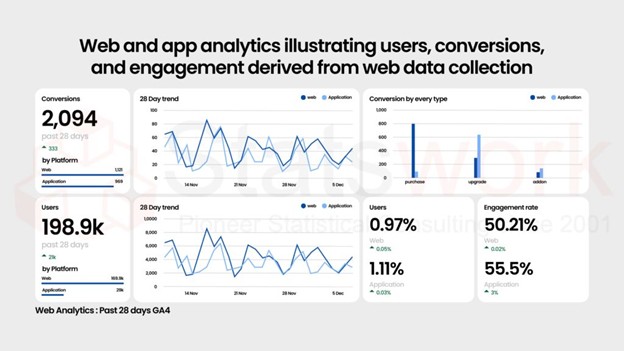
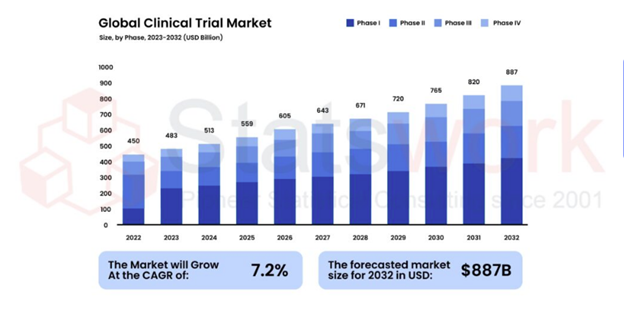
We offer different types of secondary quantitative research to review existing data or explore past or current trends to assist you in your strategic decision-making.

Industries

Data collection allows sectors to train computer vision models, improve automation, improve diagnostics, ensure safety, and spur innovation via AI applications.

Reasons to Choose Statswork

Statswork delivers accurate secondary quantitative research by combining dependable data analysis with practical insights for purposefully informed, evidence-based decision making. The steps undertaken to conduct secondary quantitative research:

Define Purpose Icon Source Data Icon Prepare Data Icon Analyse Data Icon Report and Recommend Icon

1. Define Purpose

Determine goals for the research, questions of interest, and the scope of the research.

Define Purpose Illustration

2. Source Data

Find relevant and credible secondary quantitative datasets.

Source Data Illustration

3. Prepare Data

Clean, organize, and pull out the data subsets you wish to analysis.

Prepare Data Illustration

4. Analyse Data

Use statistical methods to determine patterns and derive insights from the data.

Analyse Data Illustration

5. Report & Recommend

Provide evidence-based reports based on your analyses of the secondary datasets and provide recommendations that will result in action.


Report and Recommend Illustration
Success Stories
Insights - Must Read Articles
Frequently Asked Question
1. What is secondary quantitative research?

Secondary quantitative research is the process of analyzing existing numerical data collected from published studies, databases, reports, surveys, and institutional records to generate meaningful research insights and statistical conclusions.

2. Why is secondary quantitative research important in data analysis?

Secondary quantitative research helps researchers save time and resources by utilizing existing datasets while enabling trend analysis, comparative studies, evidence-based conclusions, and data-driven decision-making.

3. What types of data sources are commonly used in secondary quantitative research?

Common data sources include government databases, published journals, census reports, healthcare records, market research reports, institutional datasets, online repositories, and previously conducted research studies.

4. How does secondary quantitative research improve research reporting?

It strengthens research reporting by providing reliable statistical evidence, supporting comparative analysis, identifying trends and patterns, and enhancing the credibility and accuracy of research findings.

5. How does Statswork support secondary quantitative research services?

We assist in identifying reliable data sources, collecting secondary datasets, organizing and cleaning data, performing statistical analysis, interpreting findings, and preparing structured research reports for academic and professional studies.

6. What factors are considered during secondary quantitative research?

Key factors include source credibility, dataset relevance, data accuracy, sample size, statistical reliability, ethical considerations, variable consistency, and alignment with research objectives.

Begin dealing with the shopping behaviour data to convert more shoppers to buyers and personalize the buyer journey today!