
- Services
- Data Analysis services
- Sample Work
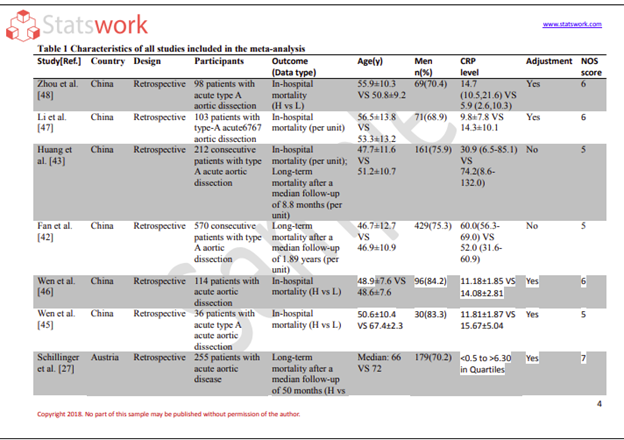
Data Analysis services
- Secondary Qualitative Research Services
- Secondary Quantitative Research Services
- Meta-Analysis Research services
- Sample Work
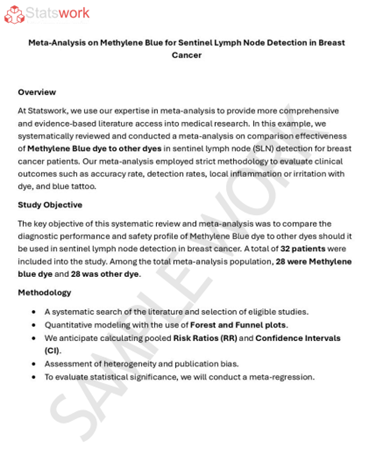
Meta-Analysis Research Services
- Data Collection Services
- Sample Work
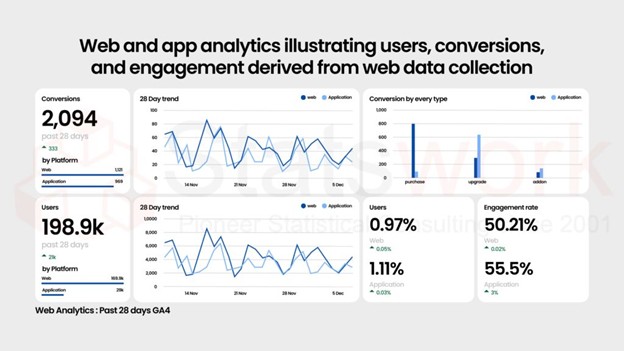
Data Collection Services
- Statistical & Biostatistics services
- Sample Work
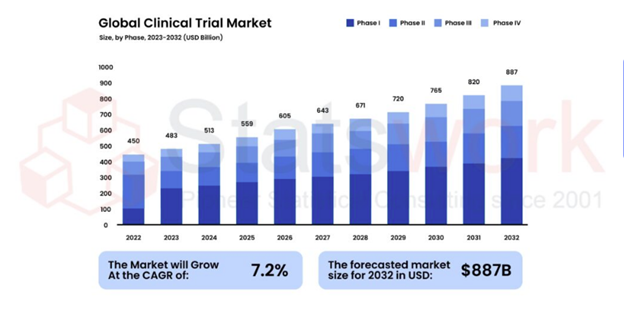
Statistical Programming & Biostatistics services
- Data Management Services
- Sample Work
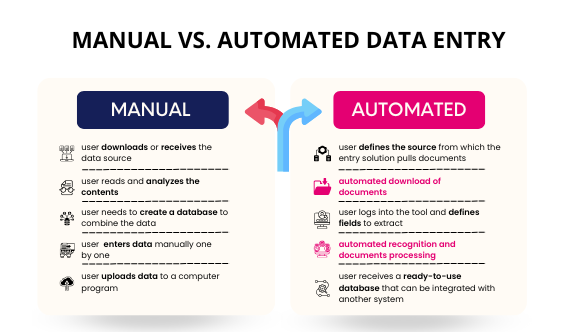
Data Management Services
- Research methodology services
- Sample Work
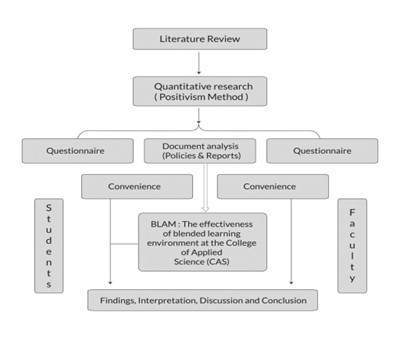
Research methodology services
- Tool Development Services
- Sample Work
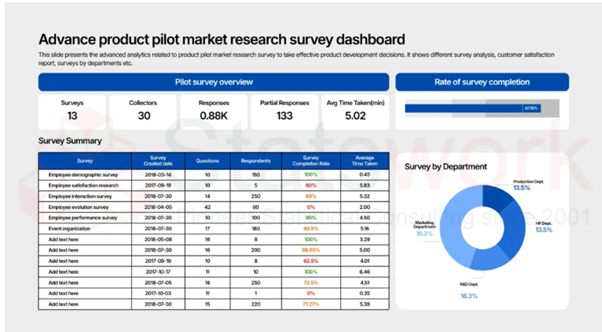
Tool development services
- Statistical Interpretation services
-
Statistical Interpretation services
- Sample Work
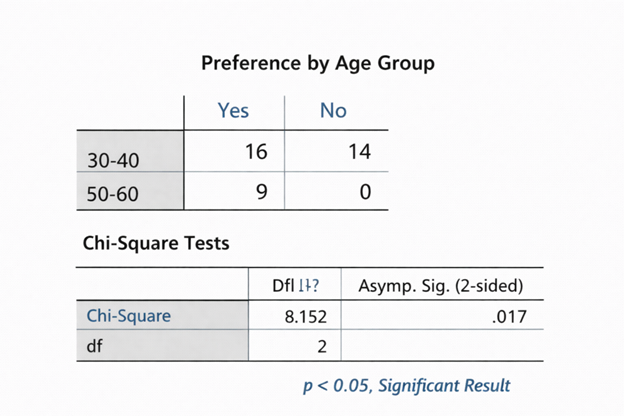
Statistical Interpretation services
-
- Sample Size Calculation Services
-
Sample Size Calculation Services
- Sample Work
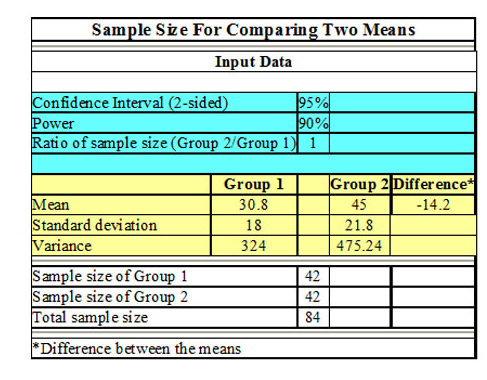
Sample Size Calculation Services
-
- AI & ML Services
-
Artificial Intelligence and Machine Learning Services
- Sample Work
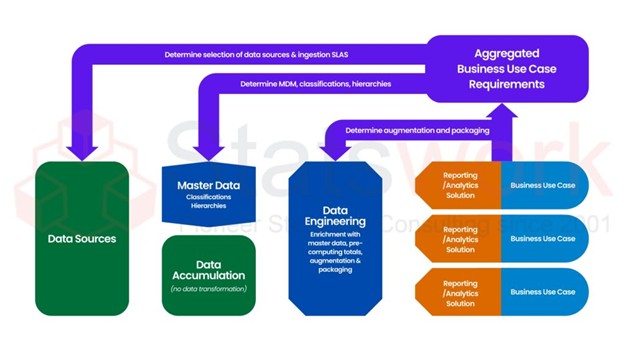
Artificial Intelligence and Machine Learning Services
-
- Meaningful Visualization Services
- Thought Leadership Services
- Report Generation Services
-
Report generation Service
- Sample Work
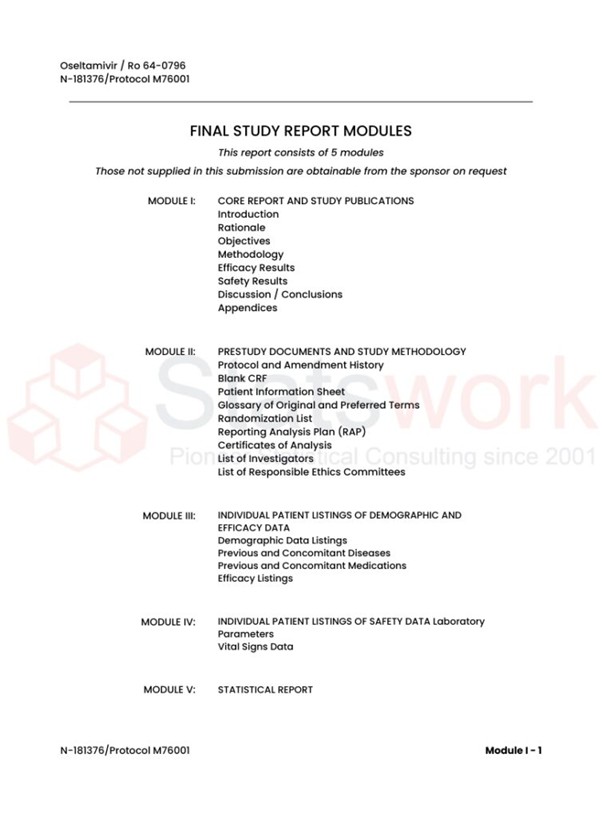
Report generation Services
-
- Data Analysis services
- Industries
- About Us
- Blog
- Insights
- Contact Us
- Services
- Data Analysis services
- Sample Work
Data Analysis services
- Secondary Qualitative Research Services
- Secondary Quantitative Research Services
- Meta-Analysis Research services
- Sample Work
Meta-Analysis Research Services
- Data Collection Services
- Sample Work
Data Collection Services
- Statistical & Biostatistics services
- Sample Work
Statistical Programming & Biostatistics services
- Data Management Services
- Sample Work
Data Management Services
- Research methodology services
- Sample Work
Research methodology services
- Tool Development Services
- Sample Work
Tool development services
- Statistical Interpretation services
-
Statistical Interpretation services
- Sample Work
Statistical Interpretation services
-
- Sample Size Calculation Services
-
Sample Size Calculation Services
- Sample Work
Sample Size Calculation Services
-
- AI & ML Services
-
Artificial Intelligence and Machine Learning Services
- Sample Work
Artificial Intelligence and Machine Learning Services
-
- Meaningful Visualization Services
- Thought Leadership Services
- Report Generation Services
-
Report generation Service
- Sample Work
Report generation Services
-
- Data Analysis services
- Industries
- About Us
- Blog
- Insights
- Contact Us
How Secondary Data Collection Saves Time and Cost in Research Projects
Meta Analysis Service
- What is Secondary Data Collection?
- Why Secondary Data is Efficient
- How Secondary Data Saves Time in Research
- Cost-Saving Benefits of Secondary Data Collection
- How Does Secondary Data Collection Save Time and Cost?
- Real-World Examples of Secondary Data Collection
- Common Sources of Secondary Data
- When to Use Secondary Data in Research
- Challenges of Secondary Data Collection
- Best Practices for Using Secondary Data
- Conclusion
- Frequently Asked Questions (FAQs)
Recommended Reads
Contact us
How Secondary Data Collection Saves Time and Cost in Research Projects
In the current fast-paced research environment, efficiency is the key. Whether you’re a student, academic researcher, or business analyst, the capacity to obtain valuable data efficiently without compromising quality can be the deciding factor. It is at this point that the importance of secondary data collection comes into the picture. Using secondary data sources can help researchers achieve efficiency in their research, which can be cost-effective [1].
This blog is intended to discuss the importance of secondary data collection in terms of efficiency and cost-effectiveness.
What is Government and Public Data?
Secondary data collection is the process of collecting data that has already been collected, analyzed, and published by other people. Instead of carrying out new surveys or experiments, the data collector uses already published data from the following sources:
- Government publications
- Academic publications
- Publicly available data
- Company publications
- Online data repositories
- Existing survey data
This is different from primary data collection, where new data is collected through surveys, interviews, or experiments [2].
Why Secondary Data is Efficient
One of the greatest benefits of secondary data is its ability to enhance research efficiency. This is because, with secondary data, researchers avoid some processes in the research process.
Key Reasons Why Secondary Data is Efficient:
- Eliminate data collection planning
- Saves time on data collection
- Instant access to large amounts of data
- Faster decision-making [3]
Understanding why secondary data is efficient will assist researchers in planning and utilizing their resources more effectively.
How Secondary Data Saves Time in Research
1. Immediate Availability of Data
One way in which secondary data helps in saving time is the fact that the data is readily available. Unlike primary data collection, which can take weeks or even months to obtain, secondary data is readily available.
2. No Data Collection Needed
Another way in which secondary data helps in saving time is the fact that no data collection is needed. Unlike the situation in which data is collected using surveys, which can take time, using existing survey data saves time.
3. Completion of the Project in Less Time
Since data collection is the longest part of the research process, skipping this part is one way to ensure that the project is completed in less time. This is one way in which secondary data can be collected [4].
4. Access to Data Collected Over Time
Another way in which secondary data can be collected is the fact that it is possible to access data collected over time.
5. Ease in the Research Process
With pre-existing data, researchers can focus on refining research questions and analytical methods instead of designing data collection instruments.
Cost-Saving Benefits of Secondary Data Collection
One of the biggest advantages of using secondary data is its capacity to reduce the cost of the research to a great extent.
1. No Data Collection Costs Involved
In the case of conducting primary data collection, several costs are involved. They include:
- Designing the survey
- Designing data collection tools
- Hiring personnel
- Hiring logistics
These costs can be avoided if secondary data is used.
2. Reduced Labor Costs
Since no personnel is required to collect the data, the cost of labor can be avoided [2].
3. Free Data Available
In many cases, data is freely available. It is readily accessible to the researcher. Data collected by government agencies, universities, and international agencies is freely available.
4. Reduced Technology Costs
In the case of primary data collection, several technology costs are involved. Secondary data is readily available in the required format. Hence, the cost of technology can be avoided.
5. Efficient Allocation of Budget
Since no cost is involved in the data collection process, the allocated budget can be efficiently utilized.
How Does Secondary Data Collection Save Time and Cost?
To comprehend the time and cost savings involved with the process of collecting secondary data, the following comparison can be made:
| Aspect | Primary Data | Secondary Data |
| Data Collection Time | High | Minimal |
| Cost | Expensive | Low or Free |
| Effort | High | Low |
| Accessibility | Limited | Widely Available |
| Scalability | Limited | High |
This comparison helps to illustrate the benefits associated with the collection of secondary data [4].
Real-World Examples of Secondary Data Collection
To further illustrate the time and cost benefits associated with the collection of secondary data, the following examples are provided:
1. Academic Research with Public Data
A postgraduate student who is conducting research on population growth can utilize government census public datasets rather than collecting primary data through surveys.
How it saves time and cost:
- No time is wasted on creating surveys.
- Data is immediately available from nationwide surveys.
- Travel costs are not incurred.
This approach greatly enhances the efficiency of the research process while still ensuring the accuracy of the data.
2. Market Research with Industry Reports
A new startup company that is planning to enter the food delivery market can utilize existing reports from market research companies.
How it saves time and cost:
- It eliminates the cost of conducting primary market surveys.
- It offers immediate knowledge about customer behavior and competitors.
- It reduces the time taken for market research from months to days.
This is an excellent example of the cost-saving potential associated with the collection of secondary data.
3. Healthcare Research Using Global Data
Research on health trends globally can use data published by international bodies.
How it saves time and cost:
- Access to large-scale data
- No need to collect data from patients
- Facilitates quick analysis of data
This example illustrates the efficiency of secondary data in large-scale research operations [2].
4. Analysis of Social Media Using Existing Data
A digital marketing team can use data reports instead of conducting new research on consumer behavior on social media platforms.
How it saves time and cost:
- Access to insights on consumer behavior
- No need for new data collection from consumers
- No need for new tools to perform operations
This is one of the most efficient means of saving time in the collection of secondary data.
5. Policy Research Using Government Reports
Policy research analysts use published reports of the government and statistical data from the government.
Explanation of how it saves time and cost:
- Eliminates the need for large-scale data collection efforts
- Provides credible data
- Facilitates quick policy recommendations
This explains the need for secondary data in research, particularly in the context of governance [3].
6. Business Expansion Using Competitor Data
A retail company planning to expand can use competitor data for research.
Explanation of how it saves time and cost:
- No need for expensive data collection through surveys
- Provides access to data
- Facilitates quick business decisions
This explains how secondary data collection saves time and cost in competitor research.
Common Sources of Secondary Data
To make the research process more efficient, it is important to be aware of the sources from where the required data can be acquired.
The common sources include:
- Government databases
- Academic journals
- Research papers
- Data available on the Internet
- Industry reports
When to Use Secondary Data in Research
It is important to know why secondary data is used in research in selecting the best approach.
Ideal Scenarios:
- When time is limited
- When there is a budget constraint involved
- For exploratory research
- To analyze trends and comparative data
- To access large data sets
Challenges of Secondary Data Collection
While there are many advantages associated with the use of secondary data, there are also some disadvantages:
1. Lack of Specificity
The data may not be exactly what you are looking for.
2. Data Quality
Not all sources are credible.
3. Outdated Information
Some data sets may not be relevant to current trends.
4. Lack of Control
The researchers do not have the power to control the way the data was originally collected [1].
Best Practices for Using Secondary Data
To maximize the benefits of secondary data collection services, one should follow these best practices for secondary data collection:
1. Evaluate Data Credibility – Check the source, methodology, and publication date.
2. Ensure Relevance – Confirm that the data aligns with your research objectives.
3. Cross-Verify Sources – Use multiple sources to validate findings.
4. Proper Citation – Always acknowledge original sources to maintain credibility.
5. Combine with Primary Data (if needed) – A hybrid approach can improve accuracy and depth.
Conclusion
The strategy of secondary data collection can be an efficient strategy in modern-day research. This is because, by relying on existing data, researchers can greatly improve the efficiency of their research, reduce costs, and save precious time.
The knowledge of the time and cost savings of secondary data can help researchers make more efficient and smart decisions [4]. Although secondary data might not be used in place of primary data, it can be an important strategy in most research scenarios.
The knowledge of the efficiency of secondary data can help researchers make more efficient and smart decisions, which can be beneficial in most scenarios.
Start using secondary data today to save time, reduce costs, and make better decisions—faster.
Frequently Asked Questions (FAQs)
1. What is secondary data collection in research?
Secondary data collection involves using existing data such as public datasets, survey data, and information from data repositories that have already been collected by other researchers or organizations.
2. How does secondary data collection save time and cost?
Secondary data eliminates the need for fieldwork, survey design, and data gathering. This significantly reduces both time and expenses, making it one of the most efficient research methods
3. Why is secondary data efficient for research projects?
Secondary data is efficient because it provides immediate access to large datasets, reduces effort, and allows researchers to focus directly on analysis and insights rather than data collection.
4. What is the cost-saving benefits of secondary data collection?
The cost-saving benefits of secondary data collection include:
- No data collection expenses
- Reduced labor costs
- Free or low-cost access to public datasets
- Minimal investment in tools and infrastructure
5. What are the best sources of secondary data?
Some of the most reliable sources include:
- Government databases
- Academic journals
- International organization reports
- Online data repositories
- Industry and market research reports
6. When should you use secondary data in research?
You should use secondary data when:
- You have limited time or budget
- You need large-scale or historical data
- You are conducting exploratory or comparative research
7. Are there any limitations to secondary data collection?
Yes, some limitations include:
- Data may not perfectly match research needs
- Possible outdated information
- Limited control over how data was collected
8. Can secondary data replace primary data?
Secondary data can sometimes replace primary data, especially for exploration or large-scale research. However, in some cases, combining both methods provides better accuracy and deeper insights.
References:
- Gardner, H., Elfeky, A., Pickles, D., Dawson, A., Gillies, K., Warwick, V., & Treweek, S. (2022). A good use of time? Providing evidence for how effort is invested in primary and secondary outcome data collection in trials. Trials, 23(1), 1047. https://link.springer.com/article
- Taherdoost, H. (2021). Data collection methods and tools for research; a step-by-step guide to choose data collection technique for academic and business research projects. International journal of academic research in management (IJARM), 10(1), 10-38. https://hal.science/Hal-03741847
- Andersen, J. P., Prause, J., & Silver, R. C. (2011). A step‐by‐step guide to using secondary data for psychological research.Social and Personality Psychology Compass, 5(1), 56-75. https://compass.onlinelibrary.wiley
- Goel, A. (2023). Using secondary data in research on social sustainability in construction project management: A transition from “interview society” to “project-as-practice”. Engineering, Construction and Architectural Management, 30(9), 3858-3875. https://www.emerald.com/ecam