
Investigating and addressing publication and other biases in meta-analysis
August 6, 2021
Standard statistical tools in research and data analysis
August 9, 2021Significance of Big Data Analytics in the Healthcare Industry
Introduction to Big Data Analytics in Healthcare
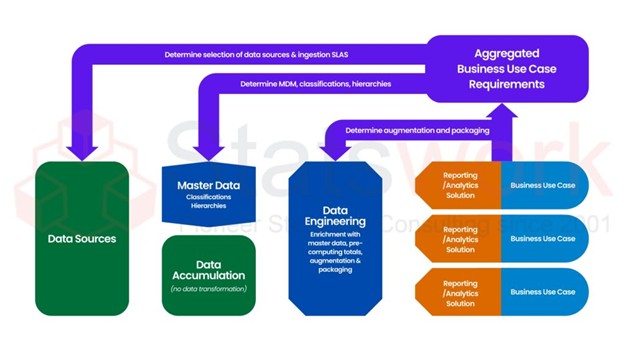
Big data signifies to large volumes of data that may be used to solve problems. It has piqued people’s curiosity over the past two decades because of the enormous potential it has. Big data analytics in healthcare is transforming how medical information is processed and utilized. Big data is generated, stored, and analyzed by various public and private sector companies to improve their services. Hospital records, patient medical records, medical examination findings, and internet of things devices are examples of big data sources in the healthcare business. Biomedical research also produces a large amount of big data that is important to public health. To obtain useful information from this data, it must be appropriately managed and analyzed using advanced data analytics, healthcare data management, and predictive analytics techniques. Otherwise, finding a solution through studying huge data is akin to looking for a needle in a haystack. Each stage of processing large data comes with its own set of problems that can only be overcome by employing high-end computing solutions for big data analysis in healthcare systems.
Healthcare as a Big-Data Repository: Electronic Health Records (EHR) and Digital Transformation
Healthcare is a multi-faceted system created with the express purpose of preventing, diagnosing, and treating human health-related disorders or impairments. Health experts (physicians or nurses), health facilities (clinics, hospitals for providing medications and other diagnosis or treatment technology), and a financial institution supporting the first two are the primary components of a healthcare system.
The digitalization of all clinical tests and medical records in healthcare systems has become a familiar and generally embraced practice nowadays, thanks to the introduction of computer systems and their potential. In 2003, the Institute of Medicine, a division of the National Academies of Sciences, Engineering, and Medicine, adopted the phrase “electronic health records” to symbolize records kept to improve the health care sector to benefit patients and doctors.
Electronic health records (EHR) are computerized medical records for patients that contain “any information relating to an individual’s past, present, or future physical/mental health or condition that resides in an electronic system(s). They are used to capture, transmit, receive, store, retrieve, link, and manipulate multimedia data for the primary purpose of providing healthcare and health-related services.” EHR systems play a critical role in healthcare big data analytics, clinical data integration, and medical data management.
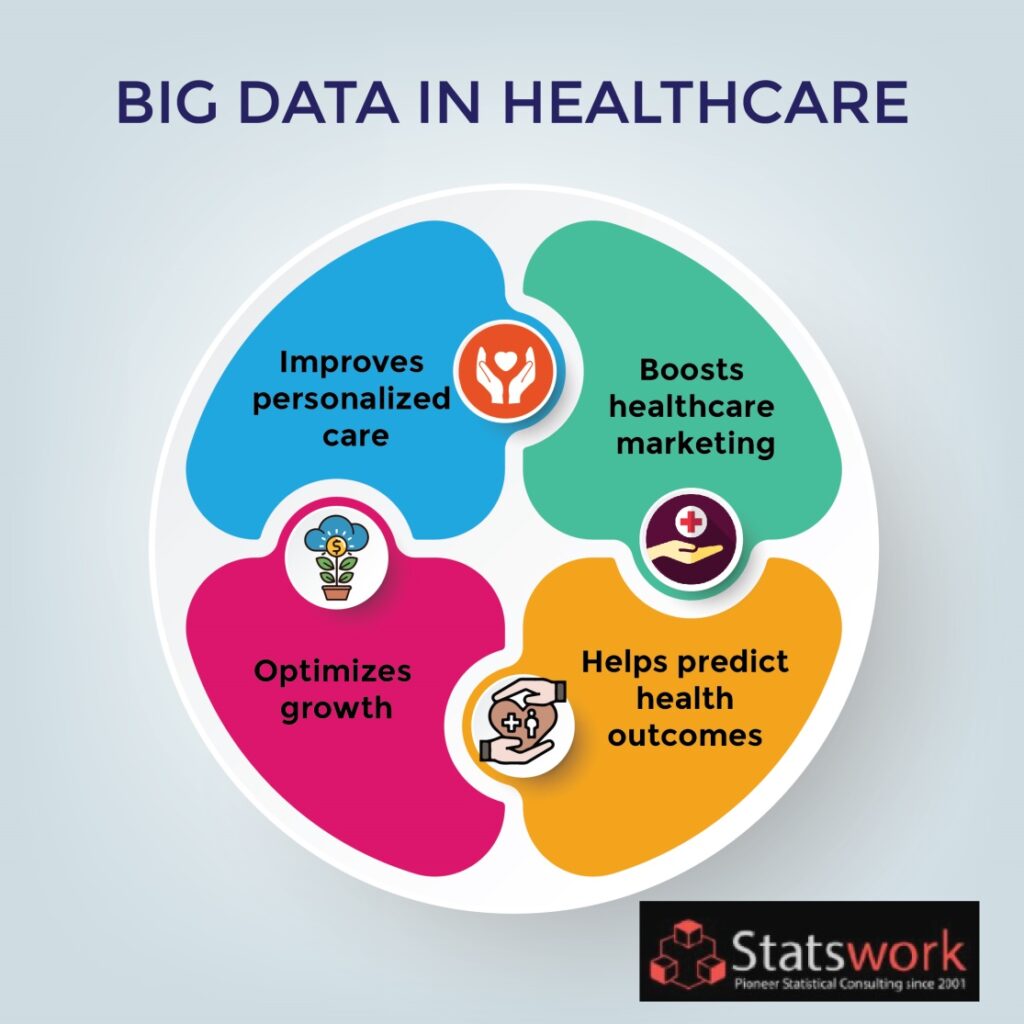
Healthcare Data Solutions and Advanced Data Analytics
The huge volume of data can be stored methodically with the aid of big data. Doctors and other healthcare professionals may now make well-informed judgments since they have access to a wealth of information through data-driven healthcare solutions and clinical decision support systems. Of course, the amount of data created will skyrocket, and modern technologies such as machine learning in healthcare, AI-driven analytics, and predictive modeling will be able to analyze it rapidly and efficiently.
Big Data to Fight Cancer: Precision Medicine and Genomic Data Analysis
Cancer is wreaking havoc on individuals all around the world. Big data can aid in the more effective fight against cancer through precision medicine and genomic data analytics. Healthcare practitioners will be better able to detect and diagnose illnesses early on, assign more appropriate medicines based on a patient’s genetic composition, and manage drug dosages to reduce adverse effects and increase efficacy. It will also aid in the mapping of the 3 billion DNA base pairs and give excellent parallelization assistance.
Monitoring Patient Vitals Using IoT and Real-Time Analytics
The use of big data makes it simpler for medical employees to work more efficiently. Aside from patient beds, sensors are continually utilized to monitor blood pressure, heartbeat, and respiration rate. Doctors and healthcare officials are notified as soon as a trend shift. Real-time healthcare analytics, wearable devices, and IoT in healthcare enhance continuous patient monitoring and improve clinical outcomes.
Smoother Hospital Administration Through Healthcare Analytics
With the aid of big data, healthcare management becomes a lot easier. It assists in lowering the cost of care measurement, providing the most remarkable clinical assistance, and managing the at-risk patient group. It also aids medical professionals in their analysis of data from various sources. It aids healthcare practitioners in determining patient aberrations and the health impacts of therapies. Healthcare data analytics supports hospital management systems, operational efficiency, and cost reduction strategies.
Healthcare Intelligence and Business Analytics
The use of big data in healthcare intelligence applications is possible. Creating smart business solutions, hospitals, payers, and healthcare agencies will enhance their competitive advantages. Healthcare business intelligence, medical data visualization, and predictive healthcare analytics enable smarter strategic decisions and improved patient services.
Fraud Prevention and Detection Using Big Data Analytics
Big data aids in the prevention of a wide range of errors made by health administrators, such as incorrect dose, incorrect medications, and other human errors. It will be very beneficial to insurance firms. They are capable of preventing a broad spectrum of insurance fraud claims Healthcare fraud detection, insurance analytics, and risk assessment models significantly reduce financial losses and improve compliance.


