







statswork

Meta-Analysis Services & Research Support

We offer support for both quantitative and qualitative studies, including systematic reviews and meta-analyses of medical research, as part of our meta-analysis services for researchers and organizations, as well as our own proprietary services.

Meta-Analysis Services & Research Support

Meta-Analysis & Evidence Synthesis Services

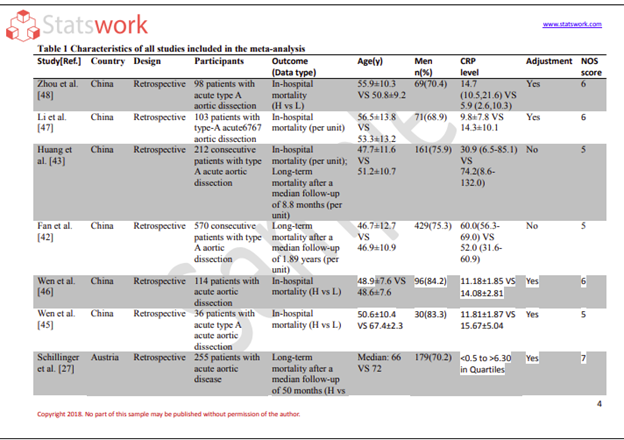
A meta-analysis combines individual studies so that researchers can arrive at evidence-based conclusions through our Professional Meta-Analysis Services for research studies. Meta-analysis involves using statistical methods to combine information found in individual studies in order to create a database of findings for evidence synthesis. 

As an example of this approach, systematic review and meta-analysis have been used within many areas of medical, quantitative and qualitative research. The benefits that result from Meta-Analysis Services for evidence synthesis have been better statistics for research purposes as well as accurate findings.

Meta-Analysis & Evidence Synthesis Services

Meta-analyses also give researchers insight into the trends and gaps in their area of research and provide them with information to make evidence-based decisions.At Statswork, we perform meta-analysis research and perform statistical analyses as part of our Statistical Meta-Analysis Services.

We perform the research for each project and provide support through expert data extraction and coding, as well as modeling services.

Summary and Significance of Meta-Analysis Services

Meta-analysis services are related to merging results from several independent studies in order to derive well-supported and valid conclusions. Such an analysis allows researchers to achieve higher validity in their results and avoid bias.

Introduction to Research Tool Development icon

Introduction to Meta-Analysis Services

Meta-analysis services encompass the systematic process of gathering, analyzing, and synthesizing information drawn from different, independent sources of research. The process aims at summarizing scientific results and obtaining an overall picture of the research problem under investigation. Meta-analysis combines quantitative and qualitative research studies, which may be included in systematic reviews, to generate high-quality research evidence for decision making.

The meta-analysis process entails several stages:
  • Defining research objectives and criteria for studies
  • Conducting systematic literature search and study selection
  • Data abstraction and coding
  • Statistical analyses and modeling
  • Heterogeneity and bias assessment
  • Results interpretation and report writing

Purpose of Research Tool Development icon

Purpose of Meta-Analysis Services

Meta-analysis services have become popular in academic researches, healthcare, businesses, and other areas for synthesizing information and making evidence-based decisions. The absence of meta-analysis will lead to the fragmentation and inconsistency of research conclusions and biases in research conclusions.

Meta-analysis services can be useful for:

  • Synthesizing information obtained by different researches
  • Increasing the power and precision of research results
  • Recognizing research trends and inconsistencies
  • Decision-making processes based on evidence
  • Bias reduction through systematic review
  • Credibility improvement

Meta-analysis is also capable of offering valuable information about overall research trends that could be helpful when making evidence-based decisions.

Meta-Analysis & Evidence Synthesis Areas

Meta-Analysis Services utilize the results of multiple independent studies and provide a comprehensive, factual analysis of the information found in these studies.

Quantitative Meta-Analysis
Qualitative Meta-Synthesis
Meta-Analysis of Medical Research
Scientific Literature Review & Search
Meta-Analysis Statistical Visualization

Quantitative Meta-Analysis

  • Meta-analysis using quantitative methods is done using advanced statistical analysis services and effect size estimation.
  • The combination of numerical data to determine an overall estimate of the effectiveness of a given treatment using fixed effects model and random effects model.
  • Meta-analysis helps support evidence-based decision making within the field of quantitative research.
Read More

Qualitative Meta-Synthesis

  • Meta-analysis of qualitative research involves synthesizing the findings of several qualitative studies.
  • The identification of overarching themes and patterns for multiple studies.
  • Expert meta-analysis can strengthen your interpretation of findings by giving you direction for correct interpretation of findings from multiple studies.
Read More

Meta-Analysis of Medical Research

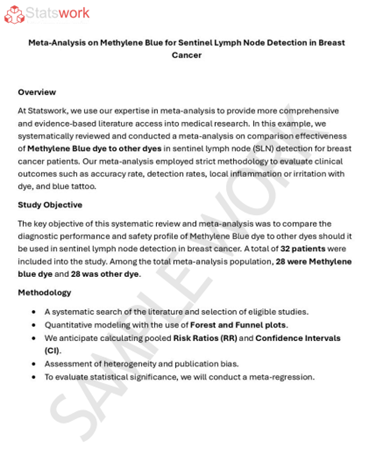
  • Through medical research, we assist in clinical and healthcare Meta-Analysis Services for medical research.
  • Through meta-analysis, we support the use of evidence-based rationale for decision making in medicine and public health.
  • We improve the reliability of these outcomes by utilizing the findings of all relevant research.
Read More

Scientific Literature Review & Search

  • Searching for and evaluating pertinent scientific literature from diverse sources.
  • Helps in recognizing areas where there is a lack of research.
  • Expert assistance helps to identify the proper scientific studies and evaluate them.
Read More

Meta-Analysis Statistical Visualization

  • Representing the results obtained from different studies through statistics in graphical form.
  • Helps in understanding trends and outcomes of the studies.
  • Expert graph preparation ensures proper presentation of statistical data.
Read More

Our Industries

Statswork offers Meta-Analysis Services & Research Support that includes systematic reviews, data extraction, data coding, and statistical modeling.

Statistics for Meta-Analysis

For a reliable and accurate meta-analysis, there is need to use complex statistical procedures. In Statswork, we use various types of statistical methods to analyze data to make sound judgments.

Reliability Testing icon

Heterogeneity Assessment

Heterogeneity assessment is employed to assess variability of findings obtained from various studies incorporated in meta-analyses. It can identify whether variability in study findings is due to chance alone or any other factors.

Methods of heterogeneity assessment:

Validity Testing icon

Publication Bias Assessment

Publication bias assessment enables one to identify whether meta-analysis findings are biased by publication of selective information. This can enable identification of whether only favorable findings are available.

Methods employed include:

  • Funnel Plot Assessment
  • Egger’s Regression Test
  • Begg’s Test
  • Trim and Fill Approach
Cronbach’s Alpha icon

Effect Size Assessment

Effect size assessment constitutes an integral part of meta-analysis. It enables assessment of strengths of associations within studies under review.

Methods of effect size assessment include:

  • Standardized Mean Difference (SMD)
  • Odds Ratio (OR)
  • Risk Ratio (RR)
  • Mean Difference (MD)
Software and Tools Employed for Meta-Analysis

The company Statswork employs highly sophisticated statistical software and technology to conduct meta-analysis and produce accurate results.

01

R / Python

  • Highly effective meta-analysis and statistical computing
  • Effective visualization of data (forest plots, funnel plots)
  • Data extraction and analysis automation
02

SPSS / SAS

  • Statistical modeling for meta-analysis
  • Calculation of effect size and data transformation
  • Management of big data and statistical analysis
03

Meta-Analysis Methods

  • Comparison of studies and data synthesis
  • Estimation of effect sizes and heterogeneity
  • Verification of findings from pooled research

Statswork Meta-Analysis Procedure

Here at Statswork, we follow a certain procedure that ensures conducting accurate and scientifically sound meta-analysis. Thanks to our statistical skills and experience in conducting meta-analyses, we are able to arrive at valid conclusions through meta-analysis.

Selection of Research Studies
  • Selection of research studies from different databases
  • Inclusion/exclusion criteria application
  • Selection of appropriate research studies
Data Extraction and Coding
  • Data extraction from the selected studies
  • Variable/coding outcomes
  • Creation of data sets
Quality Assessment and Screening
  • Evaluation and assessment of quality of selected research studies
  • Assessment of research design/protocol
  • Screening out any inconsistencies in data
Statistical Modeling and Analysis
  • Effect size calculations based on selected studies
  • Employment of fixed effects/random effects models
  • Heterogeneity and sensitivity analyses
Publication Bias and Verification
  • Publication bias detection based on selected studies
  • Application of regression methods/funnel plots for publication bias detection
  • Verification of the findings of meta-analysis
Interpretation of Meta-Analysis Findings
  • Interpretation of meta-analysis findings
  • Generation of findings
  • Report on findings of meta-analysis

Expected Outcomes of Meta-Analysis Services

Organizations using professional meta-analysis services have a number of advantages.

Expected Outcomes of Meta-Analysis Services

Businesses that seek the aid of professional meta-analysis services will acquire improved insights into their research.

The outcomes expected from such services include:

  • A complete combination of various research studies
  • Greater statistical power and precision
  • Conclusions supported by evidence and applicable to research and business decision making
  • Identification of gaps within the research and trends
  • Improved credibility of research conclusions

In turn, businesses can base their decisions on accurate information and achieve better outcomes.

Benefits of Statswork’s Meta-Analysis Services

With its expert-driven meta-analysis services, Statswork guarantees high-quality and precise research results.

The benefits include:

  • Handling of complex datasets by experts
  • Using advanced statistical tools and techniques
  • Reducing bias through systematic analysis of data
  • Proper interpretation of results of combining multiple studies
  • Efficient delivery of research outputs

These benefits contribute to effective research processes.

Integrated Research Assistance of Statswork

Statswork offers comprehensive assistance with meta-analysis and other research-related activities.

The assistance includes:

  • Systematic literature review
  • Extraction and coding of data
  • Advanced statistical modeling and analysis
  • Interpretation and presentation of results
  • Professional assistance in academic and business research

Such assistance allows researchers to conduct effective research.

Industries Benefitting from our Meta Analysis Services

Our meta analysis services find application in a number of industries in order to provide insights based on evidence.

Some of these industries include:

  • Healthcare and medical research
  • Pharmaceutical and clinical studies
  • Business and management research
  • Social sciences and educational research
  • Government and public policy research

All of these industries can greatly profit from our highly accurate meta analysis service.

Why Choose Statswork for your Meta Analysis Services?

Statswork is a well-known name when it comes to providing top-notch meta analysis services.

This can be attributed to the following reasons:

  • Team of expert statisticians
  • Use of sophisticated methods and tools
  • Highly accurate analysis
  • Tailored approach based on need
  • Punctual and quality-driven approach
Success Stories
Insights - Must Read Articles

Data Dictionary Mapping

The medical device industry is about to experience a seismic shift…

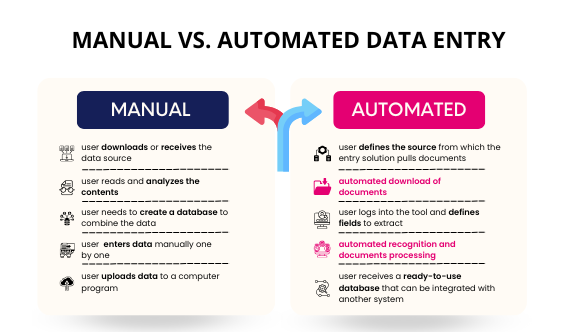
The Next Era of Data Entry

Healthcare is being impacted by two emerging technology tools – AI…

Reduces Errors and Boosts Efficiency

As organizations utilize changing data in the digital world, so is the data entry….
Frequently Asked Questions
1. What is meta-analysis research and why is it important?

Meta-analysis research is a statistical method used to combine findings from multiple independent studies on a similar topic. It helps improve the accuracy of conclusions, increases statistical power, and provides stronger evidence for research decisions.

2. How can meta-analysis improve research quality?

Meta-analysis enhances research quality by identifying overall trends, reducing inconsistencies across studies, and generating more reliable conclusions. It supports evidence-based decision-making through systematic and comprehensive evaluation of existing research findings.

3. What types of studies can be included in a meta-analysis?

Meta-analysis can include experimental studies, observational research, clinical trials, survey-based studies, cohort studies, and case-control studies, provided they meet predefined inclusion and quality criteria.

4. How are studies selected for a meta-analysis project?

Studies are selected through a structured screening process based on research objectives, eligibility criteria, publication relevance, data quality, and methodological consistency to ensure accurate and unbiased analysis.

5. How can Statswork assist with meta-analysis research studies?

Support is provided for systematic literature review, study selection, data extraction, effect size estimation, heterogeneity assessment, publication bias evaluation, and interpretation of combined research findings for accurate meta-analysis outcomes.

6. What statistical methods are commonly used in meta-analysis?

Common statistical approaches include fixed-effect and random-effect models, heterogeneity testing, subgroup analysis, sensitivity analysis, forest plots, and publication bias analysis to evaluate combined research findings effectively.