

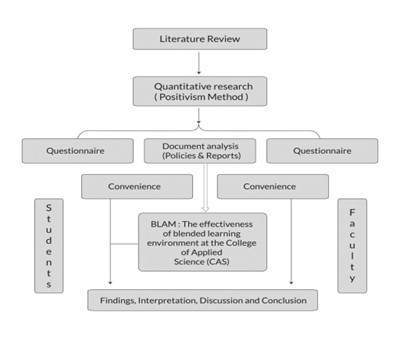
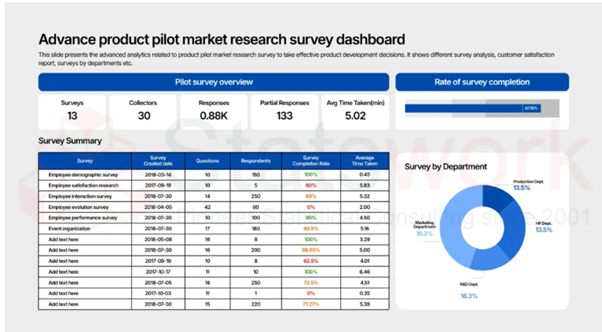
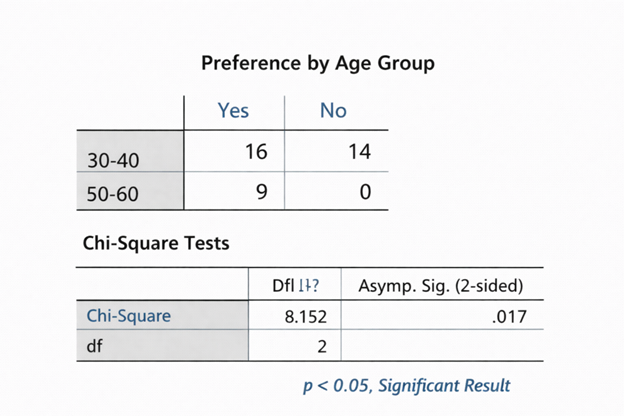
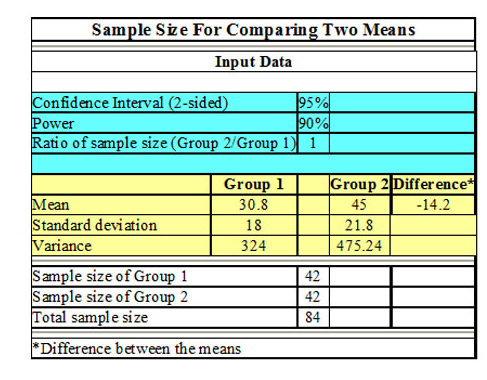
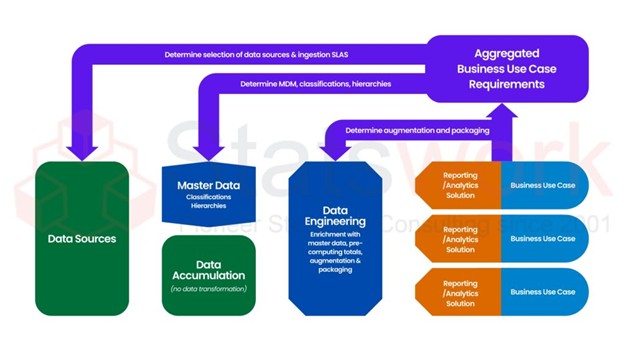
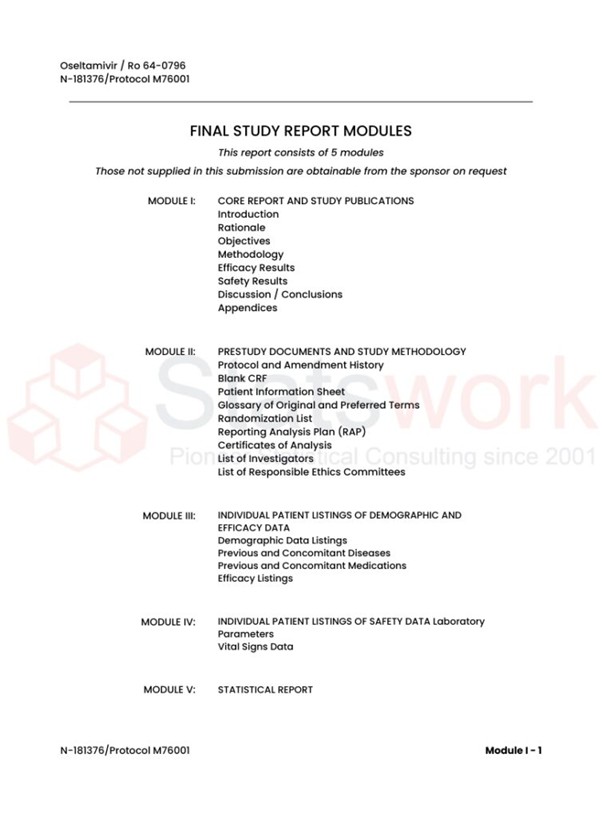

Data collection is transforming the market research industry. Explain with few possible examples.
March 3, 2021
Guideline for conducting Metadata analysis for Market research in business
March 9, 2021Compare and Contrast One-Way ANOVA and Two-Way ANOVA in Data Analysis
Qualitative Research Service
- One-Way vs Two-Way ANOVA: Key Differences, Applications, and Statistical Analysis
- What Is Analysis of Variance (ANOVA)?
- What Is One-Way ANOVA?
- Applications for One-Way ANOVA
- What Is Two-Way ANOVA?
- One-Way vs Two-Way ANOVA Differences
- ANOVA vs T-Test
- ANOVA VS MANOVA
- ANOVA for Pharmaceutical Research
- Conclusion
Recommended Reads
Contact us
Summary:
The techniques of One-way and Two-way ANOVA are statistical methods used to make comparisons between means and find any difference that may exist in the sets of data. While the technique of One-way ANOVA is used to study the effect of one factor, the technique of Two-way ANOVA is employed to study the effect of two factors and their interactions. This article discusses the uses, pros, cons, and differences of these two ANOVAs in different contexts.
One-Way vs Two-Way ANOVA: Key Differences, Applications, and Statistical Analysis
The concept of data-driven decision making requires choosing the right type of statistical analysis for interpretation of the results gathered during research. One of the popular techniques used in quantitative research is Analysis of Variance (ANOVA). It is a statistical technique aimed at comparing mean values of several groups and identifying whether there are any differences between these groups [1]. The distinction between one-way and two-way ANOVA is crucial for researchers, businesses, and other organizations who want to get valuable insights from their data.
Regardless of whether one wants to apply ANOVA in health care, education, business intelligence, market research, and others, one can use the technique in order to identify factors that impact the results. The current paper will help you to understand what ANOVA is and why it matters.
What Is Analysis of Variance (ANOVA)?
ANOVA is a statistical method that is used to test the mean differences of three or more samples at one time. It eliminates the need for making multiple tests, each time comparing two means, because multiple tests may increase chances of committing errors [2].
The major purpose of ANOVA is to find out whether any significant difference is observed among different sample means or whether the difference is due to chance alone. This test works on the principle of dividing the between-group differences with the within-group differences to arrive at an ANOVA F statistic.
This tool is generally used for experimental research, observational studies, customer analysis, product testing, and policy assessment.
What Is One-Way ANOVA?
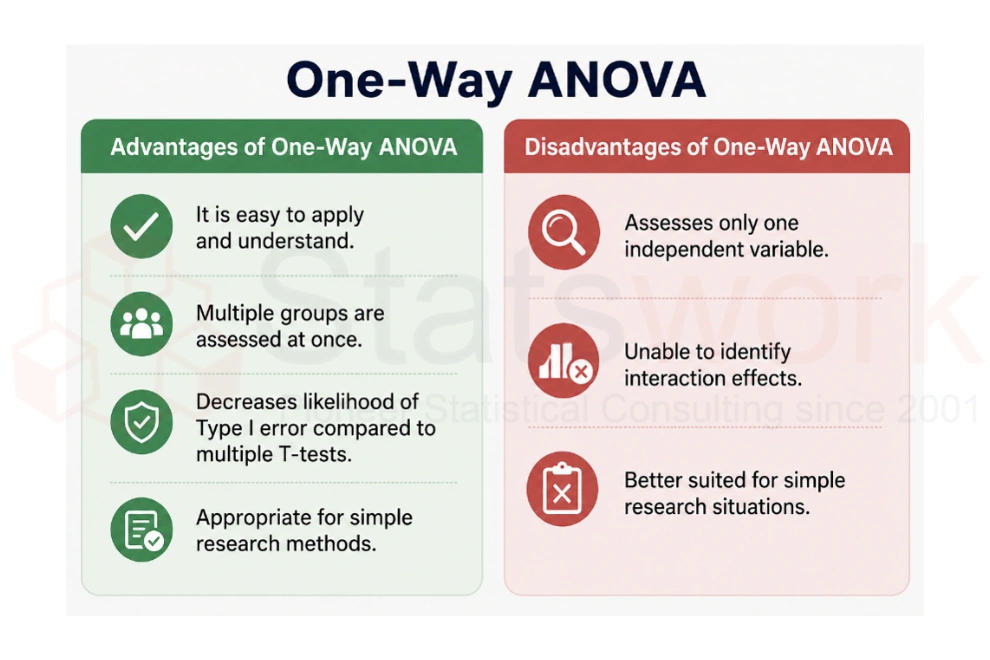
The one-way ANOVA technique is used when there is just one independent variable/factor in a research design which involves more than two categories.
Example of One-Way ANOVA
Consider that a firm wants to see if customer satisfaction varies among three of its retail outlets.
- Independent Variable: Retail Outlet
- Categories: Outlet A, Outlet B, Outlet C
- Dependent Variable: Customer Satisfaction Rating
The one-way ANOVA technique helps in comparing the means of the customer satisfaction scores in each outlet category.
Applications for One-Way ANOVA
The one-way ANOVA test is often used in:
- Satisfaction surveys
- School performance tests
- Quality control in manufacturing
- Comparative treatment tests in health care
- Worker efficiency studies
Consultants on ANOVA help many businesses conduct these tests correctly by designing the appropriate studies and using statistics correctly [3].
What Is Two-Way ANOVA?
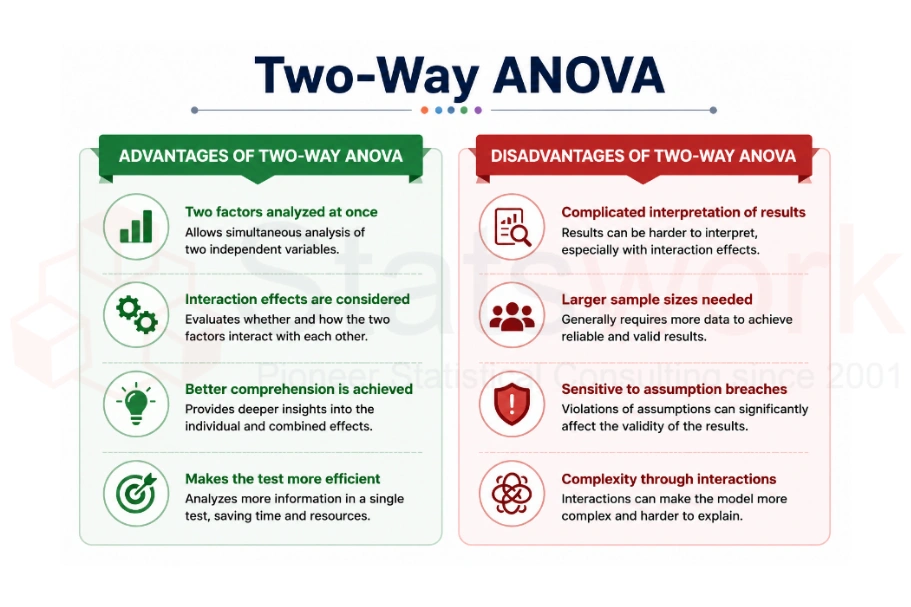
Two-way ANOVA takes the capabilities of one-way ANOVA further by exploring the effect of two independent variables on one dependent variable. Apart from assessing the effect of each factor independently, it measures whether the two factors have any interaction among themselves [4].
Two-way ANOVA Example
A market research team is trying to assess the impact of advertising approach and the age group on buying behavior.
- Independent Variable 1: Advertising Approach
- Independent Variable 2: Age Group
- Dependent Variable: Purchasing Behavior Score
The test measures:
- If advertising approach affects purchasing behavior.
- If age group affects purchasing behavior.
- If there is any difference in effectiveness of advertisements based on age groups [5].
The third result reflects the interaction effect, which is an exclusive property of two-way ANOVA.
Two-Way ANOVA Applications
Two-way ANOVA is extensively applied in:
- Studies on consumer behavior
- Tests on marketing success
- Tests in clinical and pharmaceutical settings
- Analysis of human resources
- Production process improvements
Companies rely heavily on ANOVA for data analysis within their marketing research to comprehend how several variables affect consumer behavior and decisions [5].
One-Way vs Two-Way ANOVA Differences
Understanding the one-way vs two-way ANOVA differences helps researchers choose the most suitable analytical method [2].
|
Feature |
Single Factor ANOVA |
Double Factor ANOVA |
|
No. of Independent Variables |
1 |
2 |
|
Basic Purpose |
Difference between group means on one basis |
Analysis of impact of two factors |
|
Interaction Study |
Negative |
Positive |
|
Level of Sophistication |
Easy |
Complicated |
|
Statistical Significance |
Fundamental analysis |
Complex analysis |
The choice between one-way and two-way ANOVA depends on the study objectives and the number of factors being investigated.
Understanding the ANOVA F-Statistic
ANOVA F statistics are what are considered the primary measure to test whether group means are statistically significant.
F Statistics involve comparing:
- Variation between groups
- Within groups
If there is a higher value for the F statistics, it shows more evidence of difference between the means of the groups being significant [3].
ANOVA vs T-Test
Researchers frequently compare ANOVA vs t-test when selecting statistical techniques.
|
Factor |
ANOVA |
Test T |
|
Number of Groups |
Three or More |
Two |
|
Statistical Efficiency |
High |
Moderate |
|
Error Control |
More effective for many groups |
Suitable for easy comparison |
A t-test is ideal for comparing two groups, while ANOVA is more appropriate when analyzing three or more groups.
ANOVA VS MANOVA
Yet another popular comparison that is made frequently is ANOVA vs MANOVA.
- ANOVA tests just one dependent variable.
- MANOVA tests multiple dependent variables at the same time.
The MANOVA technique is selected by researchers when multiple dependent variables need to be tested simultaneously [4].
ANOVA vs Regression
- An understanding of the difference between ANOVA and regression can assist researchers in selecting the appropriate method of analysis.
- ANOVA is based on analyzing differences between group means while regression analyzes relationships between variables.
- While ANOVA is concerned with answering questions about whether there is any significant difference between groups, regression explains why this difference exists.
ANOVA for Pharmaceutical Research
There are numerous uses for ANOVA in pharmaceutical research. Some applications include:
- Analyzing the effectiveness of different treatments
- Analyzing dosage levels of drugs
- Evaluating response rates among patients
- Analyzing results of clinical trials
It is vital to make accurate analysis in the field of pharmaceutical research since many conclusions depend on statistics [3].
Importance of ANOVA Results Interpretation
Statistical testing is but a segment of research. Interpretation will ensure that your research findings are relevant to act upon.
A statistical results interpretation service for ANOVA will aid researchers in:
- Comprehending significance
- Interpreting statistics like F value and p-value
- Reaching conclusions and drawing out practical meaning
- Writing up publishable papers
- Equipping for informed decisions.
Conclusion
Knowing about one way ANOVA vs two-way ANOVA is extremely important when choosing the right statistical method for research and getting reliable results. As you see, while one-way ANOVA measures the effect of one factor, two-way ANOVA measures the effect of two independent variables together with their interaction effects. Therefore, the ANOVA assumptions test and ANOVA F-test calculation as well as proper treatment of any ANOVA assumptions violation are vital to conduct valid ANOVA data analysis and get reliable research findings [5].
With the development of technology, more companies and organizations produce huge amounts of data, and conducting statistical analysis becomes a critical issue. Thus, performing ANOVA data analysis as part of market research, treatment evaluation in healthcare sector or conducting ANOVA in pharmaceutical industry, you may greatly benefit from professional statistical assistance.
Our company Statswork offers highly qualified Data Analysis Services that ensure high-quality and efficient support in statistics to any type of customer all over the world. With our Data Analysis Services, you can get professional ANOVA statistical analysis and ANOVA consulting services and even get help interpreting ANOVA results.
Frequently asked Questions
1. What is the main difference between one-way ANOVA and two-way ANOVA?
The main difference is that one-way ANOVA analyzes the effect of a single independent variable on a dependent variable, whereas two-way ANOVA examines the effects of two independent variables and their interaction on the dependent variable.
2. What is the difference between one-sided and two-sided ANOVA?
A one-sided ANOVA tests differences in a specific direction, while a two-sided ANOVA evaluates whether any significant difference exists between groups regardless of direction. In practice, ANOVA is generally considered a two-sided test.
3. What is the difference between two-way mixed ANOVA and two-way repeated measures ANOVA?
A two-way mixed ANOVA includes one between-subjects factor and one within-subjects factor, whereas a two-way repeated measures ANOVA involves two within-subjects factors where the same participants are measured under all conditions.
4. Is a factorial ANOVA the same as a two-way ANOVA?
A two-way ANOVA is a type of factorial ANOVA that involves exactly two independent variables. Factorial ANOVA is a broader term that refers to ANOVA designs with two or more factors.
5. What is a two-way ANOVA used for?
Two-way ANOVA is used to determine the individual and combined effects of two independent variables on a dependent variable, helping researchers identify both main effects and interaction effects.
6. What is a one-way ANOVA example?
A one-way ANOVA example is comparing customer satisfaction scores across three retail store locations to determine whether satisfaction levels differ significantly between the stores.
Reference:
- Rodrigues, L. G. P., Coelho, F. R., Krummenauer, A., Nardelli, V. C., & França, F. H. R. (2024). Two-way ANOVA analysis of novel ALBDF functions obtained for H2OCO2 gas mixtures considering variable mole fraction ratios in oxy− and air− fuel combustion conditions. Journal of Quantitative Spectroscopy and Radiative Transfer, 320, 108973. https://www.sciencedirect.com/science/article/pii/S0022407324000803
- Armstrong, R. A., Eperjesi, F., & Gilmartin, B. (2002). The application of analysis of variance (ANOVA) to different experimental designs in optometry. Ophthalmic and Physiological Optics, 22(3), 248-256. https://link.springer.com/article/10.1046/j.1475-1313.2002.00020.x
- Weissgerber, T. L., Garcia-Valencia, O., Garovic, V. D., Milic, N. M., & Winham, S. J. (2018). Why we need to report more than’Data were Analyzed by t-tests or ANOVA’. Elife, 7, e36163. https://elifesciences.org/articles/36163
- Armstrong, R. A. (2013). Statistical guidelines for the analysis of data obtained from one or both eyes. Ophthalmic and Physiological Optics, 33(1), 7-14. https://link.springer.com/article/10.1111/opo.12009
- Burger, T. (2023). Controlling for false discoveries subsequently to large scale one‐way ANOVA testing in proteomics: Practical considerations.Proteomics, 23(18), 2200406. https://analyticalsciencejournals.onlinelibrary.wiley.com/doi/abs/10.1002/pmic.202200406?__cf_chl_tk=t16JU4h_YXrDbRKtuLw_zJXb99sM3SJ06rY..1W0hBs-1781505690-1.0.1.1-d0a8iEhouQxyGtFsyzNhq8TE8LBdHkyrBIjo76N2dj4