
What is Secondary Data Collection in Simple Terms?
- Home
- Insights
- Article
- What is Secondary Data Collection in Simple Terms?
Qualitative Research Service
News & Trends
Recommended Reads
Data Collection
As the data collection methods have extreme influence over the validity of the research outcomes, it is considered as the crucial aspect of the studies
- 1. Introduction
- 2. DeepHealth’s Diagnostic Suite™: Revolutionizing Radiology Workflows
- 3. Key Features
- 4. AI Impact on National Screening Programs
- 5. SmartMammo™: Enhancing Breast Cancer Screening
- 6. DeepHealth AI Use Cases Across Specialties
- 7. Strategic Collaborations and Ecosystem Expansion
- 8. Impact and Adoption of DeepHealth’s AI Solutions
- 9. Conclusion: The Future of Radiology with AI
- 10. References
Researchers usually use accessible information previously collected for different purposes; these secondary data sources could include government statistics, census statistics, academic publications, textbooks, and corporate reports. Secondary data collection is often a preference for quick data collection at a low cost while enabling access to more data, though a careful evaluation must always occur to determine the data’s reliability, relevance, and suitability for the new purpose.
Understanding Secondary Data and Its Importance in Research
Secondary data allows researchers to leverage existing information to save time and reduce costs. Using secondary research methods, analysts can access verified datasets, enhancing market research data accuracy and reliability for academic and business studies.
Top Secondary Data Sources for Research and Market Analysis
Multiple secondary data sources can be utilized and each has different advantages:
- Government records: It would not be necessary for a city planner to conduct a new survey to understand population growth; government statistics or health databases can show this.
- Academic Publications: A student can take data concerning trends in education from the journal for their secondary data analysis.
- Corporate Reports: The annual reports of competitors can be investigated by companies regarding market research data and opportunities.
- Digital Databases: Whereas databases like Statista or WHO further provide a large amount of data, which can be ready for secondary research methods.
- Media Resources: Newspapers or online news portals have information about social trends and emerging issues.
Using these sources guarantees that researchers use the best secondary research methods to collect data relevant for analysis and trustworthy.

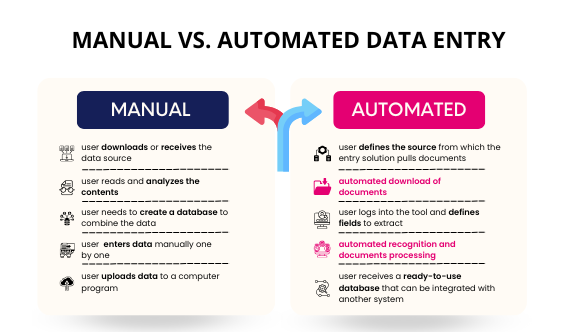
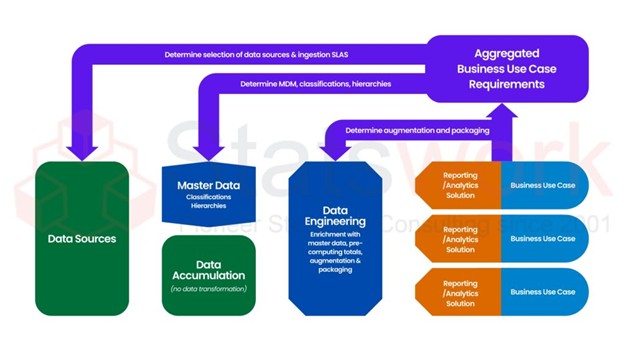
Fig 1 shows the difference between primary and secondary market research data sources.
Advantages of Secondary Data Collection for Business and Academia
Several advantages result from the secondary data collection process, particularly through the practical approach:
- Cost-effectiveness: A startup firm needs to look at the existing consumer behavior reports instead of investing in a brand-new one.
- Time saving: Readers can access ready-to-use-data like historical stock market trends, as opposed to months of primary research.
- Broad Coverage: The data from census reports and health databases represents thousands of individuals who have already been surveyed, giving us an expanded pool compared to most primary research that may hold data
- Historical Comparison: Businesses can study sales trends during the last ten decades to plan effective marketing using secondary data sources.[3]
Common Challenges in Secondary Data Collection
Even though secondary research methods are important for business knowledge acquisition, they present some problems:
Challenge | Description & Example |
Relevance | Data may not exactly match with “your research question,” e.g., old consumer surveys. |
Accuracy | Reliability depends on the original collector, as a false figure may be presented. |
Timeliness | Some datasets may be outdated, especially where they record information from 10 years ago. |
Bias | Reports might be based on the marketing point of view of the company rather than the facts. |
Accessibility | Specific high-quality datasets are subscription-based or require permission.[4] |
Tips for Effective Secondary Data Collection and Research Methods
To maximize value from secondary data collection and secondary research methods:
- Check the source credibility: Government statistics and academic publications are likely to be reliable.
- Ensure that Data format conforms to what is required: For instance, using a CSV format is easier than using a PDF format when analyzing market research data.
- Review Data Completeness: Data incompleteness is a critical factor
- Consider limitations and/or bias of existing knowledge: Context helps in interpreting secondary data sources [5]
Conclusion
Secondary data collection is an elaborate research method. By utilizing genuine secondary research methods effectively, being smart while doing secondary data collection, and staying aware of the limitations of secondary research methods, valuable information can be unearthed efficiently to make very effective decisions. The research can be conducted to aid various research requirements, as well as to contribute to secondary research methods for business insight to yield more results efficiently.
Why start from scratch when you can harness the power of existing secondary data sources? StatsWork makes secondary data collection effortless and insightful.
Reference
- Lefever, S., Dal, M., & Matthíasdóttir, Á. (2007). Online data collection in academic research: advantages and limitations. British journal of educational technology, 38(4), 574-582. https://bera-journals.onlinelibrary.wiley.com/doi/abs/10.1111/j.1467-8535.2006.00638.x
- Trinh, Q. D. (2018, April). Understanding the impact and challenges of secondary data analysis. In Urologic Oncology: Seminars and original investigations(Vol. 36, No. 4, pp. 163-164). Elsevier. https://www.sciencedirect.com/science/article/pii/S1078143917305860
- Cowton, C. J. (1998). The use of secondary data in business ethics research. Journal of business ethics, 17(4), 423-434. https://link.springer.com/article/10.1023/A:1005730825103