

When Should Organizations Choose Qualitative Over Quantitative Research?
- Home
- Insights
- Article
- When Should Organizations Choose Qualitative Over Quantitative Research?
Qualitative Research Service
News & Trends
Recommended Reads

Data Collection
As the data collection methods have extreme influence over the validity of the research outcomes, it is considered as the crucial aspect of the studies
When Should Organizations Choose Qualitative Over Quantitative Research?
- 1. Introduction
- 2. DeepHealth’s Diagnostic Suite™: Revolutionizing Radiology Workflows
- 3. Key Features
- 4. AI Impact on National Screening Programs
- 5. SmartMammo™: Enhancing Breast Cancer Screening
- 6. DeepHealth AI Use Cases Across Specialties
- 7. Strategic Collaborations and Ecosystem Expansion
- 8. Impact and Adoption of DeepHealth’s AI Solutions
- 9. Conclusion: The Future of Radiology with AI
- 10. References
Introduction
Quantitative and qualitative methods of research are two very recognized styles of conducting research. The primary focus area of qualitative research is to look at the ‘why’ behind a phenomenon, therefore gaining an understanding from all different aspects of an experience.
Conversely, quantitative research utilizes numerical data obtained through statistical means; thus, qualitative research method provides context or richness to the quantitative part of the research. However, when a researcher requires what is known as objective evidence to either justify or substantiate a decision regarding a certain phenomenon, they will rely on quantitative research.[1]
Advantages in the Qualitative Research
- Detailed Understandings: Qualitative research insights provide in-depth views into a customer’s lifestyle, purchasing habits, as well as their feelings about products or services.
- Strategic Direction: These key insights were part of the strategic direction taken when making critical product development and advertising decisions.
- Data-Based Action: The final qualitative research analysis gives an organization the required information to help support their growth and innovation efforts.[2]
The Role of Qualitative Research in Strategy Development
- Consumer Insights: Qualitative research allows marketers to dig deeper into consumer preferences and purchasing behaviour. A key aspect of the development of marketing strategies.
- Business Opportunities: Qualitative research has been used to improve business strategic decision-making by providing insights about market opportunities and online trend analysis to identify consumer needs and wants.
- Guidance for Action: Business leaders can produce new products, promotions and customer engagement initiatives based on the actionable insights obtained from their analysis of qualitative research.[3]
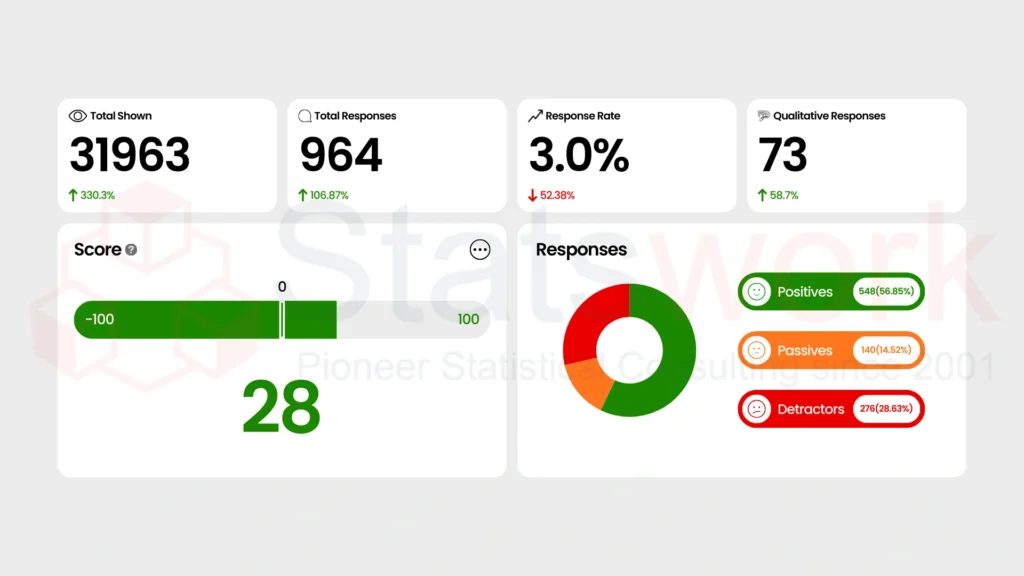
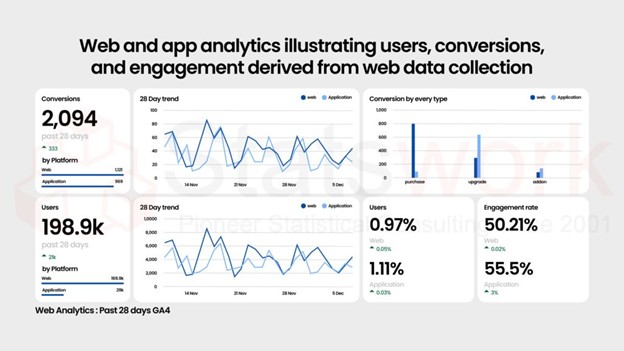
Fig 1 shows NPS data, highlighting qualitative responses and sentiment breakdown.
When to Choose Qualitative and Quantitative Research
Criteria | Qualitative Research | Quantitative Research |
Objective | Explore motivations, emotions, and behaviours. | Test hypotheses, measure variables, and generalize findings. |
Data Type | Non-numerical, descriptive, and narrative. | Numerical data, statistics, and measurable outcomes. |
Sample Size | Small, focused sample for in-depth insights. | Large sample for statistical reliability. |
When to Use | Early-stage exploration, understanding context. | Testing trends, validating theories, or measuring impact. |
Data Analysis | Thematic or narrative analysis. | Statistical analysis and numerical interpretation. [1] |
Examples,
Qualitative Research
- Explore motivations, emotions, and behaviours:
Conducting interviews to understand why people prefer certain products and how they emotionally connect to them. - Non-numerical, descriptive, and narrative:
Gathering open-ended feedback from customers to describe their experiences and feelings toward a service. - Small, focused sample for in-depth insights:
Interviewing a small group of participants to dive deeply into their personal preferences and motivations. - Early-stage exploration, understanding context:
Conducting focus groups to explore potential customer reactions and perceptions before launching a new product. - Thematic or narrative analysis:
Analysing open-ended survey responses to identify recurring themes and patterns in customer feedback.
Quantitative Research
- Test hypotheses, measure variables, and generalize findings: A survey was performed among consumers to examine whether or not a recent ad had any effect on increasing the buying intention of customers.
- Numerical data, statistics, and measurable outcomes: A customer satisfaction rating of 1-10 was used to evaluate satisfaction levels.
- Large sample for statistical reliability:
A survey was conducted with 1,000 or more respondents to determine the effect of a newly instituted policy. - Testing trends, validating theories, or measuring impact:
A sales report analysis was done to assess whether holiday sales were increased due to special promotional offers. - Statistical analysis and numerical interpretation:
Using regression analysis to estimate how product modifications might impact customer retention rates.
Tools and Techniques in Qualitative Research
- Data Collection Methods: Gathering information through various means, including interviews, focus groups and observation will provide quality results to your research.
- Data Analyses: Through qualitative data analysis methods, code and theme your data to identify major themes and patterns among your data sets.
- Strategic Use: By using all the above-mentioned tools for data collection, your organisation will be able to make better informed decisions and will have a greater understanding of their customers’ behaviours and motives.[4]
Common Misconception About Qualitative Research
- The perception of qualitative research as being subjective is inaccurate because qualitative research uses systematic approaches when analysing research data.
- Qualitative methods have been wrongly characterised as being unscientific; in fact, qualitative methods can provide much-depth information and an understanding of a research area that quantitative methods do not capture.
Ethical Considerations in Qualitative Research
- Secure the participant’s consent as well as protect their privacy (that is confidential) through data protection methods.
- Avoid any bias while performing research and report all results honestly and accurately.
- Maintain cultural sensitivity to different cultures to limit harm; also maintain integrity throughout the qualitative research method.[5]
Challenges of Qualitative Research
Subjectivity | Researcher’s bias can affect how the data is interpreted. |
Time-Consuming | Gathering and analysing data typically takes a long time. |
Limited Generalizability | It is difficult to generalise outcomes from a small sample size. |
Complex Data Analysis | Understanding qualitative data is generally complex and requires skill. |
Resource Intensive | The level of resources required (staff, finances, etc.) is typically high.[2] |
Consideration and Best Practices
- Following Ethical Conduct, Objectivity, & Disclosure Aspiring for an Ethical Conduct, Objectivity & Disclosure in accordance with ethical obligations (such as confidentiality, informed consent) and objectivity in the conduct of research; Clear research objectives: Provide research objectives which are clear and concise.
- Methodology And Analysis Structured Develop a Structured methodology for data collection, apply a forensic framework of thematic analysis and a transparent process to enhance the credibility of the findings.[5]
Conclusion
To summarize, qualitative research helps to better understand consumers’ thoughts, feelings and behaviours and therefore assists in making strategic business decisions as well as in providing opportunities. Although there are problems related to qualitative research, qualitative research’s ability to provide detailed information and actionable results are a must for organisations wishing to take the next step.
When utilising ethical practices, following clear objectives, and utilising well-defined methodologies, qualitative research aids businesses in making better decisions and supports growth.
“Understand the ‘Why’ Behind Your Customers’ Actions with Statswork’s Qualitative Research!”
Reference
- Jean Lee, S. K. (1992). Quantitative versus qualitative research methods—Two approaches to organisation studies. Asia Pacific Journal of Management, 9(1), 87-94. https://link.springer.com/article/10.1007/bf01732039
- Opdenakker, R. J. G. (2006). Advantages and disadvantages of four interview techniques in qualitative research. In Forum Qualitative Sozialforschung= Forum: Qualitative Social Research(Vol. 7, No. 4, pp. art-11). Institut fur Klinische Sychologie and Gemeindesychologie. https://research.tue.nl/en/publications/advantages-and-disadvantages-of-four-interview-techniques-in-qual/
- Mukhopadhyay, S., & Gupta, R. K. (2014). Survey of qualitative research methodology in strategy research and implication for Indian researchers. Vision, 18(2), 109-123. https://journals.sagepub.com/doi/abs/10.1177/0972262914528437
- Berkwits, M., & Inui, T. S. (1998). Making use of qualitative research techniques. Journal of general internal medicine, 13(3), 195. https://pmc.ncbi.nlm.nih.gov/articles/PMC1496926/
- Munhall, P. L. (1988). Ethical considerations in qualitative research. Western journal of nursing research, 10(2), 150-162. https://journals.sagepub.com/doi/abs/10.1177/019394598801000204