AI Financial & Pricing Data Collection for Market Entry & Competitor Benchmarking

AI Financial & Pricing Data Collection for Market Entry & Competitor Benchmarking

May 2025 | Source: News-Medical

Introduction: AI in Market Entry and Competitor Benchmarking

Advanced AI fuelled collection of financials and market entry analytics of market entries has disrupted the way Companies can use their Market Research and Benchmark their competitors. AI-driven tools that provide this data allow Firms to monitor Competitor Activity in Real Time, Identify Emerging Trends and to find New Market Opportunities as they arise.

As such, Firms can make Better Decisions, Develop More Effective Strategies, and Achieve Great Returns on Investment (ROI) in Fast-Changing/Highly Competitive marketplaces.[1]

The Importance of Financial and Pricing Data in Market Entry

  • Artificial Intelligence AI Financial Data Collection gathers and analyses live Financial Data to determine current market Conditions and Price Trends to assist a company with its Decision to enter a market.
  • Market Entry Analytics studies market Dynamics to determine Opportunities available for refining Strategy and Pricing Optimization.
  • Competitor Benchmarking uses AI tools to provide information about a competitor’s Strategy, which helps to inform a business’s Decision to enter a market.[2]

AI-Powered Competitor Benchmarking

  • Competitor benchmarking with artificial intelligence (AI) involves collecting and analysing financial information about other companies in real-time to gain insight into their strategies, prices, and performances relative to your organization.
  • In addition to analysing competitor data through AI software applications, businesses can maximize their potential for success through AI-enhanced decision-making based on the results of their competitor analyses to strengthen their business strategies and processes.[3]

AI Tools and Technologies for Financial Data Collection

Natural Language Processing (NLP)

examining the sentiment in financial reports, news, and social media; identifying trends.

Robotic Process Automation (RPA)

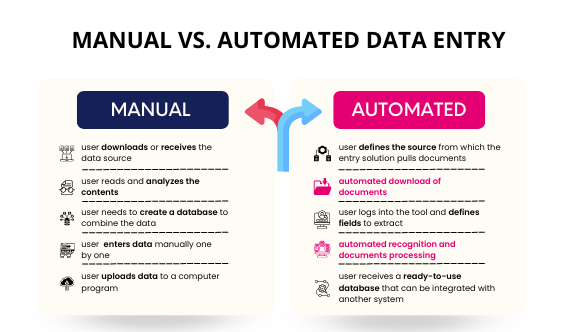
automation of extraction and entry into database; extracting information from financial sources

Machine Learning Algorithms

identifying patterns and anomalies in financial data for forecasting.

Big Data Analytics

analysis of large quantities of data from different financial sources.

Blockchain Technology

ensuring the secure and transparent transaction of financial information.

AI Data Scraping Tools

collecting real-time financial data from website and other internet sources.[4]

Market Entry

Dynamic Pricing Models Powered by AI

  • Dynamic pricing models use real-time data and sophisticated algorithms to dynamically change pricing based upon customer demand, competitor-escalated discount levels, and other market variables.
  • AI capabilities permit the analysis of both customer purchasing behaviour patterns, as well as competitor and market-level pricing patterns to effectively determine the right price point.
  • Consequently, dynamic pricing via technology increases the company’s revenue potential, adds to its supply or value offering, and reinforces a competitive position via responsiveness to market changes.[4]

Data Quality and Ethics in AI-Based Financial Data Collection

Data Accuracy

To enable sound judgment in budget planning, organizations and individuals rely on significant financial data that must be credible, accurate, and free of error.

Data Privacy

To maintain the confidentiality of sensitive financial information from unauthorized persons, it is necessary for organizations and individuals to follow applicable privacy regulations.

Bias in Data

Organizations and individuals must understand and eliminate biases found within the financial data to provide equitable, non-biased AI-based decision-making.

Transparency

Transparent and understandable methods of collecting and analysing financial data using AI Data Collection and techniques is necessary.

Data Integrity

The financial data must be kept complete and consistent during storage and processing. [5]

Challenges in AI Financial Data Collection for Market Entry

  • A reliable and trustworthy database will provide a higher likelihood of success than an unreliable or ill-equipped database.
  • Security for databases protects businesses from financial loss due to data breaches and is an aging compliance measure by ensuring customers’ financial information continues to comply with regulations, such as GDPR.
  • The integration of various systems and services to provide users with access to their databases can create challenges [5]
Financial & Pricing

Future Trends in AI for Financial & Pricing Data Collection

  • Predictive Models to Determine Prices and Shifts in Markets: AI will augment existing Prediction Programs, which help organizations make changes to their Strategy based on Real-Time Market Data.
  • Data Assembly and Custom Pricing Models: AI will Primitively Automate the Collection of Financial Data to allow for the Creation of Custom Pricing Models for Clients.

Conclusion

In conclusion, businesses can benefit from analysing financial data using AI to gain insights for their pricing models and digital execution strategies- as well as have access to real-time information about competitors and emerging markets.

Companies can take advantage of AI technology to improve the quality of their strategic development, achieve superior performance over competitors, and achieve sustainability in the fast-changing business world.

“Turn Data into Action with StatsWork. Collect Smarter, Lead Stronger!”

References

  1. Shukla, S., Singh, J., Nassa, V. K., Saba, M., Bhatia, J., & Elangovan, M. (2024, August). Artificial Intelligence driven Deep Learning for Competitive Intelligence to enhance Market Analysis and Strategic Positioning. In 2024 4th Asian Conference on Innovation in Technology (ASIANCON)(pp. 1-5). IEEE. https://ieeexplore.ieee.org/abstract/document/10838208
  2. Eliashberg, J., & Jeuland, A. P. (1986). The impact of competitive entry in a developing market upon dynamic pricing strategies. Marketing science5(1), 20-36. https://pubsonline.informs.org/doi/abs/10.1287/mksc.5.1.20
  3. Kaushik, S. (2024). The rise of AI-powered competitive intelligence: Transforming market analysis. Blockchain and AI in Business, 112. https://www.researchgate.net/profile/Saroj-Jha-11/
  4. Bernatska, N., Dzhumelia, E., Kochan, O., & Salamon, I. (2025). Digital Economy and Smart Financial Management: Using AI Tools for Financial Literacy. In Artificial Intelligence, Medical Engineering and Education(pp. 158-167). IOS Press. https://www.researchgate.net/profile/Ivan-Salamon/publication/390725459.
  5. Alamäki, A., Mäki, M., & Ratnayake, R. M. (2019). Privacy concern, data quality and trustworthiness of AI-analytics. Proceedings of Fake Intelligence Online Summit 2019. https://www.theseus.fi/handle/10024/226461

Contact us