
- Services
- Data Analysis services
- Sample Work
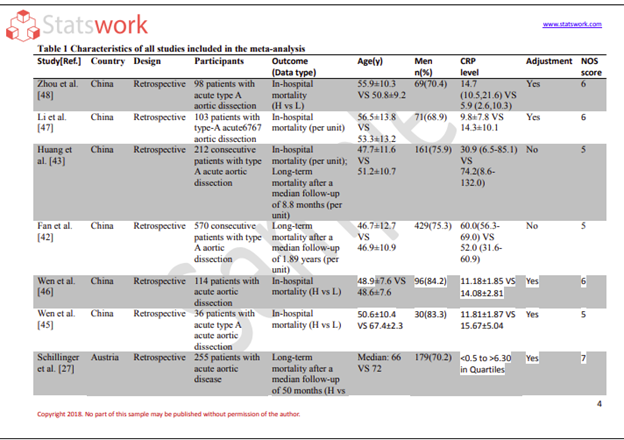
Data Analysis services
- Secondary Qualitative Research Services
- Secondary Quantitative Research Services
- Meta-Analysis Research services
- Sample Work
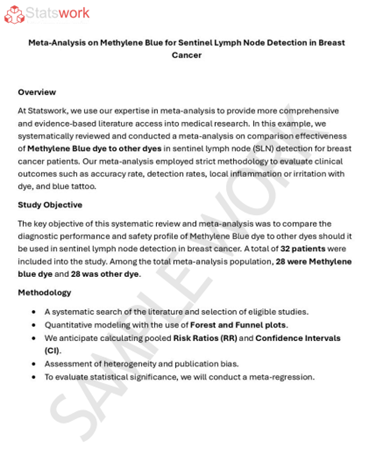
Meta-Analysis Research Services
- Data Collection Services
- Sample Work
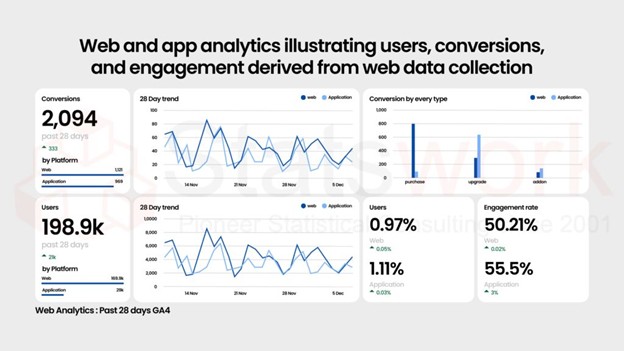
Data Collection Services
- Statistical & Biostatistics services
- Sample Work
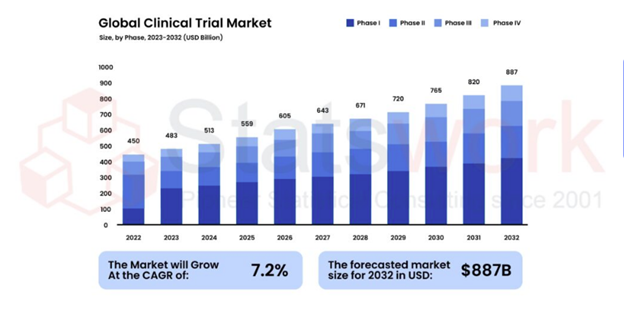
Statistical Programming & Biostatistics services
- Data Management Services
- Sample Work
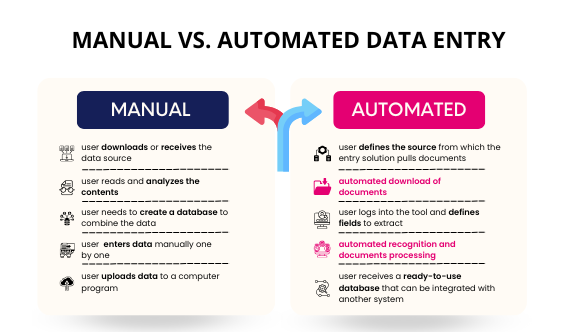
Data Management Services
- Research methodology services
- Sample Work
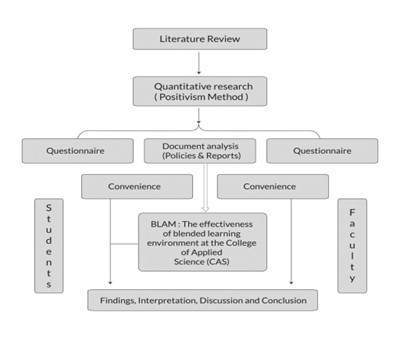
Research methodology services
- Tool Development Services
- Sample Work
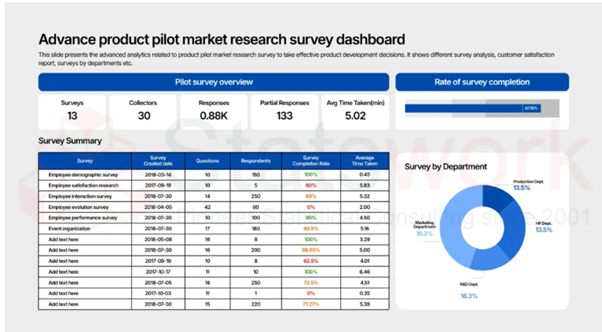
Tool development services
- Statistical Interpretation services
-
Statistical Interpretation services
- Sample Work
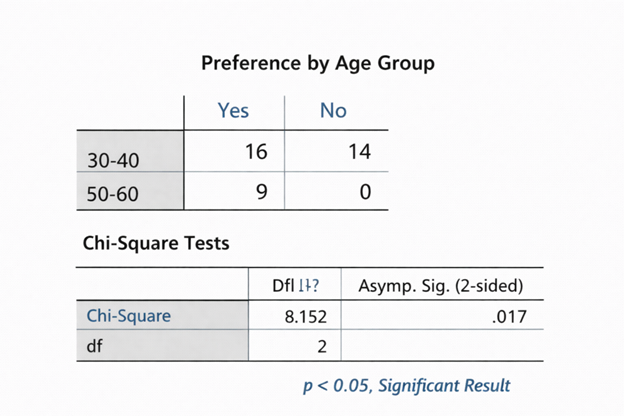
Statistical Interpretation services
-
- Sample Size Calculation Services
-
Sample Size Calculation Services
- Sample Work
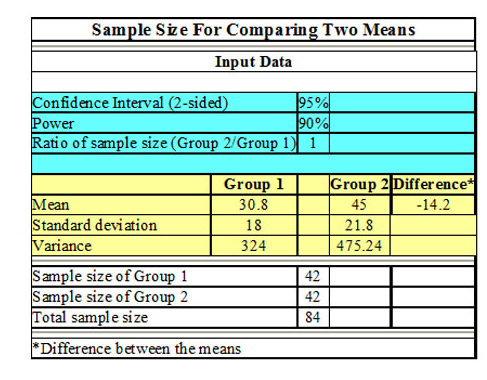
Sample Size Calculation Services
-
- AI & ML Services
-
Artificial Intelligence and Machine Learning Services
- Sample Work
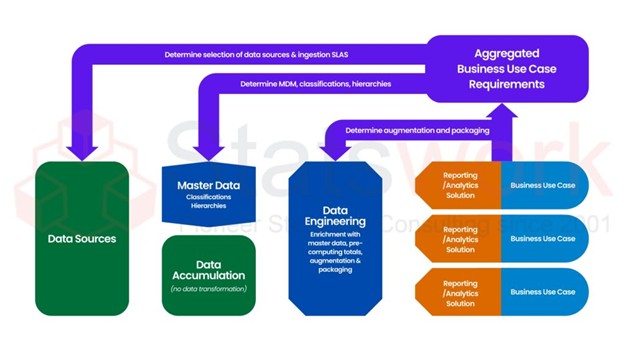
Artificial Intelligence and Machine Learning Services
-
- Meaningful Visualization Services
- Thought Leadership Services
- Report Generation Services
-
Report generation Service
- Sample Work
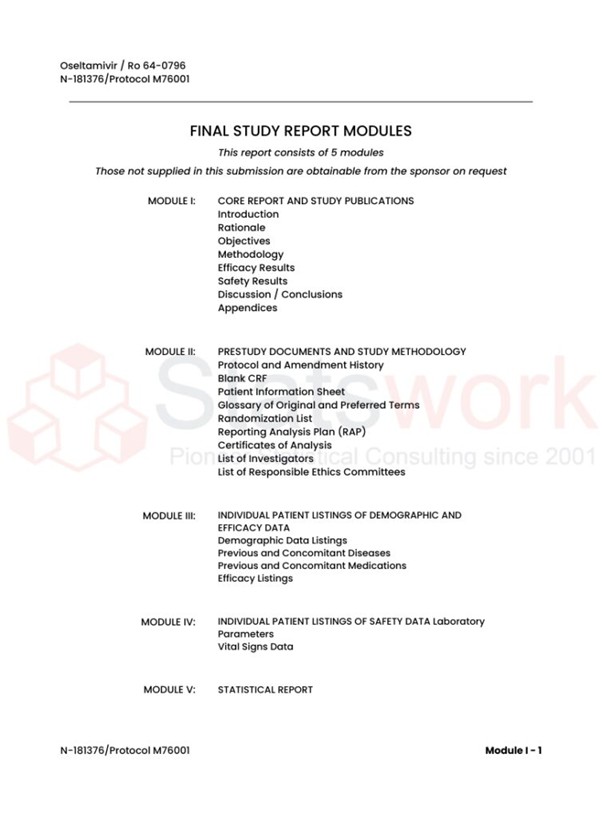
Report generation Services
-
- Data Analysis services
- Industries
- About Us
- Blog
- Insights
- Contact Us
- Services
- Data Analysis services
- Sample Work
Data Analysis services
- Secondary Qualitative Research Services
- Secondary Quantitative Research Services
- Meta-Analysis Research services
- Sample Work
Meta-Analysis Research Services
- Data Collection Services
- Sample Work
Data Collection Services
- Statistical & Biostatistics services
- Sample Work
Statistical Programming & Biostatistics services
- Data Management Services
- Sample Work
Data Management Services
- Research methodology services
- Sample Work
Research methodology services
- Tool Development Services
- Sample Work
Tool development services
- Statistical Interpretation services
-
Statistical Interpretation services
- Sample Work
Statistical Interpretation services
-
- Sample Size Calculation Services
-
Sample Size Calculation Services
- Sample Work
Sample Size Calculation Services
-
- AI & ML Services
-
Artificial Intelligence and Machine Learning Services
- Sample Work
Artificial Intelligence and Machine Learning Services
-
- Meaningful Visualization Services
- Thought Leadership Services
- Report Generation Services
-
Report generation Service
- Sample Work
Report generation Services
-
- Data Analysis services
- Industries
- About Us
- Blog
- Insights
- Contact Us
Top 10 Machine Learning Algorithms in 2026 for Enterprises
Meta Analysis Service
Recommended Reads
Contact us
Summary:
Machine learning, nowadays, is an integral part of enterprise competitiveness in 2026: businesses have obtained 30-45% growth in terms of operational efficiency and 35% year-over-year revenue growth after having adopted ML solutions. The blog post covers ten different machine learning algorithms from Random Forests and XGBoost to LSTMs with use cases and ROI examples for Financial Services, Healthcare, Retail, and Manufacturing sectors, including $2.3B fraud prevention and $340M revenue optimization use case
The article describes the iterative process of implementing ML in business through a prioritized set of stages: Evaluation, Trial, Production, and Scaling. It provides concrete examples of ROI, which vary between industries but reach up to 800% in some cases. StatsWork advises starting with the business problems first and then thinking of the appropriate machine learning solutions and implementations to obtain sustainable competitive advantages
Now, in 2026, the use of machine learning algorithms has become widespread across enterprises to remain competitive. Companies using these algorithms have reported a 30-45% boost in operational efficiency, up to 25-40% decrease in expenses, and an increase in revenue of 35% per annum. Moreover, during the period studied, 78% of enterprises used machine learning to achieve specific goals, as reflected in their 2026 reports.
Top Machine Learning Algorithms for Business
Supervised Learning Algorithms
Decision Trees & Random Forests
Retail companies utilize Random Forests in order to predict churn. One such company, a major chain, managed to identify 25,000 at-risk customers, which saved them $12M per year with 87% accuracy. The algorithm is great at implementing business logic and requires less data preprocessing [1].
Support Vector Machines (SVM)
A global bank used SVM to reduce fraud successfully. The SVM helped the large international bank to avoid losses worth $47 million yearly with 94 percent accuracy. SVMs are appropriate for two-class classification issues with high-dimensional data with a very minimal percentage of false positives.
Gradient Boosting (XGBoost & LightGBM)
E-commerce Retailers Use XGBoost to Predict Customer Value and Optimize Pricing and One Realized an Additional $340M in Annual Revenue from Real-Time Personalization With Sub-100ms Inference Latency.
Logistic Regression
Enterprise SaaS companies utilized logistic regression in order to score their leads. This had a +45 increase in sales productivity, -15-day contraction of the sales cycle, and +$25M in annual revenue. Simple, interpretable, and business-friendly.
Unsupervised Learning Algorithms
K-Means Clustering
Global CPG manufacturers segmented their customers into 6 groups (budget-minded, premium-oriented, eco-conscious, etc.) [2], increasing ROI of their marketing campaigns by 23% and customer retention by 35%. Telecom operators applied K-Means algorithm to optimize network infrastructure and reduced capital expenditures by $85M.
Deep Learning Algorithms
Convolutional Neural Networks (CNN)
E-commerce companies utilized Convolutional Neural Networks for product photo verification, thus, removing the need for quality assurance and saving $400K per year with 96.2% accuracy rate.
Recurrent Neural Networks (LSTM)
LSTM-based demand forecasting in supply chains leads to an 8.2% lower Mean Absolute Percentage Error (vs. 14.5% in conventional approaches), cutting inventory costs by 18% and raising fill rates by 12% [3].
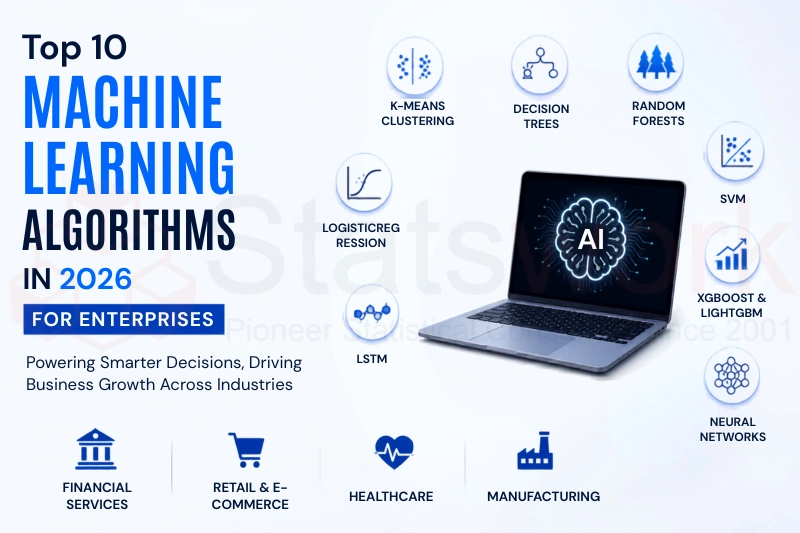
Real-World Industry Use Cases
Financial Services
Fraud Detection: $2.3B annually prevented using Random Forest & Neural Networks
Credit Risk: 5-day approval process cut to 4 hours using XGBoost & SVM
Loan Default: 89% accuracy predicted and reported with regulatory compliance using Gradient Boosting
Healthcare
- Patient risk stratification identifies 15-20% of patients responsible for 80% of costs (SVM).
- Disease diagnosis achieves 95%+ accuracy with 30% reduction in radiologist error (CNN).
- Predictive maintenance reduces equipment downtime by 35% (LSTM).
Retail & E-Commerce
- Product recommendations: increased conversion rate by 25–35% and AOV by 18% (Collaborative Filtering)
- Inventory optimization: decreased inventory costs by 20%, achieved fill rates of over 95% (XGBoost)
- Customer segmentation: boosted ROI of email campaigns by 40% (K-Means)
Manufacturing
Industrial IoT Use Cases and Benefits
Use Case Benefit ML Algorithm
- Predictive Maintenance 45% decrease in equipment failure, 30% lower maintenance costs LSTM
- Quality Control 99%+ defect detection rate, 65% reduction in rework CNN
- Supply Chain Optimization 18% reduction in logistics costs, 5-7 day shorter delivery times XGBoost
Algorithm Comparison Table
| Algorithm | Best For | ROI | Time | Use Case |
| Decision Trees | Structured data, interpretability | 8/10 | 2-3 weeks | Churn prediction |
| Random Forest | Complex patterns, accuracy | 9/10 | 3-4 weeks | Risk assessment |
| SVM | High-dimensional, binary classification | 8.5/10 | 4-6 weeks | Fraud detection |
| K-Means | Unsupervised grouping | 9/10 | 2-3 weeks | Customer segmentation |
| XGBoost | High-accuracy predictions | 9.5/10 | 4-8 weeks | Revenue optimization |
| LightGBM | Large-scale datasets, speed | 9.5/10 | 3-6 weeks | Real-time scoring |
| Neural Networks | Complex patterns, images | 8.5/10 | 8-12 weeks | Predictive maintenance |
Implementation Roadmap
Phase 1: Evaluation (Week 1-4)
- Examine data architecture
- Determine 3-5 use cases that have high impact
- Financial return calculation
Phase 2: Trial (Week 5-12)
- Creation of baseline model
- Accuracy testing
- Development of proof of concept
- Investment: $75,0
Phase 3: Production (Weeks 13 – 20)
- Deployment to production
- Monitoring
- Stakeholder training [3]
Phase 4: Scaling (Months 6+)
Re-training every month
- New use case expansion
- Building MLOps infrastructure
Expected Business Outcomes
| Industry | Investment | ROI |
|---|---|---|
| Financial Services | $500K-$5M | 400-800% |
| Retail/E-Commerce | $300K-$3M | 300-700% |
| Healthcare | $400K-$6M | 250-600% |
| Manufacturing | $300K-$4M | 350-750% |
Key Insight: Mature ML programs (3+ years) achieve 8-15x cumulative ROI.
Conclusion
The use of machine learning algorithms is no longer experimental in nature, but rather mandatory. Companies that have used such algorithms have experienced an increase in their revenues of 3-12%, reduction in costs by 15-40%, and 50-80% automation of processes.
Here’s how the best applications of such algorithms look like:
- Start from the business problem, not from algorithms
- Use supervised learning for 80% of the enterprise value creation
- See the return on investment within 4-6 weeks
- Prioritize explanation over accuracy
- Systematically build up your capabilities
Ready to transform your business? Schedule a consultation with Statswork ML experts to assess your ML readiness, identify high-impact use cases, and develop your implementation roadmap.
Frequently Asked Questions (FAQs)
The top 10 include Linear Regression, Logistic Regression, Decision Trees, Random Forest, SVM, KNN, Naive Bayes, K-Means, PCA, and Neural Networks.
Popular projects include recommendation systems, fraud detection, sentiment analysis, image classification, chatbots, sales forecasting, customer churn prediction, and predictive maintenance.
The seven common types are sorting, searching, graph, dynamic programming, recursive, backtracking, and divide-and-conquer algorithms.
There is no single best algorithm; the right choice depends on the dataset, business problem, features, and required performance.
Yes, you can learn the fundamentals of machine learning in three months with consistent practice, covering Python, statistics, algorithms, and practical projects.
The best algorithm depends on the specific problem, data characteristics, accuracy requirements, interpretability, and computational resources.
References:
- Pal, T. (2025). Machine Learning for Fraud Detection in Enterprise Financial Systems. American Journal of Advanced Technology and Engineering Solutions, 1(02), 304-318. https://ajates-scholarly.com/index.php/ajates
- Djunaidy, A. (2026). From data to decisions: The impact of machine learning on business transformation. Procedia Computer Science, 284, 3-10. https://www.sciencedirect.com
- Li, H., Li, H., Shi, W., & Wu, Y. J. (2026). Enterprise efficiency analysis based on explainable artificial intelligence: From predictive algorithms to mechanisms. Information Processing & Management, 63(5), 104666. https://www.sciencedirect.com/