

Why Statistical Result Interpretation Is Important in Meta Analysis
- Home
- Insights
- Article
- Why Statistical Result Interpretation Is Important in Meta Analysis
Qualitative Research Service
News & Trends
Recommended Reads

Data Collection
As the data collection methods have extreme influence over the validity of the research outcomes, it is considered as the crucial aspect of the studies
- 1. Introduction
- 2. DeepHealth’s Diagnostic Suite™: Revolutionizing Radiology Workflows
- 3. Key Features
- 4. AI Impact on National Screening Programs
- 5. SmartMammo™: Enhancing Breast Cancer Screening
- 6. DeepHealth AI Use Cases Across Specialties
- 7. Strategic Collaborations and Ecosystem Expansion
- 8. Impact and Adoption of DeepHealth’s AI Solutions
- 9. Conclusion: The Future of Radiology with AI
- 10. References
Introduction
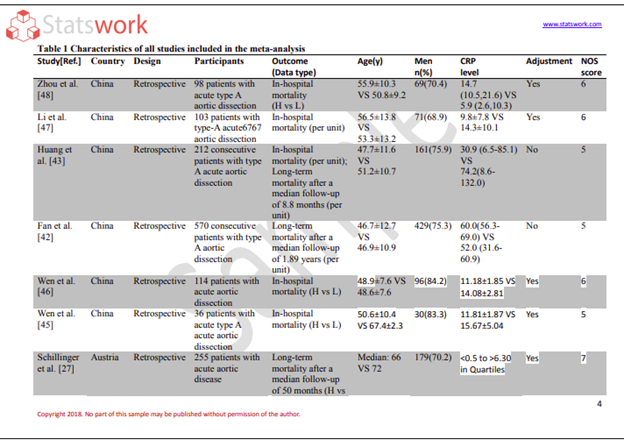
Meta-analysis is among the most efficient research tools used to integrate the outcomes of various studies to make more accurate findings. This type of research technique is commonly utilized by researchers in healthcare, social sciences, business, engineering, education, and other fields for evaluating the available evidence on a particular issue. Nevertheless, the efficiency of meta-analysis is not related to finding the necessary studies or conducting statistics but rather to their correct interpretation.
Correct interpretation of statistical results of meta-analysis provides an opportunity for researchers to comprehend the cumulative impact made by several studies. In addition, correct interpretation allows drawing appropriate conclusions and making evidence-based decisions. Therefore, knowledge of how to interpret statistics obtained through meta-analysis is important for researchers, academicians, and professionals working in the field of systematic reviews.
Understanding Statistical Interpretation in Meta Analysis
Meta-analysis refers to a process where data is collected from multiple independent studies and analyzed using statistics. Meta-analysts aim at determining an overall effect size, which reflects the outcomes generated by all studies incorporated in the analysis. Statistical interpretation refers to the evaluation of the results obtained to assess their significance, direction, magnitude, and reliability.
Some key statistical measures used during this process include the overall effect size, confidence intervals, p-value, heterogeneity, forest plot, funnel plot, and publication bias. These elements contribute significantly to the interpretation process, which helps in determining whether an effect is significant enough.
A significant effect, for instance, indicates that the intervention or treatment under study is effective. It is important, however, for analysts to determine whether the effect size is clinically significant and whether there is sufficient consistency among the studies included.
Importance of Statistical Interpretation in Identifying Overall Effects in Meta Analysis
| Aspect | Description |
| Overall Effect Identification | Statistical interpretation in meta-analysis enables scientists to understand the overall effect of the studies. |
| Differences in Individual Study Findings | These differences could occur owing to the sample used, methodology, or data gathering methods in each study. |
| Importance of Statistical Interpretation | It assists in determining the overall effect of the research as positive, negative, or insignificant. |
| Increased Quality of Evidence | The combination of the interpreted findings leads to improved quality of evidence compared to a single study. |
| Scientific Research Reliability | Interpretation ensures scientific research reliability and accuracy . |
Supporting Evidence-Based Decision-Making
Meta-analyses find their place in evidence-based research and analysis. Clinical scientists and healthcare professionals often apply the outcomes of their meta-analysis studies to support further decision-making processes.
Statistical interpretation allows making sure that the decisions are based on sound evidence. For example, the right interpretation of the confidence intervals and effect sizes may help establish whether the effects yielded by a certain treatment are clinically relevant .
Thus, statistical interpretation acts as a mediator between the data provided by statistics and decision-makers.
Evaluating Consistency Among the Included Studies
- Meta-analysis aids in assessing heterogeneity among the included studies.
- Heterogeneity means the degree of difference that exists among research studies.
- Such differences can arise from different participant factors, research approaches, or even geographic locations.
- Statistical analysis will assist researchers in understanding how such differences can impact the general outcome.
- Heterogeneity measures are important for evaluating heterogeneity among studies.
- Low heterogeneity values mean high consistency among studies.
- High heterogeneity values mean low consistency among the studies.
- Interpretation of heterogeneity can improve the validity of meta-analysis results.
The proper interpretation of heterogeneity assists the researcher in determining the right statistical models to employ. Moreover, through proper interpretation, the researcher may be able to determine the possible sources of inconsistency in the different studies.
Assists in Detecting Publication Bias
Publication bias can be described as the situation whereby studies reporting significant or positive results are given priority in publishing. Therefore, the presence of publication bias tends to have implications on the results of the meta-analysis.
Increases Research Transparency and Credibility
The correct interpretation of statistics enhances research transparency and credibility. Academic readers and reviewers alike expect accurate statistical interpretations to be provided by researchers.
Interpretation of statistical results in a practical manner makes it possible for researchers to confidently convey their findings to their audience. The findings’ implications can then be easily understood by the readers.
The process enhances scientific communication while at the same time ensures that the findings are evidenced-based rather than assumption-based. This is important in dissertations, scholarly articles, and systematic reviews.
Enhancing Research Reporting
- Statistical interpretation should be accurate to ensure proper research reporting.
- Meta-analysis involves advanced statistical processes that need to be explained correctly.
- The results of statistical analysis are useful only after proper interpretation.
- Interpretation of forest plots, effect sizes, confidence intervals, and p-values should be done effectively.
- Correct interpretation makes it easy for individuals from various professions to comprehend the results of a study.
- Accurate statistical reporting leads to better research reporting.
- Accurate interpretation of statistical results increases the chances of acceptance by peer-reviewed journals.
- Most journal reviewers pay attention to the interpretation of statistics while reviewing research papers.
Conclusion
Statistical analysis is among the most significant factors in conducting research through meta-analysis. Interpretation provides the necessary insight to determine the validity of the study, check consistency, identify publication bias, and generate credible conclusions. Effective interpretation of statistical analysis results ensures the production of credible data that can be used in making informed decisions.
Failure to conduct effective interpretation may make the meta-analysis findings misleading and invalid, thereby limiting the significance of the research. Researchers should be able to interpret statistical analysis results effectively to enhance the validity of their research projects through meta-analysis.
Due to the growing importance of meta-analysis in several fields, the requirement for efficient interpretation of the statistical results will remain significant for conducting good research. Statswork offers professional in Meta Analysis Research services that can help researchers interpret statistical results, conduct research using evidence-based studies, check for publication bias and report their findings accurately.
References
- Tahir, S. Tenbholen and S. Miyazaki, “Analysis of Statistical Methods for Assessment of Power Transformer Frequency Response Measurements,” in IEEE Transactions on Power Delivery, vol. 36, no. 2, pp. 618-626, April 2024, doi