


What is FDA and its Importance?
- Home
- Insights
- Article
- What is FDA and its Importance?
Qualitative Research Service
News & Trends
Recommended Reads

Data Collection
As the data collection methods have extreme influence over the validity of the research outcomes, it is considered as the crucial aspect of the studies
- 1. Introduction
- 2. DeepHealth’s Diagnostic Suite™: Revolutionizing Radiology Workflows
- 3. Key Features
- 4. AI Impact on National Screening Programs
- 5. SmartMammo™: Enhancing Breast Cancer Screening
- 6. DeepHealth AI Use Cases Across Specialties
- 7. Strategic Collaborations and Ecosystem Expansion
- 8. Impact and Adoption of DeepHealth’s AI Solutions
- 9. Conclusion: The Future of Radiology with AI
- 10. References
To ensure the health of the public and to maintain consumer confidence, there is a need for strict regulation of drugs, vaccines, food, and medical devices. In the United States, the Food and Drug Administration (FDA) plays this critical role by regulating everyday products, setting standards for safety, and providing guidelines for development and research, while also promoting innovation and maintaining high standards of quality and efficacy.[1]
Regulatory Responsibilities of the FDA
The FDA is an important agency that safeguards public health by regulating a broad spectrum of products to ensure safety, quality, and reliability. The main functions of the FDA include:
- Drug and Medical Device Approval: The FDA examines and approval of new drugs and medical devices after rigorous testing to ensure they are safe, effective, and reliable for public use.
- Food Safety Monitoring: It oversees the food chain to ensure that the food we eat is safe and healthy by preventing contamination, adulteration, or harmful additives in the food chain.
- Accurate Product Labelling: The FDA strictly enforces labeling requirements so that consumers have accurate information about the products they use.
- Adverse Effect Tracking and Recalls: The FDA continues to monitor the products even after they are on the market and can order a recall if they pose a potential threat to consumers.[2]
Importance of the FDA for Product Safety and Compliance
- The FDA is very important in the aspect of ensuring public health and gaining consumer trust in products. Its importance can be outlined as follows:
- Health Protection: Prevents harmful drugs and contaminated food from reaching the consumer.
- Product Quality: Enforces production standards for consistency and safety.
- Consumer Confidence: Empowers products to be reliable and effective.
- Encouraging Innovation: Offers regulatory guidelines for new drugs.
- Health Protection: Prevents harmful drugs, food, and medical devices from reaching the consumer.
- Product Quality: Enforces strict safety and production standards for products.
- Consumer Confidence: Gains consumer trust by ensuring products are safe, effective, and reliable.
- Encouraging Innovation: Aids in the development of new drugs and medical technologies.[3]
Overview of the FDA Drug Approval Process
The FDA uses a formal process to establish drug safety and effectiveness both prior to and following drug approval,
- Preclinical Testing: Initial laboratory and animal studies are performed to assess the drug’s safety and biological effects.
- Clinical Trials: Drug safety, dosage, and efficacy are determined through a series of human clinical trials.
- FDA Review: All clinical trial and manufacturing information is reviewed by the FDA prior to drug approval.
- Post-Market Surveillance: Ongoing monitoring of the drug’s safety, side effects, and long-term risk is performed after drug approval.[4]
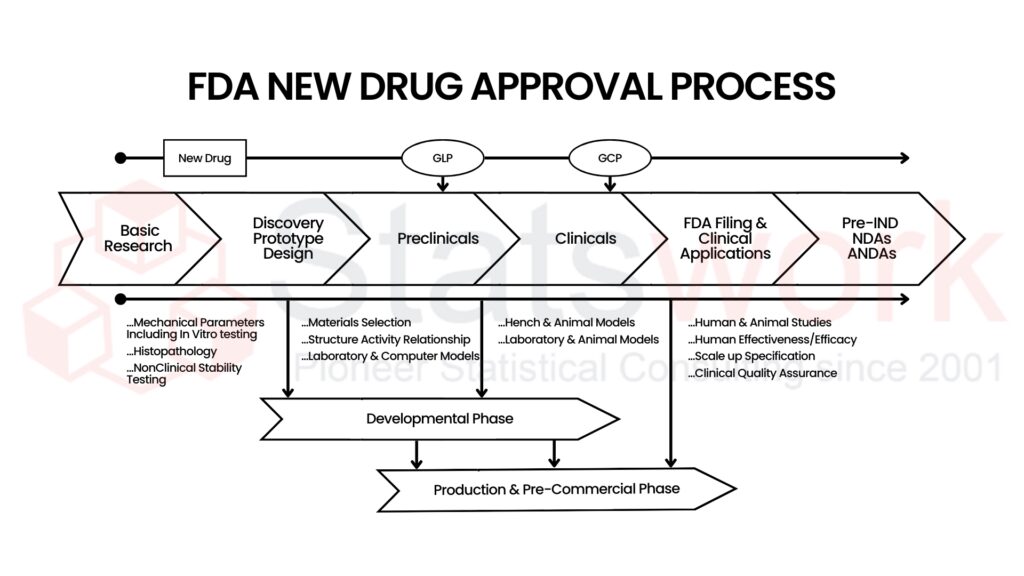
Fig 1 shows the key stages of the FDA new drug approval process from research to regulatory approval.
FDA’s Role in Food and Medical Device Regulation
The FDA is responsible for protecting the public by regulating food and medical products to ensure the health and safety of the public.
- Food Safety Monitoring: Regulates all aspects of food production, packaging and distribution, to help prevent contamination.
- Food Safety Standards: Establishes requirements to ensure foods are properly handled and labeled accurately.
- Medical Device Approval: Reviews and approves medical devices before they enter the marketplace.
- Patient Safety: Ensures medical devices are safe and effective for their intended use.[5]
In conclusion, The FDA protects the public’s health by safeguarding the safety, quality, and efficacy of foods, drugs, and medical products through developing consumer confidence and fostering research and development policies and regulatory reviews.
Turn FDA-ready data into confident decisions with StatsWork’s biostatistics services for accurate and compliant research.
Reference
- Borchers, A. T., Hagie, F., Keen, C. L., & Gershwin, M. E. (2007). The history and contemporary challenges of the US Food and Drug Administration. Clinical therapeutics, 29(1), 1-16. https://www.sciencedirect.com/science/article/pii/S0149291807000203
- Oria, M., & Wallace, R. B. (Eds.). (2010). Enhancing food safety: the role of the Food and Drug Administration. https://books.google.com/books?
- McKee, A. E., Farrell, A. T., Pazdur, R., & Woodcock, J. (2010). The role of the US Food and Drug Administration review process: clinical trial endpoints in oncology. The oncologist, 15(S1), 13-18. https://academic.oup.com/oncolo/article-abstract/15/S1/13/6398976
- Lipsky, M. S., & Sharp, L. K. (2001). From idea to market: the drug approval process. The Journal of the American Board of Family Practice, 14(5), 362-367. https://www.jabfm.org/content/14/5/362.short
- Johnson, J. A. (2012, June). FDA regulation of medical devices. https://a51.nl/sites/default/files/pdf/R42130.pdf