
What is Statistical Analysis?
- Home
- Insights
- Article
- What is Statistical Analysis?
Qualitative Research Service
News & Trends
Recommended Reads
Data Collection
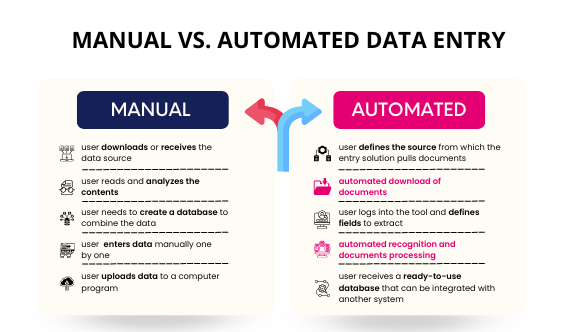
As the data collection methods have extreme influence over the validity of the research outcomes, it is considered as the crucial aspect of the studies
- 1. Introduction
- 2. DeepHealth’s Diagnostic Suite™: Revolutionizing Radiology Workflows
- 3. Key Features
- 4. AI Impact on National Screening Programs
- 5. SmartMammo™: Enhancing Breast Cancer Screening
- 6. DeepHealth AI Use Cases Across Specialties
- 7. Strategic Collaborations and Ecosystem Expansion
- 8. Impact and Adoption of DeepHealth’s AI Solutions
- 9. Conclusion: The Future of Radiology with AI
- 10. References
Statistical analysis is a systematic way of looking at numbers to identify important patterns and insights. Statistical analysis is an important tool in research, business, and scientific communities because it helps to turn raw data into valuable knowledge.[1]
Data Handling as the Basis for Statistical Analysis
Statistical analysis begins with the establishment of a solid data foundation that enables correct interpretation and sound conclusions. Data handling enables the generation of results that are both reliable and valid.
- Data accuracy and consistency: This ensures that errors, duplicates, and missing data are corrected before analysis.
- Data classification: This involves the organization of data into categories or numerical forms that are amenable to analysis.
- Relevance of sampling: This involves the selection of data that is representative of the desired population.
- Data scaling: This enables variables to be compared and subjected to advanced statistical data analysis.
A solid data foundation has a direct bearing on the validity of statistical analysis in research and studies.[1]
Analytical Techniques and Measurement
Once the data is prepared, various analytical methods are used to derive valuable information. Various statistical analysis methods are used to describe, compare, and explain the patterns of the data.
- Descriptive measurements: The data is summarized using averages, dispersion, and distribution patterns.
- Comparative evaluation: It analyzes the differences between various groups or conditions.
- Trend identification: It identifies patterns over time for forecasting and planning.
- Quantitative data analysis: It translates numerical data into measurable information for objective analysis.
These methods ensure that the analysis of data is done in a systematic and transparent manner.[2]
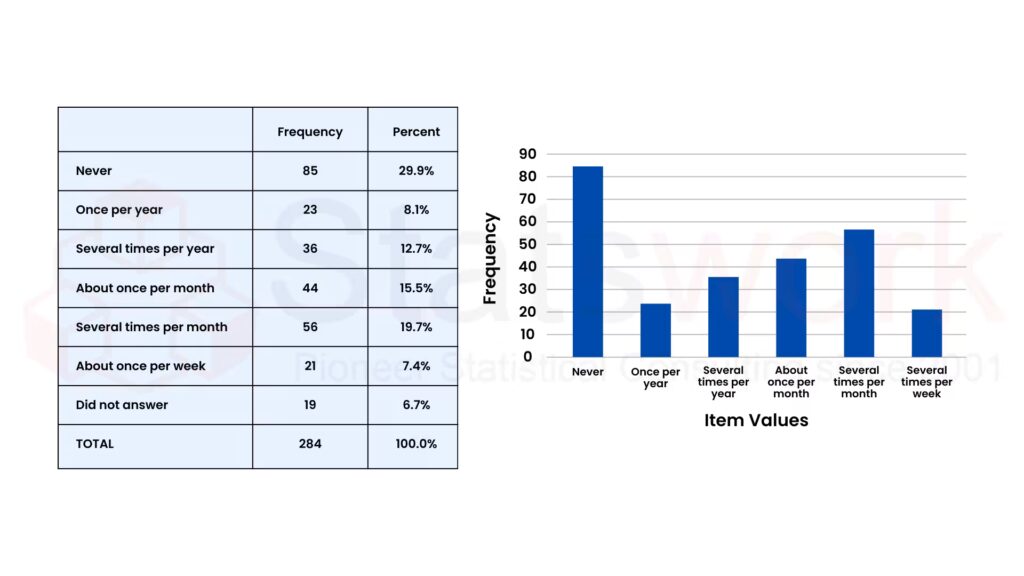
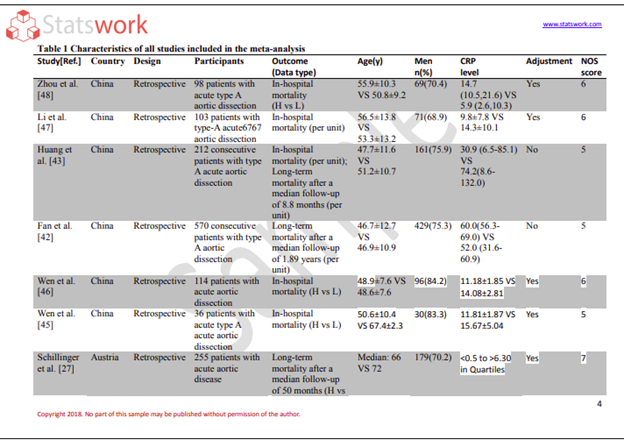
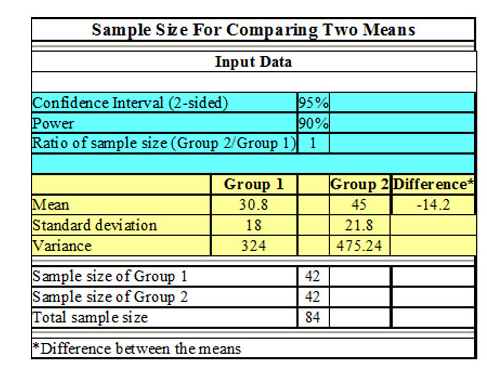
Fig 1 shows a statistical analysis of response frequencies, with counts and percentages across various time intervals.
Widely Used Statistical Analysis Methods
Statistical analysis techniques depending on the objectives of the study and the nature of the data. The following table illustrates some of the common techniques of analysis and their applications.
Approach | Description | Typical Use |
Descriptive Analysis | Summarizes data using numerical and graphical methods | Understanding data patterns |
Inferential Analysis | Draws conclusions about a population based on sample data | Generalizing findings |
Predictive Modeling | Uses variable relationships to predict results | Forecasting trends |
Relationship Analysis | Examines relationships between variables | Studying dependencies[3] |
Inferential Analysis for Valid Decision-Making
Inferential reasoning enables researchers to go beyond observation and make decisions based on evidence.
- Formulation of hypothesis: This involves making assumptions to be tested objectively.
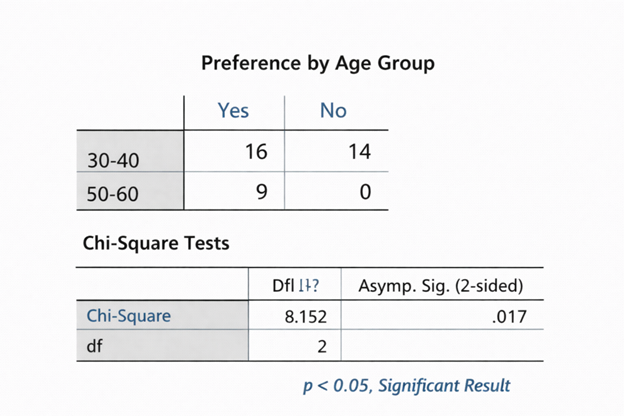
- Hypothesis Testing: This helps determine if the outcome is statistically significant.
- Estimation of confidence: This helps determine the reliability of the outcome.
- Error control: This helps prevent the possibility of reaching a false conclusion when analyzing data.
All this helps ensure that the conclusion reached is based on sound statistical evidence.[4]
Statistical Modelling for Prediction and Insight
Variable interaction knowledge improves prediction and decision-making. Regression analysis is widely used to analyze relationships and predict outcomes.
- Relationship Measurement: Determines the effect of independent variables on outcomes.
- Prediction Modeling: Predicts future outcomes using existing information.
- Impact Evaluation: Determines the strength and direction of variable influence.
- Research Application: Validates theories in research.
This modeling improves statistical analysis by linking data to its implications.[5]
In Conclusion, Statistical analysis is a reliable tool for data interpretation and decision-making. By using structured statistical data analysis, quantitative data analysis, and well-established statistical methods in research, complex data is converted into meaningful information that helps to move forward in various fields.
Make data-backed decisions faster with StatsWork’s Biostatistics services, built on robust statistical analysis you can trust.
Reference
- Dixon, W. J., & Massey Jr, F. J. (1951). Introduction to statistical analysis. https://psycnet.apa.org/record/1951-07185-000
- Linnet, K., & Boyd, J. C. (2014). Selection and analytical evaluation of methods-with statistical techniques. Burtis CA, Bruns DE, editors. Tietz Fundamentals of Clinical Chemistry and Molecular Diagnostics. 7th ed. St. Louis, Missouri, USA: Elsevier Saunders, 6-32. https://books.google.com/books?hl=en&lr=&id=p7XwAwAAQBAJ&oi=fnd&pg=PA6&dq=statistical+analysis+-+Analytical+Techniques+and+Measurement&ots=jo-0gnTe-z&sig=YJ3R678IIN8U8eTTm0L0fYC2HYU
- Lista, L. (2017). Statistical Methods For Data Analysis. Lecture Notes in Physics (Apr. 2023). https://link.springer.com/content/pdf/10.1007/978-3-031-19934-9.pdf
- Greig, I. D. (1979). Validation, statistical testing, and the decision to model. Simulation, 33(2), 55-60. https://journals.sagepub.com/doi/abs/10.1177/003754977903300204
- Popescul, A., & Ungar, L. H. (2003, August). Statistical relational learning for link prediction. In IJCAI workshop on learning statistical models from relational data(Vol. 2003). https://core.ac.uk/download/pdf/13599742.pdf#page=115