
Statistical Approaches to Inter-Coder Reliability Testing
- Home
- Insights
- Article
- Statistical Approaches to Inter-Coder Reliability Testing
Qualitative Research Service
- Role of Secondary Quantitative Data Collection in Power BI Analytics
- Common Sources of Secondary Quantitative Data
- Benefits of Power BI Dashboard Development PDF Tutorials and Learning Resources
- Power BI Dashboard Development Example in Quantitative Research
- Importance of Power BI Dashboard Development PDF Resources
- Power BI Dashboard Design Templates for Report Creation
- Power BI Dashboard Design Best Practices for Research Analytics
- The Future of Power BI Dashboard Development in Quantitative Research
- Conclusion
News & Trends
Recommended Reads

Data Collection
As the data collection methods have extreme influence over the validity of the research outcomes, it is considered as the crucial aspect of the studies
- 1. Introduction
- 2. DeepHealth’s Diagnostic Suite™: Revolutionizing Radiology Workflows
- 3. Key Features
- 4. AI Impact on National Screening Programs
- 5. SmartMammo™: Enhancing Breast Cancer Screening
- 6. DeepHealth AI Use Cases Across Specialties
- 7. Strategic Collaborations and Ecosystem Expansion
- 8. Impact and Adoption of DeepHealth’s AI Solutions
- 9. Conclusion: The Future of Radiology with AI
- 10. References
Introduction
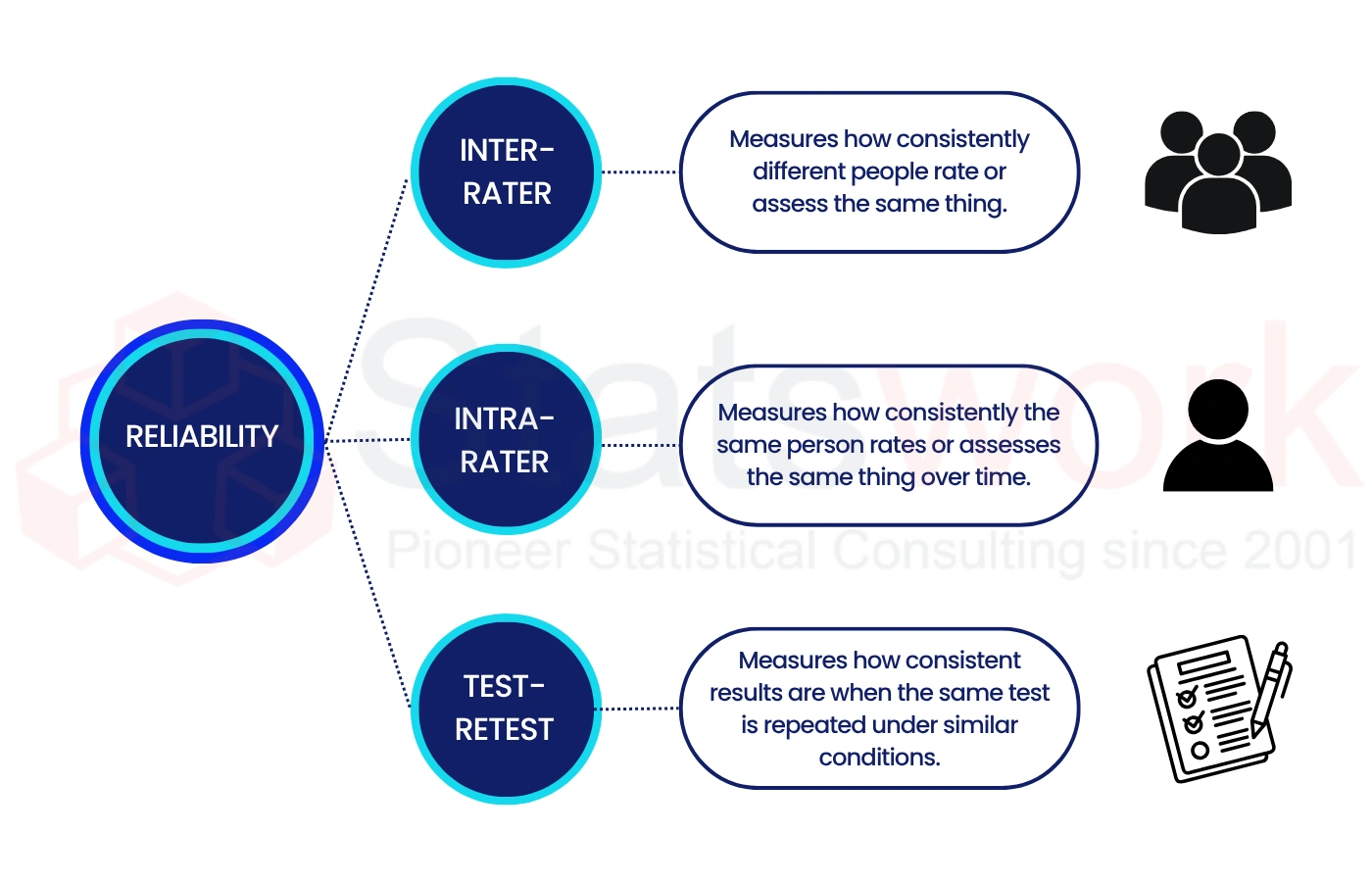
The inter-coder reliability testing tools prove crucial for research of all types including qualitative research, mixed-method research, and research methodology service. In qualitative analysis of data, multiple researchers may interpret interviews or observations differently. With inter-coder reliability testing, researchers will make sure that their coding remains reliable and objective
In healthcare, educational institutions, psychology, social science, communication studies, and even market research, experts conduct research to obtain useful data. Researchers from all these industries use inter-coder reliability tools to make their data credible through measuring the extent to which coding remains objective. The specialists working on professional research methodology usually use special software and statistics.
Apart from the qualitative research tools used for conducting data analysis, the researchers apply quantitative research tools that facilitate data collection through surveys and other tools like questionnaire, Likert scale, online form, rating scales, and standard assessments.
Importance of Inter-Coder Reliability Testing Tools
Inter-coder reliability testing software is useful to researchers in ensuring that they achieve consistency in the coding process for qualitative research. It becomes especially important where large quantities of interviews, transcripts, focus groups, observations, social media, or open-ended survey questions need analysis.
Advantages of using inter-coder reliability testing software include:
- Achieving consistency in coding by multiple researchers
- Decreasing researcher bias in qualitative data analysis
- Boosting validity and reliability of the results obtained
- Creating research methodology that is transparent and replicable
- Better quality of thematic analysis and content analysis
In research methodology, software for inter-coder reliability testing is usually suggested depending on the specifics of the research.
Common Statistical Approaches Used in Inter-Coder Reliability Testing
Several statistical approaches are commonly used to evaluate coding agreement in qualitative research
| Type of Statistical Technique | Purpose | Function/Applications |
| Cohen’s Kappa | Consider the effect of coincidence when measuring the agreement between two raters | Interviews, healthcare classification |
| Fleiss’ Kappa | Measurement of agreement among several coders | Big qualitative data sets |
| Krippendorff’s Alpha | Allows for different forms of data and the presence of missing data | Media content analysis |
| Scott’s Pi | Tests for agreement among coders, considering coincidences | Media communication |
| Percent Agreement | Measurement of exact agreement between coders | Preliminary work in qualitative research |
Statistical techniques are highly incorporated in qualitative data analysis software packages to facilitate coding validation and enhance research accuracy.
NVivo for Inter-Coder Reliability Testing
NVivo is among the most popular qualitative data analysis software packages that researchers employ for inter-coder reliability testing. NVivo enables efficient organization, coding, categorization, and analysis of qualitative data sets. The software can handle analysis of interviews, thematic coding, content analysis, and mixed methods research.
Key Features of NVivo
- Comparison of coders’ coding in queries for assessing coder reliability
- Analysis of text, audio, images, and video files
- Thematic analysis techniques
- Data visualization and reporting tools
- Combining survey data and quantitative data sets
NVivo is commonly applied in health care research, educational research, psychological research, social science research, and business analysis applications. Methodology-related services often suggest NVivo for large qualitative studies due to its sophisticated coding and reliability measurement options.
ATLAS.ti for Coding Consistency Analysis
ATLAS.ti is yet another qualitative research software that is useful for conducting inter-coder reliability testing and qualitative data analysis. This is because ATLAS.ti allows for collaborative coding and thematic analysis.
| Tool | Primary Function | Areas of Research |
| NVivo | Coding and theme identification | Health, education, psychology |
| ATLAS.ti | Collective coding and qualitative research | Social sciences, media studies |
| MAXQDA | Mixed methods analysis | Marketing, behavioral research |
| Dedoose | Online collective research | Distributed research teams |
| SPSS | Test of statistical reliability | Quantitative and mixed methods research |
Features of ATLAS.ti
- Intercoder agreement analysis
- Collaborative coding support
- Multimedia data analysis
- Research network visualization
- Flexible qualitative data management
ATLAS.ti is highly advantageous to researchers undertaking content analysis, communication studies, social sciences, and mixed methods. Intercoder agreement analysis
MAXQDA for Reliability Measurement
MAXQDA is a powerful software program that is used for inter-coder reliability assessments. The software analyzes qualitative interviews, focus groups, open surveys, and observations.
Main Features of MAXQDA
- Statistics of inter-coder agreement
- Integration of quantitative and qualitative data
- Integration of mixed methods
- Data visualization features
- Reporting
MAXQDA is widely applied in behavioral science, organizational research, health care research, and marketing research.
Statistical Reliability Testing using SPSS and R Software Packages
For complex statistical reliability tests, SPSS and R software packages are widely utilized. This software calculates statistical parameters including Cohen’s Kappa, Fleiss’ Kappa, and Krippendorff’s Alpha.
Comparison of SPSS and R Software
| Software | Strengths | Recommended for |
| SPSS | Easy-to-use interface and statistics report generation | Survey research and quantitative studies |
| R Software | Highly customizable and open source | Complex statistics |
| Dedoose | Web-based collaboration for coding | Qualitative research with team members |
| MAXQDA | Mixed method support | Behavior and market studies |
The Role of Quantitative Data Collection Tools in Reliability Research
Quantitative data collection tools have an important contribution to make to the improvement of research accuracy and statistical validation of research results. Commonly used quantitative data collection tools include:
- Questionnaire surveys
- Survey forms online
- Rating scales
- Likert scale survey instrument
- Standard assessment instruments
- Data recording form
In combination with qualitative data collection tools, like guide interview, checklist observation, and focus group discussion framework, these research instruments ensure enhanced reliability and validity of the research results.
Conclusion
Statistical methods for inter-coder reliability testing tools are crucial to achieving consistency, reliability, and validity in the process of conducting qualitative research. Software tools for evaluation of coding agreement include NVivo, ATLAS.ti, MAXQDA, Dedoose, SPSS, and R.
Professional research methodology service helps researchers choose the right inter-coder reliability testing tools as well as the appropriate statistical techniques to conduct reliable qualitative research analysis and qualitative data analysis.
Statswork offers comprehensive support for inter-coder reliability testing, qualitative research analysis, research methodology services, and qualitative data collection tools services for researchers, academicians, health professionals, and other experts across industries.
References
- Rughiniș, Ș. Matei and A. Corcaci, “Generative Content Analysis for Policy Research: Comparing LLM Reliability in Analyzing Institutional AI Discourse,” 2025 25th International Conference on Control Systems and Computer Science (CSCS), Bucharest, Romania, 2025, pp. 596-603, doi: