








"Their discriminant analysis helped us build a classification rule we could actually trust in production. The hit ratio and cross-validation results gave us complete confidence before rollout."

- Services
- Data Analysis services
-
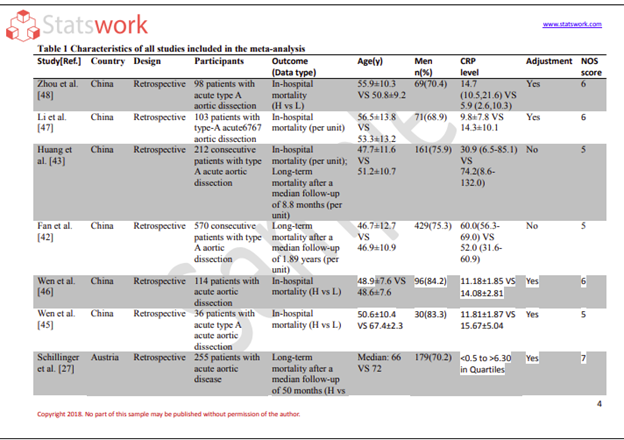
Data Analysis services
-
- Meta-Analysis Research services
-
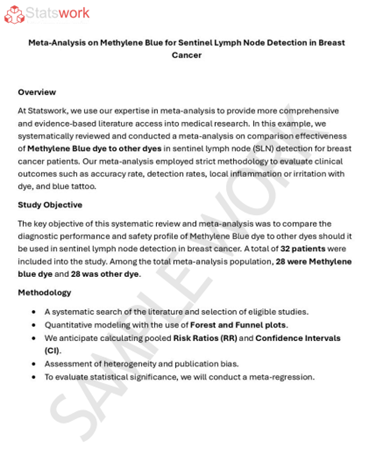
Meta-Analysis Research Services
-
- Data Collection Services
-
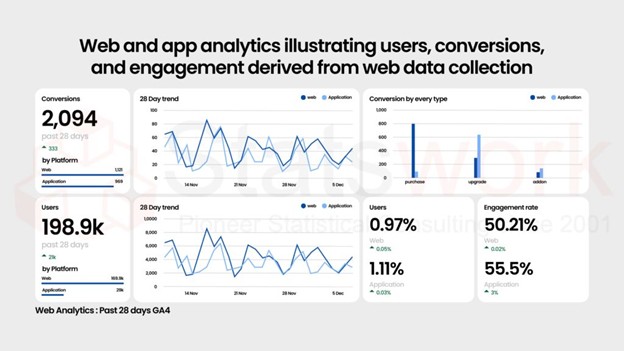
Data Collection Services
-
- Statistical & Biostatistics services
-
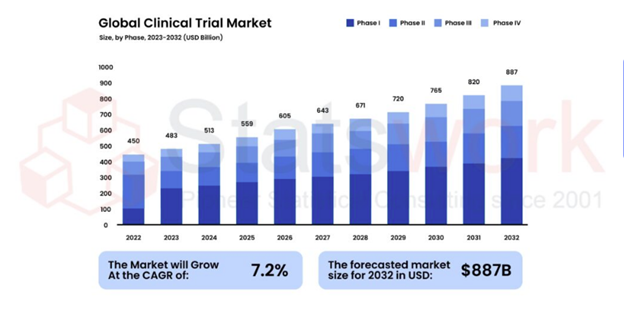
Statistical Programming & Biostatistics services
-
- Data Management Services
-
Data Management Services
-
- Research methodology services
-
Research methodology services
-
- Tool Development Services
-
Tool development services
-
- Statistical Interpretation services
-
Statistical Interpretation services
-
- Sample Size Calculation Services
-
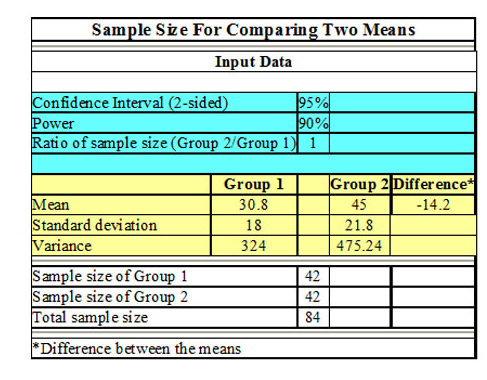
Sample Size Calculation Services
-
- AI & ML Services
-
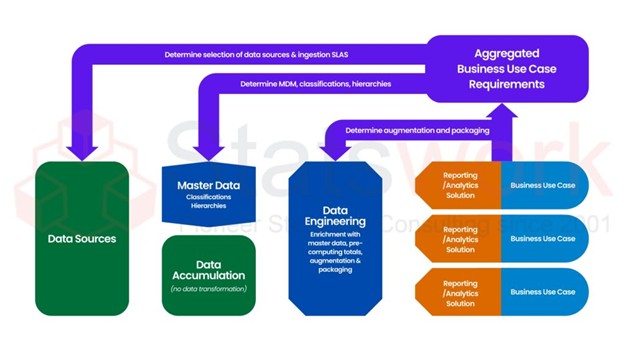
Artificial Intelligence and Machine Learning Services
-
- Report Generation Services
-
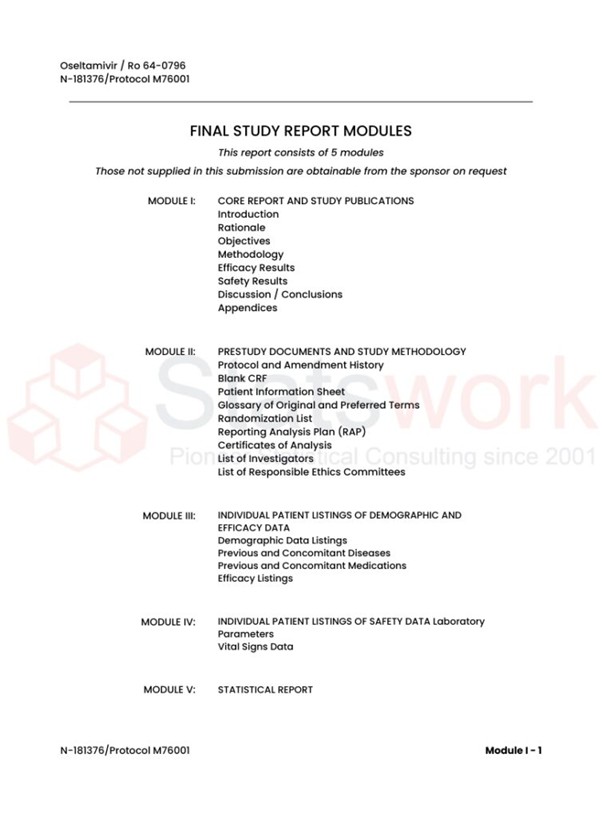
Report generation Services
-
- Data Analysis services
- Services
- Data Analysis services
-
Data Analysis services
-
- Meta-Analysis Research services
-
Meta-Analysis Research Services
-
- Data Collection Services
-
Data Collection Services
-
- Statistical & Biostatistics services
-
Statistical Programming & Biostatistics services
-
- Data Management Services
-
Data Management Services
-
- Research methodology services
-
Research methodology services
-
- Tool Development Services
-
Tool development services
-
- Statistical Interpretation services
-
Statistical Interpretation services
-
- Sample Size Calculation Services
-
Sample Size Calculation Services
-
- AI & ML Services
-
Artificial Intelligence and Machine Learning Services
-
- Report Generation Services
-
Report generation Services
-
- Data Analysis services


Introduction to Discriminant Function Analysis Services
As indicated above, discriminant function analysis services are provided to help firms in identifying what combination of measurable variables can be used to separate the groups that have been labeled or are known. The groups may refer to customer segments, credit risk groupings, employee turnover statuses, vendor risk profiles, or product defect classes, whereas the predictors may refer to behaviors, finances, operation, and transactions. The above reasons explain why discriminant function analysis services are popular in marketing segmentation, credit risk and finance, human resource analysis, quality assurance, fraud detection, and customer experience management. Some of the phases included in discriminant function analysis services are:
- Group and predictor variable definition according to business objectives
- Data gathering, cleansing, and structuring of enterprise data from internal and field sources
- Test of discriminant analysis assumptions such as multivariate normality and homogeneity of covariance matrices
- Derivation of discriminant function(s) and canonical structure
- Hit ratio test of classification accuracy and validation through cross-validation

Justifications for Using Discriminant Function Analysis Services
The discriminant function analysis services help in identifying the true discriminator among known groups and constructing a justified decision rule for classifying new observations. Discriminant analysis of enterprise data associated with group membership cannot be carried out satisfactorily by merely inspecting the plots or setting cut-off for each variable separately. Following are some instances where you should consider opting for discriminant function analysis services:
- Classification of customers, prospects, or accounts into two or more known categories
- Determination of which variables differentiate two or more groups based on their performance levels
- Category-wise classification of future observations by applying a validated discriminant function
- Applications of discriminant analysis in customer segmentation, churn classification, and market positioning
- Applications of discriminant analysis in credit risk scoring, fraud detection, and loan defaults prediction
- Discrimination between various categories of quality, compliance, or vendor-risk factors
- Evaluation of classification accuracy prior to deploying a classification rule in the decision-making process
- Comparing two or more competing discriminant models constructed using different sets of variables
- Condensation of two or more predictors to one or two canonical discriminant functions
- Rigorous classification-oriented decision-making based on multivariate statistical theory

Data Preparation & Modeling Methods
- Enterprise Data Cleaning for Discriminant Analysis Applications
- Missing Values Handling for Classification Models
- Screening of Predictor and Indicators Variables
- Diagnostics of Multivariate Normality and Homogeneity of Covariance
- Diagnosis of Multicollinearity and Outliers
- Sample and Group Sample Size Adequacy Check
- Graphical Conduction of Territorial and Group Centroids Plot

Major and Diagnostic Discriminant Methods
- Two-Groups Linear Discriminant Analysis
- Several Groups Canonical Discriminant Analysis
- Stepwise Discriminant Analysis
- Classification Functions Development
- Cross Validation and Hit Ratio Test
- Wilks’ Lambda and Eigenvalue Tests

Advanced Discriminant Methods
- Quadratic and Regularized Discriminant Analysis
- Box’s M Test of Covariance Equality
- Leave One Out and Split-Sample Validation
- Model Competing Comparison for Classification
- Handling Prior Probability and Misclassification Cost
- Establishment of Predictive Classification Rules


"The discriminant function was professionally derived, thoroughly diagnosed, and easy to understand. Their team explained every coefficient and classification statistic clearly, making our results far more defensible to leadership."

"We needed reliable group-classification modeling for a complex multi-predictor dataset, and the results exceeded our expectations. Their expertise in stepwise selection and cross-validation significantly improved our classification accuracy."

"From assumption testing to full classification validation, every step was handled with exceptional precision. Their insights helped us defend our model to senior stakeholders with confidence."