
What is Data Mining?
- Home
- Insights
- Article
- What is Data Mining?
Qualitative Research Service
News & Trends
Recommended Reads
Data Collection
As the data collection methods have extreme influence over the validity of the research outcomes, it is considered as the crucial aspect of the studies
- 1. Introduction
- 2. DeepHealth’s Diagnostic Suite™: Revolutionizing Radiology Workflows
- 3. Key Features
- 4. AI Impact on National Screening Programs
- 5. SmartMammo™: Enhancing Breast Cancer Screening
- 6. DeepHealth AI Use Cases Across Specialties
- 7. Strategic Collaborations and Ecosystem Expansion
- 8. Impact and Adoption of DeepHealth’s AI Solutions
- 9. Conclusion: The Future of Radiology with AI
- 10. References
In the current era of big data analysis, organizations create enormous amounts of data daily. However, interpreting this data to inform decision-making is where data mining becomes extremely useful. Data mining helps organizations identify unseen patterns and trends in data, which can then be used to make informed decisions.[1]
Key Data Mining Techniques
Data mining methods give ways of retrieving valuable information from a large set of data. Data mining methods enable organizations to enhance efficiency, forecast trends, and mitigate risks.
- Classification: Categorizing data into pre-defined categories for better understanding and forecasting.
- Clustering: Clustering similar data points together to discover patterns without predefined labels.
- Association Rule Learning: Finding connections between variables to forecast future behaviors.
- Regression Analysis: Finding estimates between variables to forecast future outcomes.
- Anomaly Detection: Finding unusual patterns or outliers that may suggest risks or opportunities.[2]
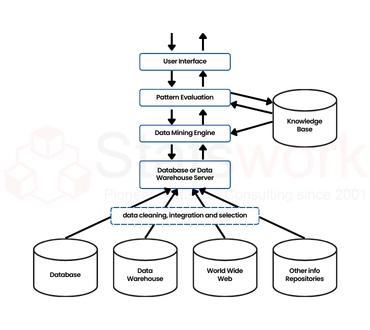
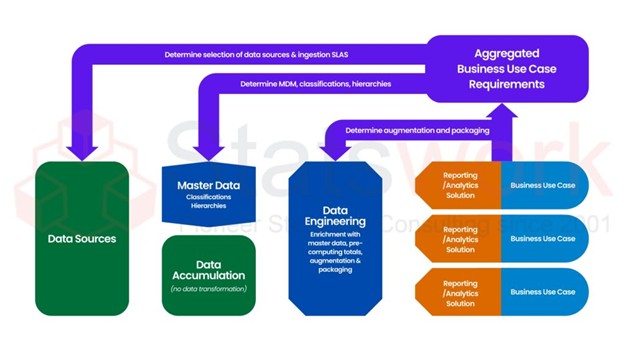
Fig 1 shows The Architecture of a data mining system from data sources to user interface.
Data Mining Algorithms
The driving force behind data mining is the ability to use algorithms to analyze data and find patterns.
- Decision Trees: Algorithms that are both simple and efficient for classification and prediction.
- K-Means Clustering: Similar data points can be clustered together using popular clustering algorithms.
- Apriori Algorithm: Market basket analysis is one way to identify the most frequently co-occurring items (frequent itemsets) in the customer’s purchase history.
- Neural Networks: Consequently, they are well-suited to address complex, nonlinear data relationships.
- Support Vector Machines (SVM): Classification and regression processes for high dimensional data portions.
Based on these algorithm possibilities, companies can improve accuracy and efficiency with large-scale data mining projects.
Applications of Data Mining
- Analysis of customer behavior to improve marketing campaigns.
- Detection of fraud in banking and financial transactions.
- Predictive maintenance in manufacturing to optimize operations.
- Analytics in the healthcare industry detect risk patterns in patient data.
- Product recommendation systems on e-commerce websites.
These examples illustrate the business use of data mining software and consulting services.[4]
Comparison of Common Data Mining Software
There is various software available that help in the implementation of data mining. The following table gives some of the popular platforms and their key features:
Software | Primary Use Case | Key Features |
RapidMiner | Predictive analytics | Drag-and-drop interface, visual workflows |
WEKA | Classification & clustering | Open source, supports multiple algorithms |
KNIME | Data integration & analysis | Modular workflows, extensible with plugins |
SAS Enterprise | Advanced analytics | Comprehensive tools for big data analysis |
Microsoft Azure ML | Cloud-based predictive models | Scalable, integrates with Microsoft ecosystem. |
Conclusion
Data mining is an extremely useful technology that helps convert a large amount of unrefined data into valuable information. By using data mining algorithms, methods, and tools, organizations can unlock innovation and improve decision-making in the big data analysis era. Whether it is an in-house process or a consulting service, the possibilities with predictive analytics are endless for businesses.
Unlock hidden insights in your data with StatsWork’s Data Mining expertise – where data turns into decisions.
Reference
- Mining, W. I. D. (2006). Introduction to data mining. Mining Multimedia Databases, Mining Time Series and. https://link.springer.com/content/pdf/10.1007/978-1-4302-3325-1_14?pdf=chapter%20toc
- Liao, S. H., Chu, P. H., & Hsiao, P. Y. (2012). Data mining techniques and applications–A decade review from 2000 to 2011. Expert systems with applications, 39(12), 11303-11311. https://www.sciencedirect.com/science/article/pii/S0957417412003077
- Hassani, H., Huang, X., Silva, E. S., & Ghodsi, M. (2016). A review of data mining applications in crime. Statistical Analysis and Data Mining: The ASA Data Science Journal, 9(3), 139-154. https://onlinelibrary.wiley.com/doi/abs/10.1002/sam.11312