
What is Data Quality Management?
- Home
- Insights
- Article
- What is Data Quality Management?
Qualitative Research Service
News & Trends
Recommended Reads
Data Collection
As the data collection methods have extreme influence over the validity of the research outcomes, it is considered as the crucial aspect of the studies
- 1. Introduction
- 2. DeepHealth’s Diagnostic Suite™: Revolutionizing Radiology Workflows
- 3. Key Features
- 4. AI Impact on National Screening Programs
- 5. SmartMammo™: Enhancing Breast Cancer Screening
- 6. DeepHealth AI Use Cases Across Specialties
- 7. Strategic Collaborations and Ecosystem Expansion
- 8. Impact and Adoption of DeepHealth’s AI Solutions
- 9. Conclusion: The Future of Radiology with AI
- 10. References
In a data-driven ecosystem, data is used extensively as a tool for strategy, operations, and innovation. However, data is only useful if it is trustworthy and usable. Data Quality Management is all about ensuring that data standards are of high quality so that the insights derived from data are trustworthy.[1]
Ensuring Reliable Data Through Quality Frameworks
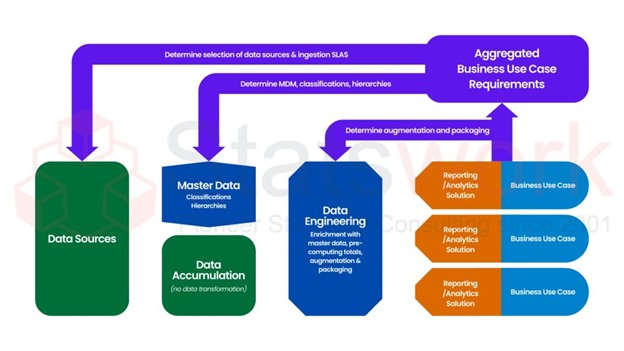
This framework illustrates how data quality is addressed throughout the data life cycle to provide trusted, decision-quality data. It links control principles with analytics and business results.
- Baseline Data Quality: Establishes standard metrics and guidelines to provide consistent data from the source.
- Quality Processes: Uses guidelines, KPIs, and dashboards to track data quality.
- Intermediate Quality: Improves and verifies data in the processing stage.
- Fit-for-Purpose Usage: Enables reporting, machine learning models, and other systems.[1]
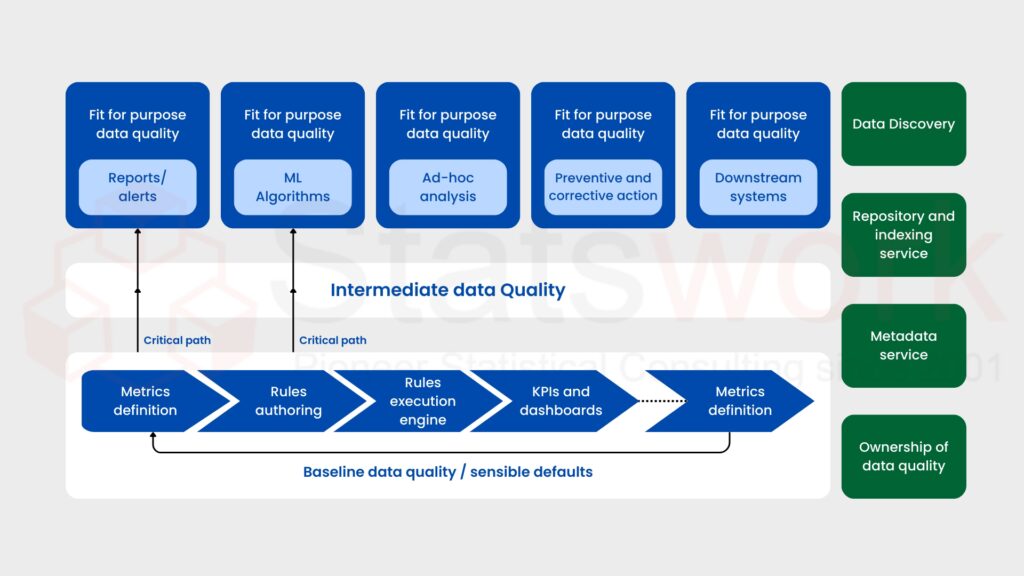
Fig 1 shows a Data Quality Management framework that ensures fit-for-purpose data from baseline controls to analytics and downstream systems.
Aligning Data Quality Initiatives with Organizational Goals
A sustainable Data Quality Strategy is one that aligns data quality activities with business goals and analytical requirements. This ensures that data quality activities are focused on supporting business decision-making rather than being mere technical activities.
- Business Alignment: Data goals are aligned with business goals.
- Risk Management: Risks associated with data are assessed and addressed proactively.
- Continuous Improvement: Data quality processes improve as data usage increases.
Business alignment of data quality activities ensures that data quality activities add value to the business.[2]
Establishing Data Governance and Accountability
Data oversight requires ownership and accountability. Data Quality Governance defines roles, responsibilities, and escalation procedures to ensure quality in systems.
- Ownership Assignment: Data stewards own data sets.
- Policy Enforcement: Policies guarantee adherence to organizational and external best practices.
- Issue Resolution: Effective procedures resolve data quality issues efficiently.
Data Quality Governance makes data quality a business discipline, not a technical issue.[3]
Understanding Data Quality Metrics and Their Business Impact
Data quality dimensions are key indicators about the effectiveness of data when making business decisions and performing business operations.
Metrics | Description | Business Impact |
Accuracy | The data accurately represents the actual or real-world values. | Less error when making analytic and decision input. |
Completeness | Data fields are all present for each data point. | Increased report reliability. |
Consistency | The data is uniform across all the systems that use the data. | Operational efficiency is improved. |
Timeliness | Data is timely and available. | Supports timely decisions when making business decisions.[4] |
By having strong Data Accuracy and Consistency will produce a consistent or reliable analytic and reporting result.
Tools and Operational Practices
Organizations are increasingly turning to Data Quality Management Tools to automate the validation, monitoring, and correction processes. Data quality management tools minimize manual work and maximize visibility into data quality.
- Profiling Capabilities: Anomaly and pattern detection in data sets.
- Validation Rules: Data quality rules are enforced on a large scale.
- Monitoring Dashboards: Data quality trends are tracked over time.
When used in conjunction with Data Quality Best Practices, data quality management tools ensure consistent performance.
Conclusion
Creating high-quality data is a sustained effort rather than a one-time project. Data governance, strategy development, frameworks and automation all come together so that companies can ensure the ongoing accuracy, consistency, and reliability of their data. Organizations that have implemented effective data quality processes will be able to make decisions confidently based on accurate analysis and ultimately achieve sustained success as an organization.
Elevate your data’s reliability and impact with StatsWork’s professional Data Management solutions—built for precision, control, and growth.
Reference
- Wang, R. Y. (1998). A product perspective on total data quality management. Communications of the ACM, 41(2), 58-65. https://dl.acm.org/doi/abs/10.1145/269012.269022
- Mahanti, R. (2019). Data quality: dimensions, measurement, strategy, management, and governance. Quality Press. https://books.google.com/books?hl=en&lr=&id=semiEAAAQBAJ&oi=fnd&pg=PT5&dq=data+quality+management+-+Strategic+Approach+to+Data+Quality&ots=pRmEKODNKi&sig=gdd85P_fTMYxBjZ-z9U27GeUT3o
- Wende, K. (2007). A model for data governance–Organising accountabilities for data quality management. https://aisel.aisnet.org/acis2007/80/
- Mahanti, R. (2019). Data quality: dimensions, measurement, strategy, management, and governance. Quality Press. https://books.google.com/books?hl=en&lr=&id=semiEAAAQBAJ&oi=fnd&pg=PT5&dq=data+quality+management+
- Samson, D., & Terziovski, M. (1999). The relationship between total quality management practices and operational performance. Journal of operations management, 17(4), 393-409. https://www.sciencedirect.com/science/article/pii/S0272696398000461