
How Can Research Intelligence Transform Brand Strategy and Positioning?
- Home
- Insights
- Article
- How Can Research Intelligence Transform Brand Strategy and Positioning?
Quantitative Analysis
News & Trends
Recommended Reads
Data Collection
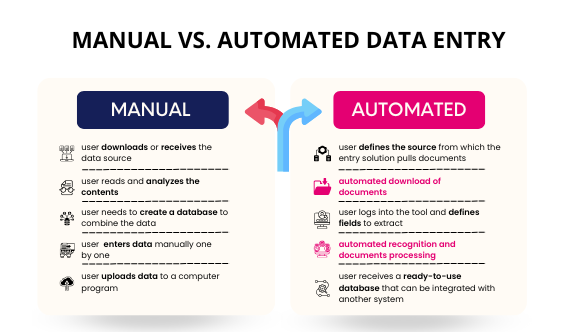
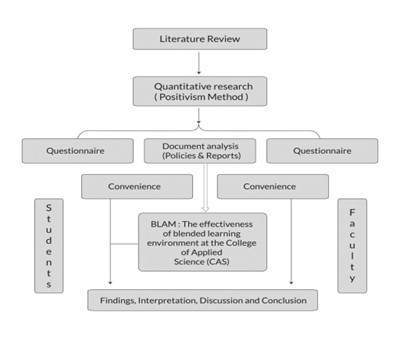
As the data collection methods have extreme influence over the validity of the research outcomes, it is considered as the crucial aspect of the studies
How Can Research Intelligence Transform Brand Strategy and Positioning?
- 1. Introduction
- 2. DeepHealth’s Diagnostic Suite™: Revolutionizing Radiology Workflows
- 3. Key Features
- 4. AI Impact on National Screening Programs
- 5. SmartMammo™: Enhancing Breast Cancer Screening
- 6. DeepHealth AI Use Cases Across Specialties
- 7. Strategic Collaborations and Ecosystem Expansion
- 8. Impact and Adoption of DeepHealth’s AI Solutions
- 9. Conclusion: The Future of Radiology with AI
- 10. References
May 2025 | Source: News-Medical

How to Ensure Annotation Quality in Your AI Training Data
Research Intelligence
Research intelligence in brand strategy involves gathering and analyzing data and insights that inform how brands will be developed through both qualitative and quantitative methodologies.
Research Intelligence enables brands to gain an understanding of how consumers behave, what trends are occurring in the marketplace, how competitors are performing, and how brands are performing.[1]
Research Intelligence in Brand Strategy
1.Data-Driven Brand strategy
A Data Driven Brand Strategy is Based on Research & Insights. Brands use real-time Data to define their Branding Strategies from Product Development through to Consumer Engagement instead of assuming or depending on Outdated Strategies.
Consumer Insight: Gather Data about your Consumers’ Behavior, Preferences, and Frustrations through Market Research, so you can create Products and Marketing that truly Connect with Your Target Audience.
Performance Tracking: Track Progress of Your Brand with Data so your Brand can remain Agile to Changes in Consumer Demands and the Marketplace.[1]
2. Strategic Positioning Through Research Intelligence
Strategic positioning establishes the identity of a brand so that it communicates with its respective targets. To help establish brand positioning, brands use research intelligence to aid in refining it through quantitative analysis, consumer feedback and market trends.
Competitive Benchmarking: Through research intelligence, brands can keep track of their competitors and analyze their strategies. By doing this, brands can determine where they have a unique advantage over competitors as well as identifying potential market opportunities.
Market Trends: When a brand understands the current trends within its industry, it will be able to remain competitive by making necessary changes to meet consumer expectations or technological advancement.
3.Impact of Research Intelligence on Brand Strategy
Role | Impact |
Collects information about the preferences and buying behaviours of customers. | Assists in developing products that are customised for the consumer’s needs and engagement. |
Investigates competitors’ strategic initiatives to identify market gaps and opportunities. | Provides differentiation to draw attention to the brand in a highly competitive environment. |
Monitors industry trends, cultural changes and buying behaviours. | Ensures that brands remain dynamic and relevant by adapt quickly to changing market conditions. |
Measures key performance indicators (KPIs), to determine if the selected strategy is effective. | Generates actionable insights to help to improve the effectiveness of marketing campaigns. |
Utilises consumer insight to develop effective and accurate brand positioning. | Provides a pathway for brands to successfully engage with target customers. |
4. Quantitative Data Analysis for Better Segmentation and Targeting
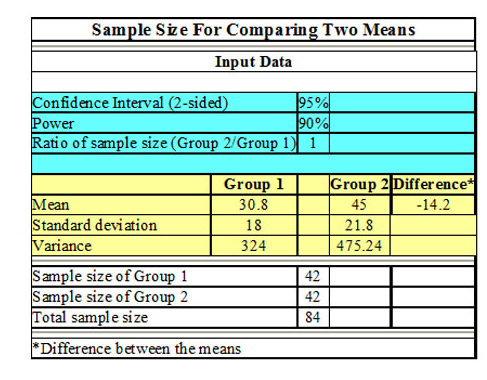
- Research Intelligence relies on analysing Quantitative Data, which is one of the most significant aspects of this form of Research Intelligence.
- Many brands would be able to group their Target Market into different Segmentation’s based on Behavioural Characteristics, Demographics, Buying Frequency, etc.
- This allows brands to create a Marketing Strategy that will be most effective at each of these different segments.
- Through Market Research, brands can also identify the purchasing behaviour trends of various age groups or geographic locations and create specific messaging, offers, and sales based on those trends.[3]
5. Adapting Brand Strategy with Real-Time Market Trends
- Sustainability of brand growth over time requires rapid ability to adapt to ongoing changes in the marketplace.
- Brands can see and predict how consumer behaviours and actions toward a brand will shift based on ongoing changes in technology, economy and consumer behaviours through market trend analysis and therefore adjust their messaging position and product offerings accordingly.
- Incorporating emerging trends such as sustainability and digital transformation into the brand strategy, product offerings and communication will allow brands to establish a brand image that is innovative and appeals to a modern consumer.[4]
6.Utilizing Consumer Insights to Improve Brand Positioning
- Consumer insights, both from market research, and quantitative analysis is referred to as Research Intelligence (RI) and is used to help a company improve how it positions itself in the marketplace.
- Benchmarking against competitors allows a company to create a differentiated position by articulating unique strengths it has compared to its competition.
- By using Market Trends, a company can adapt to changes in consumer behaviour and technological advances to remain competitive.
- Companies can develop distinct messages tailored to different segments; this segmentation is critical in creating targeted messaging and effective positioning in each segment.[5]
Conclusion
The use of quantitative data analysis, market research, and analysis of consumers’ purchasing behaviour through insights along with analysing trends within the marketplace allows brands to create effective targeted and positioned advertising/branding campaigns.
Through this process, brands not only have insight into current consumer purchase behaviours but will also gain an understanding of changes that may occur in the future.
CTA- Transform your brand strategy with Statswork’s data collection services – Gain the insights you need to stay competitive and drive growth!
Reference
1.Hussein, E. A. (2020). Marketing intelligence system and its impact in determining strategies of competitive positions. Utopía y Praxis Latinoamericana, 25(1), 530-544. https://www.redalyc.org/journal/279/27963086050/27963086050.pdf
2.Kanwal, S., Samalia, H. V., & Singh, G. (2019). The role of marketing intelligence in brand positioning: Perspective of marketing professionals. In Brand Culture and Identity: Concepts, Methodologies, Tools, and Applications (pp. 695-714). IGI Global Scientific Publishing. https://www.igi-global.com/chapter/the-role-of-marketing-intelligence-in-brand-positioning/213733
- Nur, M. F., & Siregar, A. (2024). Exploring the use of cluster analysis in market segmentation for targeted advertising. IAIC Transactions on Sustainable Digital Innovation (ITSDI), 5(2), 158-168. https://aptikom-journal.id/itsdi/article/view/665
- Klimova, I., Hordieieva, I., Sereda, N., Pashchenko, O., & Petecki, I. (2023). STRATEGIC MARKETING IN A DYNAMIC MARKET ENVIRONMENT: ADAPTIVE APPROACHES, ANALYSIS OF TRENDS AND IMPLEMENTATION OF INNOVATIONS. Conhecimento & Diversidade, 15(40), 98-118. https://svr-net127.unilasalle.edu.br/index.php/conhecimento_diversidade/article/view/11273
- Yılmaz, M. K., & Altunay, H. T. (2023). Marketing insight from consumer reviews: Creating brand position through opinion mining approach. Telematics and Informatics Reports, 11, 100094. https://pdf.sciencedirectassets.com/780150/1-s2.0-S2772503023X00024/1-s2.0-S2772503023000543/main.pdf?X-