
How Can Quantitative Analysis Strengthen Decision Making at Scale?
- Home
- Insights
- Article
- How Can Quantitative Analysis Strengthen Decision Making at Scale?
Quantitative Analysis
News & Trends
Recommended Reads
Data Collection
As the data collection methods have extreme influence over the validity of the research outcomes, it is considered as the crucial aspect of the studies
How Can Quantitative Analysis Strengthen Decision Making at Scale?
Decision-making can be made much better using Quantitative Analysis (QA) which uses Data and Statistics as tools to produce an evidence-based approach to making decisions about an organisation.
The application of QA at scale allows for the ability for organisations to be able to use data to make objective, measurable and reproducible decisions. Some areas of how QA can enhance decision-making when using the tool at scale are detailed below.
How It Strengthens Decision Making
1. Using Data for Insights to Make More Informed Choices
- Objective Decision-Making: With Quantitative Analysis, the Decision-Making can use quantitative data in an objective fashion to base decisions on actual data that is factual. The more decisions are being made, especially at a higher level, the less impact that personal bias will have on the Decision-Maker.
- Predictive Power: By Utilizing Advanced Statistical Analysis (i.e., Regression Analysis, Machine Learning, Dynamic Forecasting), the Decision-Maker can use Forecasting Models (predictions) based on the data that has been obtained in the past (historical data).[2]

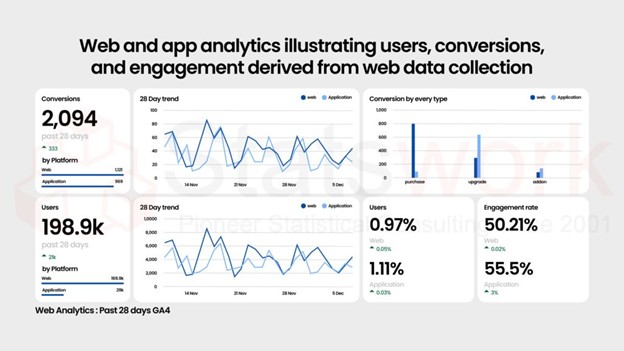
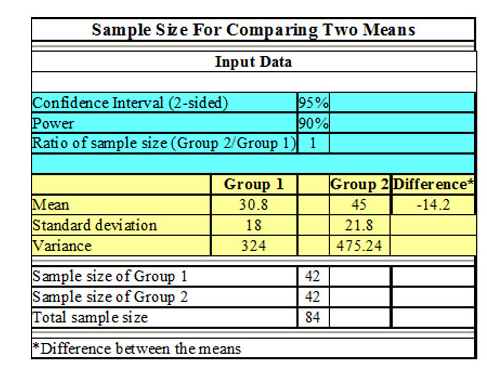
Fig1 shows comparison website traffic by region, gender, and device type.
2. Management and Mitigation Strategies for Risk
- Recognition of Risks: The identification and assessment of risks can be achieved using quantitative tools to determine various possible outcomes and to develop contingency plans for each possibility.
- Quantification of Uncertainty: Quality assurance (QA) fosters informed decision making with respect to risk and reward by measuring uncertainty and variability.
- Predictive Models for Risk: Predictive analytics allow a business to evaluate the likelihood of risks such as customer attrition or stock price anomalies.[3]
3. Resource Optimization
Optimized Allocation of Available Resources | Quantitative analyses provide organizations with an opportunity maximizing returns on investment (ROI). |
Cost Reduction | Improved profitability and scalability by identifying areas where production costs can be reduced during the QA Process. |
Tracking of Performance Indicators | The QA Process allows for continuous tracking of key performance indicators (KPIs).[2] |
4. Scaling Personalisation and Customisation
- Customer Segmentatio: To identify various customer segments and provide services targeted at those different segments.
- Individualised Recommendation Systems: These recommendation systems will use algorithms to collect large amounts of data about users and make recommendations in real time based on that data.
- A/B Testing at Scale: Businesses can have the opportunity to continuously use the A/B testing method to evaluate different types of variations, businesses will implement the best variation for success across their entire user base.
5. Improved Forecasting and Planning
- Using Sales and Revenue Forecasting: Quantitative forecasting uses models based upon the historical performance of sales data combined with various methods such as Time Series Analysis, Exponential Smoothing and ARIMA (Autoregressive Integrated Moving Average).
- Demand Forecasting: By analysing historical sales data, a company can determine demand for its products or services for a specific period.[4]
- Scenario Analysis: Using quantitative methodologies allows for scenario analysis, using the information to generate a “What-If” model based on company decisions.
6. Continuous Improvement & Feedback
- Analytics/Dashboards in Real-time: The ability to perform ongoing analysis of your company’s data helps you continually improve the business, as it gives you a way to monitor the key metrics of your organization.
- Making Decisions with Feedback: By utilizing the customer’s feedback using real-time data, companies can quickly test and evaluate their products and services.
- Learning Through Data: By analysing and evaluating quantitative data, it has become much easier for companies to create a culture where continuous improvement is achieved.
Advantage | Limitation |
to remove as much bias from the decision-making process as possible by using a data-centric methodology. | The implementation of complex decision-making requires advanced skill sets. |
The risks associated with certain decisions; you will be able to avoid them. | Relying heavily on data for your decisions may lead you to overlook. |
Forecasting and predicting future trends will significantly aid in planning for the future. | May not provide an accurate representation of current and/or future dynamics. |
That you can implement similar processes across departments or teams. | The data you have will ultimately depend on how reliable and accessible the data is. |
Conclusion
Quantitative analysis supports large-scale decision-making by supplying objective, empirical insights derived from data to help maximize resources, manage risk and develop forecasts.
In addition to increasing efficiency, accuracy, and scalability of operations; quantitative analysis presents unique challenges associated with data volume, assumptions associated with models developed, and complexities related to the implementation process.
CTA:
Make Smarter Decisions with Data!
At Statswork, we use quantitative analysis to optimize resources, predict trends, and manage risks. Contact us today to turn your data into actionable insights!
Reference
- Yousuf, H., & Zainal, A. Y. (2020). Quantitative approach in enhancing decision making through big data as an advanced technology. Advances in Science, Technology and Engineering Systems Journal, 5(5), 109-116.https://d1wqtxts1xzle7.cloudfront.net/64618969/ASTESJ_050515-libre.pdf?1602080131=&response-content- A
- Nasab, H. H., & Milani, A. S. (2012). An improvement of quantitative strategic planning matrix using multiple criteria decision making and fuzzy numbers. Applied Soft Computing, 12(8), 2246-2253. https://www.sciencedirect.com/science/article/abs/pii/S156849461200097X
- Figalist, I., Elsner, C., Bosch, J., & Olsson, H. H. (2021). Fast and curious: A model for building efficient monitoring-and decision-making frameworks based on quantitative data. Information and Software Technology, 132, 106458.https://www.sciencedirect.com/science/article/abs/pii/S0950584920302044