
What is Data Capture and Digitalization and its Important?
- Home
- Insights
- Article
- What is Data Capture and Digitalization and its Important?
Qualitative Research Service
News & Trends
Recommended Reads
Data Collection
As the data collection methods have extreme influence over the validity of the research outcomes, it is considered as the crucial aspect of the studies
- 1. Introduction
- 2. DeepHealth’s Diagnostic Suite™: Revolutionizing Radiology Workflows
- 3. Key Features
- 4. AI Impact on National Screening Programs
- 5. SmartMammo™: Enhancing Breast Cancer Screening
- 6. DeepHealth AI Use Cases Across Specialties
- 7. Strategic Collaborations and Ecosystem Expansion
- 8. Impact and Adoption of DeepHealth’s AI Solutions
- 9. Conclusion: The Future of Radiology with AI
- 10. References
A process through which information is gathered from physical and/or online sources and is stored in a manner usable by machines for easy access and automated processes; data capture and digitalization enable automation, security, and better decision-making.[1]
What is Data Capture
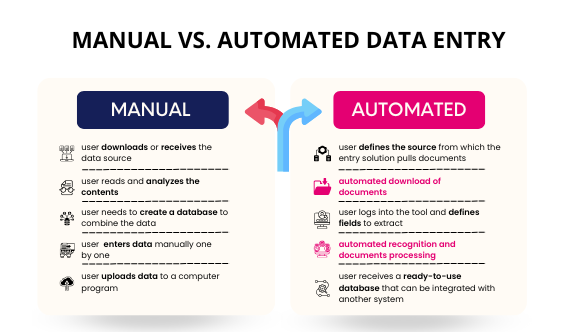
Data capture means the method through which data is collected from different sources and stored in a structured and/or digital form for efficient and effective storage, scrutiny, and reporting through data and digitalization.
This data can be collected from:
- Paper-based forms and surveys using digital data collection methods.
- Sensors & Smart Devices through Automated Data Capture Systems.
- Medical Records, Clinical Trials, Electronic Data Capture (EDC).
- Customer transactions and online forms via digital data capture.
Data capture technology can support the digitalization of the data by minimizing the use of labor and ensuring greater accuracy and the paperless management of the operations, which are significant factors that can induce the digitalization and digitalized services.[2]
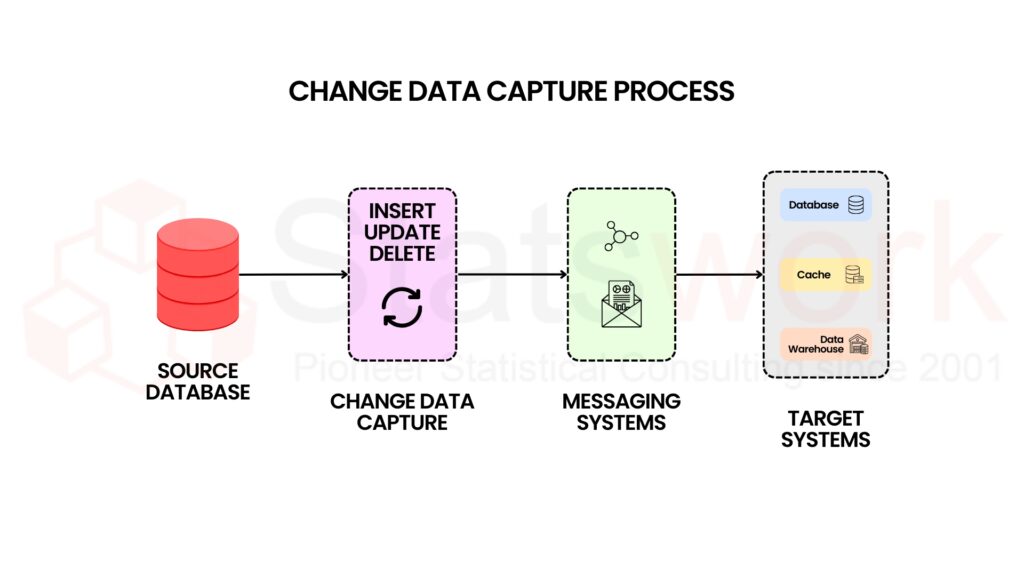
Fig 1 shows the CDC process of capturing source database updates and applying them to target systems.
What is Digitalization
Moving a step forward in the digitalization path, data digitalization uses the collected information and digitizes it into an easily utilized digital format and incorporates the information into a system.
Examples include:
- Converting paper records into digital databases
- Automating Workflows Using New Data Capture Technologies
- Integrating data into cloud-based platforms
- Enabling real-time access, reporting, and collaboration
In simple terms:
Data capture gathers data, while digitalization allows for the use of such data for improved decision-making.[3]
Why is Data Capture and Digitalization Important?
- Improves Data Accuracy and Quality: The process of manual data entry is susceptible to errors. Digital data projects help in avoiding the discrepancies that may occur during data entry through validation mechanisms that automate such processes.
- Saves Time and Increases Efficiency: The utilization of the automated data capture system is originally associated with the elimination of repetitive tasks, thus assisting in the enhancement of productivity.
- Enables Real-Time Access to Data: The data digitalization process provides an instant way to access the data, allowing organizations to monitor the trends.[4]
- Enhances Data Security and Compliance: Data capture and digitalization offer security with storage, access control, auditability, and backup.
- Supports Better Decision-Making: Accurate data collected through efficient application of digital data collection tools can make analysis, forecasting, and decision-making possible.
- Scales Easily with Growing Data Needs: Where there are paperless data management services, as well as effective data capture/digitization services, organizations can grow as the data continues to rise in volume.
Example: In a clinical trial:
Data capture: Patient data is directly entered into an EDC system.
Digitalization: Data is validated and statistically analyzed using statistical software.
Faster trials with quality and reliable results.
In conclusion, data capture and digitalization increase efficiency, speed, accuracy, security, and certainty in the collection, storage, management, and exploitation of information, thereby facilitating a paperless and digital approach to data management.[5]
Make every byte count with StatsWork’s next-gen Data Capture and Digitalization services!
Reference
- Klingenberg, C. O., Júnior, J. A. V. A., & Müller-Seitz, G. (2022). Impacts of digitalization on value creation and capture: Evidence from the agricultural value chain. Agricultural Systems, 201, 103468. https://www.sciencedirect.com/science/article/pii/S0308521X22001044
- Smith, A. D., & Offodile, F. (2002). Information management of automatic data capture: an overview of technical developments. Information Management & Computer Security, 10(3), 109-118. https://www.emerald.com/insight/content/doi/10.1108/09685220210431863/full/html
- Leidner, D. E., & Tona, O. (2021). The CARE theory of dignity amid personal data digitalization. MIS quarterly, 45(1), 343-370. https://misq.umn.edu/misq/article/45/1/343/1825
- Haston, E., Cubey, R., & Harris, D. J. (2012). Data concepts and their relevance for data capture in large scale digitisation of biological collections. International Journal of Humanities and Arts Computing, 6(1-2), 111-119. https://www.euppublishing.com/doi/abs/10.3366/ijhac.2012.0042
- Ciarko, M., & Paluch-Dybek, A. (2021). The importance of digitalization in the education process. In E3S Web of Conferences(Vol. 307, p. 06002). EDP Sciences. https://www.e3s-conferences.org/articles/e3sconf/abs/2021/83/e3sconf_dsdm2021_06002/e3sconf_dsdm2021_06002.html