
What is meant by data abstraction from media?
- Home
- Insights
- Article
- What is meant by data abstraction from media?
Qualitative Research Service
- Understanding Different Media Sources
- Primary Methods for Analysing and Extracting Multimedia Data
- Analytical Tools and Technologies for Multimedia Data Abstraction
- Improving Accuracy and Speed with Automated Media Analysis
- Practical Applications of Media Data Abstraction Across Sectors
- Challenges and Considerations in Multimedia Data Extraction
News & Trends
Recommended Reads
Data Collection
As the data collection methods have extreme influence over the validity of the research outcomes, it is considered as the crucial aspect of the studies
- 1. Introduction
- 2. DeepHealth’s Diagnostic Suite™: Revolutionizing Radiology Workflows
- 3. Key Features
- 4. AI Impact on National Screening Programs
- 5. SmartMammo™: Enhancing Breast Cancer Screening
- 6. DeepHealth AI Use Cases Across Specialties
- 7. Strategic Collaborations and Ecosystem Expansion
- 8. Impact and Adoption of DeepHealth’s AI Solutions
- 9. Conclusion: The Future of Radiology with AI
- 10. References
Digital media, once considered an assortment of images, videos, or audio tracks, is now also an invaluable source of insights that are ready to be discovered. Data Abstraction from Media helps organizations and researchers convert media data into an effective source of knowledge. Media data can now be quickly organized, interpreted, and even analysed using the power of advanced AI tools.[1]
Understanding Different Media Sources
Media can also take many different forms, each with its own information. By extracting data from media, professionals can obtain the essence of such media files.
- Audio: Interviews, podcasts, and voice recordings can also be analysed through transcription.
- Video: Motion, visuals, and text in a video could disclose behaviour, trend, or marketing information.
- Images: Photographs and graphics can be processed to identify objects, text, or visual patterns.
- Text-based media: PDFs, scanned documents, social media, etc., constitute both structured and unstructured information.[2]
Primary Methods for Analysing and Extracting Multimedia Data
Applying appropriate data abstraction technique for multimedia helps in precise extraction and analysis of the data.
- Optical Character Recognition (OCR) for text recognition from images or scanned files.
- Speech recognition for text analysis of audio files.
- Frame-by-frame video analysis for motion detection and object identification.
- Extraction of metadata for contextual information like time, location, or author.[3]
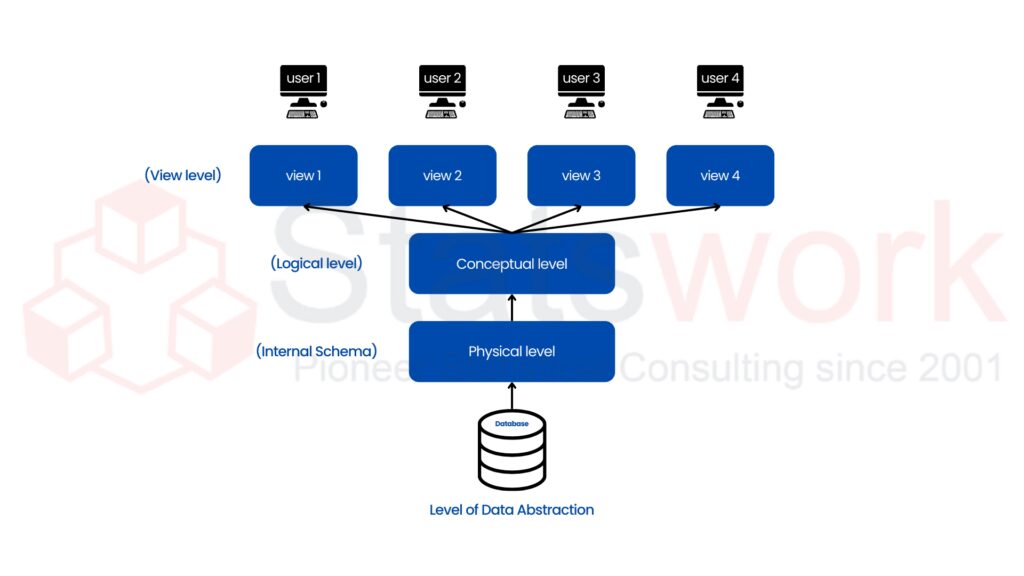
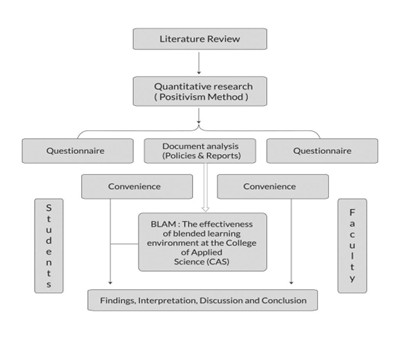
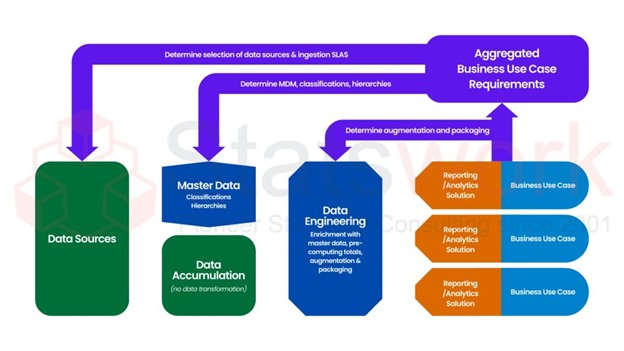
Fig 1 shows layered media data abstraction, separating user views from logical structure and physical media storage.
Analytical Tools and Technologies for Multimedia Data Abstraction
Tool Type | Purpose | Example |
AI & Machine Learning | Automates content analysis | TensorFlow, PyTorch |
OCR Software | Extracts text from images | Adobe Acrobat, Tesseract |
Video Analytics Tools | Detects motion, objects, and patterns | OpenCV, FFmpeg |
Natural Language Processing | Analyses text and sentiment | SpaCy, NLTK |
These technologies help in media content analysis and make the process of extracting insights from raw media data easier.[3]
Improving Accuracy and Speed with Automated Media Analysis
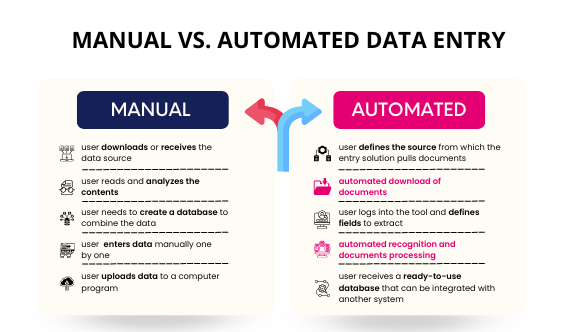
- The process of manually extracting media from files takes a lot of time and is highly susceptible to mistakes.
- Automating data extraction from media files increases the rate and accuracy of this work.
- AI-based workflow tools allow for efficient processing of very large datasets.
- Automating the process of extracting data from media files will allow for faster detection of relevant patterns in the underlying data.
- Integration of AI systems will provide the ability to generate reports in real time.
Practical Applications of Media Data Abstraction Across Sectors
AI-powered media data abstraction is changing multiple industries including healthcare and marketing.
- Healthcare: Extract information about the patient from a taped ملاقات/event and /or photo.
- Marketing: Assess the behaviour of consumers through examining their social networking posts and/or videos.
- Education: Convert lecture recordings, study materials, and other academics into easily interpretable text-based databases for easy searching.
- Security: Monitor video feeds to find out any abnormalities and/or potential threats.
Challenges and Considerations in Multimedia Data Extraction
Media data abstraction is a powerful tool – however, many challenges still exist.
- Data Privacy Concerns: Safeguards need to be used to protect sensitive media files and the information they contain.
- Variability in Media Quality: Low-quality images, audio and/or video can impact how accurately media is extracted.
- Managing Unstructured Content: Collecting data from a variety of places can be complicated.
Dealing with these challenges will help provide you with dependable media content analyses and give you results you can act on.[5]
Transform unstructured media into decision-ready data with StatsWork’s advanced Data Abstraction.
Reference
- Zhou, Z., Zhang, X., Guo, Z., & Liu, Y. (2020). Visual abstraction and exploration of large-scale geographical social media data. Neurocomputing, 376, 244-255. https://www.sciencedirect.com/science/article/pii/S0925231219315103
- Debreceny, R. S., Wang, T., & Zhou, M. (2019). Research in social media: Data sources and methodologies. Journal of Information Systems, 33(1), 1-28. https://publications.aaahq.org/jis/article-abstract/33/1/1/1254
- Batrinca, B., & Treleaven, P. C. (2015). Social media analytics: a survey of techniques, tools and platforms. Ai & Society, 30(1), 89-116. https://link.springer.com/article/10.1007/s00146-014-0549-4
- Bhatt, C. A., & Kankanhalli, M. S. (2011). Multimedia data mining: state of the art and challenges. Multimedia Tools and Applications, 51(1), 35-76. https://link.springer.com/article/10.1007/s11042-010-0645-5