
What is R in Simple Terms?
- Home
- Insights
- Article
- What is R in Simple Terms?
Qualitative Research Service
News & Trends
Recommended Reads
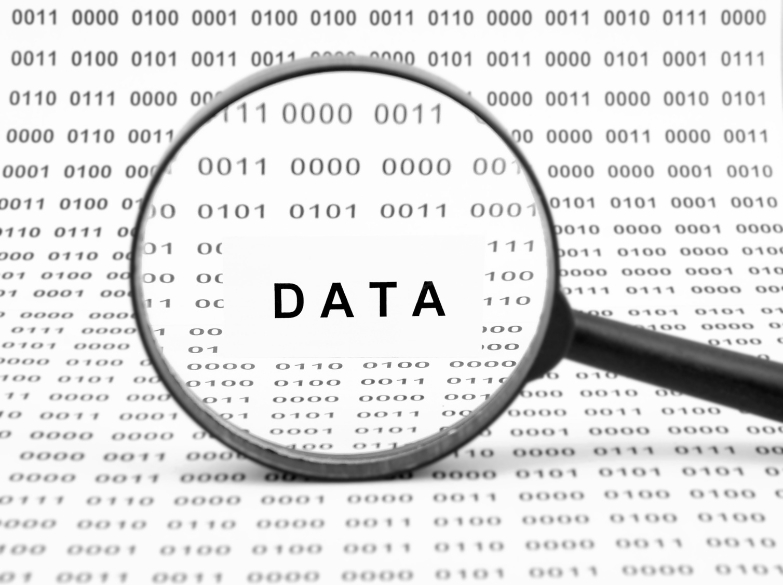
Data Collection
As the data collection methods have extreme influence over the validity of the research outcomes, it is considered as the crucial aspect of the studies
What is R in Simple Terms?
- 1. Introduction
- 2. DeepHealth’s Diagnostic Suite™: Revolutionizing Radiology Workflows
- 3. Key Features
- 4. AI Impact on National Screening Programs
- 5. SmartMammo™: Enhancing Breast Cancer Screening
- 6. DeepHealth AI Use Cases Across Specialties
- 7. Strategic Collaborations and Ecosystem Expansion
- 8. Impact and Adoption of DeepHealth’s AI Solutions
- 9. Conclusion: The Future of Radiology with AI
- 10. References
Developed as a comprehensive open-source data analytic, statistical and visualisation programming environment, R is a powerful open-source programming language used to perform statistical modelling, complex computation and processing of large datasets. The user has complete access to work with include implementing, modifying and extending R programming as a project in any way they wish without having to license R or pay any licensing fees. [1]
Why R is Popular?
A major reason for R’s popularity is its strong statistical capabilities, flexibility, and the large number of active users in the community who support R.
- Strong Statistical Capabilities: R has many high-level statistical tools to conduct your data analyses (hypothetical testing, regression, probabilities, etc.).
- Flexibility: R can be used to create and manipulate many types of data for many different uses (i.e., simple calculations to complex models).
- Machine Learning Support: R can be used in conjunction with Machine Learning algorithms to develop predictive Models; also, you can use these capabilities to analyse advanced data techniques.
- Extensive Packages: There are thousands of Packages available on CRAN that extend the capabilities of R to efficiently create specialized data manipulation and presentation and develop models.
- Open-Source Community: R is open-source software, so there are ongoing development and support for it from a Global Community of Users.[2]
Data Analysis with R
With R, data management and analysis can be performed efficiently and with increased insight.
- Efficient Data Handling: R is a tool that has been created to aid users with the ability to process and utilize large sets of data by making it easy for users to clean, reformat and structure their data more effectively
- Powerful Packages: Packaging such as dplyr and tidyr provide many additional capabilities for manipulating, filtering, and reformulating the users’ datasets.
- Time-Saving Analysis: Data preparation and data analysis tasks may be simplified through use of R along with providing the capability to save the user time and produce more quality and meaningful information.[3]
Data Visualization
R provides the ability to clearly and accurately visualize complex data sets.
- High-Quality Visuals: R provides users with the capability to create extremely high-quality charts, graphs, and dashboards.
- Powerful Visualization Packages: Tools such as ggplot2 provide users with additional options to customize and beautify their graphical representation of data.
- Clear Communication of Insights: R’s ability to visualize data in innovative ways makes difficult-to-grasp information easier to digest and allows for more grounded decision-making based on analysis.[4]
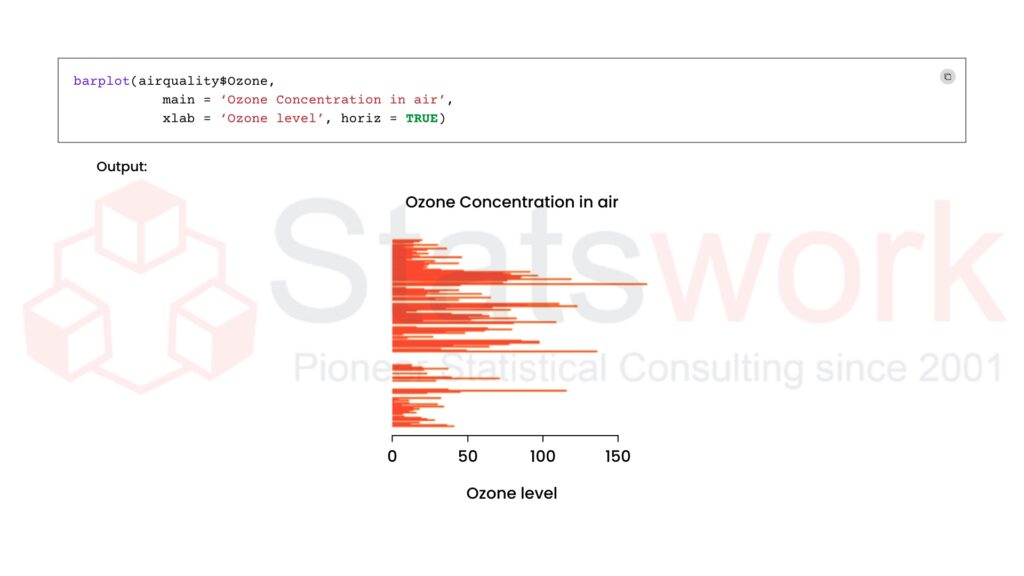
Fig 1 Shows a horizontal bar plot in R programming showing the distribution of ozone concentration levels in the air.
Applications of R
Finance | R is used for analysing financial risk, predicting stock exchange movements, modelling finance. |
Healthcare | R is used to analyse patient information, conduct medical research, and conduct bioinformatics studies. |
Education and Research | R is used to support academic research, conduct statistical work, and conduct experimental work backed by empirical evidence. |
Marketing and Business Intelligence | Businesses analytics utilize R for customer behaviour analysis, predicting future revenues, and aiding in business decision processes. |
Predictive and Statistical Modelling | R has a wide variety of applications in predictive modelling, trend prediction, and modelling advanced statistics.[5] |
Shift from reactive analysis to predictive intelligence with Statswork AI & ML.
Reference
- Tippmann, S. (2015). Programming tools: Adventures with R. Nature, 517(7532), 109-110. https://www.nature.com/articles/517109a
- Gardener, M. (2012). Beginning R: The statistical programming language. John Wiley & Sons. http://books.google.co.in/books?hl=en&lr=&id=iJoKYSWCubEC&oi=fnd&pg=PR21&dq=r+programming+statistics&ots
- Chan, B. K. (2018). Data analysis using R programming. In Biostatistics for Human Genetic Epidemiology(pp. 47-122). Cham: Springer International Publishing. https://link.springer.com/chapter/10.1007/978-3-319-93791-5_2
- Healy, K. (2024). Data visualization: a practical introduction. Princeton University Press. https://books.google.co.in/books?hl=en&lr=&id=v7gfEQAAQBAJ&oi=fnd&pg=PA1&dq=r+programming+in+data+visualization
- Pavlenko, L. V., Pavlenko, M. P., Khomenko, V. H., & Mezhuyev, V. I. (2022). Application of R Programming Language in Learning Statistics. In Proceedings of the 1st Symposium on Advances in Educational Technology(Vol. 2, pp. 62-72). https://www.scitepress.org/Papers/2020/109285/109285.pdf