

What is the Concept of TensorFlow?
- Home
- Insights
- Article
- What is the Concept of TensorFlow?
Qualitative Research Service
News & Trends
Recommended Reads
Data Collection
As the data collection methods have extreme influence over the validity of the research outcomes, it is considered as the crucial aspect of the studies
- 1. Introduction
- 2. DeepHealth’s Diagnostic Suite™: Revolutionizing Radiology Workflows
- 3. Key Features
- 4. AI Impact on National Screening Programs
- 5. SmartMammo™: Enhancing Breast Cancer Screening
- 6. DeepHealth AI Use Cases Across Specialties
- 7. Strategic Collaborations and Ecosystem Expansion
- 8. Impact and Adoption of DeepHealth’s AI Solutions
- 9. Conclusion: The Future of Radiology with AI
- 10. References
Machine learning is at the core of transforming data into intelligent systems, especially with the presence of AI tools. However, when it comes to choosing a reliable platform, TensorFlow is the leading solution. The platform is reliable enough to work on experiments, production, and deployment. It is also strong enough to work on complex applications.
How the Ecosystem Supports Model Development
The TensorFlow framework has a unified ecosystem that supports a full machine learning lifecycle, facilitating the transition from experimentation to deployment in one environment.
- End-to-end workflow: Handles data preparation, training, evaluation, and deployment smoothly for TensorFlow-based machine learning projects.
- Flexible platform support: Runs with CPUs, GPUs, TPUs, mobile, and browsers without modification to the code.
- Smooth research-to-production flow: Enables rapid experimentation and real-world deployment, particularly suited for Deep Learning with TensorFlow.
- Optimized performance tools: Ensures scalable and efficient execution of TensorFlow neural networks.[2]
Learning Curve and Accessibility for New Users
The ease of accessibility in TensorFlow machine learning makes it very well suited for a beginning student who is looking into AI and machine learning concepts.
- Simplified development: High-level APIs, like Keras reduce complexity so that one doesn’t have to deal with intrinsic mathematics; rather, one focuses on the logical structure of the model.
- Structured learning path: A clear TensorFlow tutorial for beginners assists in smooth transitioning from the basics to hands-on creation of models.
- Quick adoption: Well-documented tools that allow newcomers to dive right into building machine learning models with TensorFlow.[2]
Role in Advanced Artificial Intelligence Workflows
For complex AI applications, deep learning models provided by TensorFlow may represent powerful tools for designing complex models.
- Support for complex architectures: Enables the construction of advanced models for vision, speech, and language using TensorFlow neural networks.
- Efficient large-scale processing: Handles large datasets and high computational loads effectively within the TensorFlow framework.
- Built-in optimization capabilities: Automatic differentiation and optimization tools help improve performance while ensuring the accuracy of the models.[3]
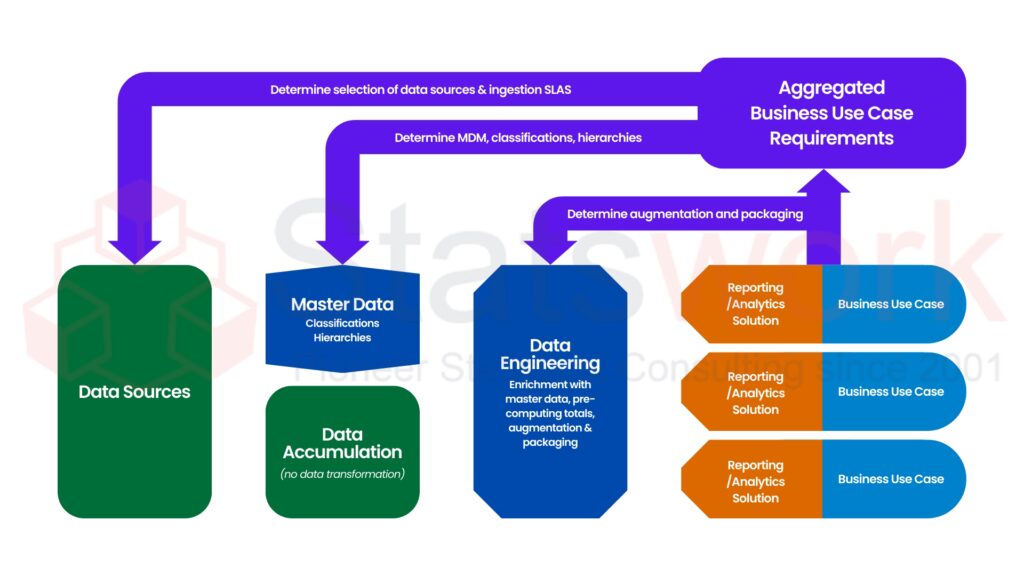
Fig 1 shows a TensorFlow AI workflow with ML metadata tracking for pipelines, executions, and artifacts across different storage sources.
Common Applications and Model Types
The flexibility in TensorFlow neural networks is great, as developers can build a wide range of models suited to different problems. The following below is the snapshot where TensorFlow is normally applied:
Application Area | Model Types Used | Practical Example |
Computer Vision | Convolutional Neural Networks (CNNs) | Image classification |
Natural Language | Recurrent Neural Networks (RNNs), Transformers | Text summarization |
Time-Series Data | Long Short-Term Memory (LSTM) | Demand forecasting |
Recommendation | Dense Networks | Product suggestions.[4] |
This is the reason TensorFlow becomes practical in every industrious field.
TensorFlow: From Concept to Deployment
Developing machine learning models with TensorFlow extends from model training to fast and scalable deployment.
- Production-ready deployment tools: It assists in real-world implementation via tools like TensorFlow Lite and TensorFlow Serving under the TensorFlow umbrella.
- Optimized performance in production: Ensures that models are run efficiently across platforms while providing reliability and speed.
- Model monitoring and updates: Enables continuous improvement by supporting versioning, monitoring, and updates after deployment.
- Faster innovation cycles: End-to-end support enables teams to go from concepts to significant AI applications quickly.[5]
In summary, TensorFlow is empowering users to efficiently build, scale, and deploy intelligent systems, including both novice and advanced uses, while enabling the user to smoothly move from the experimental stage to the actual machine learning.
Leverage TensorFlow AI solutions from StatsWork to turn data into intelligent, scalable outcomes.
Reference
- Vasilev, I. (2019). Advanced Deep Learning with Python: Design and implement advanced next-generation AI solutions using TensorFlow and PyTorch. Packt Publishing Ltd. https://books.google.com/books?hl=en&lr=&id=TxbEDwAAQBAJ&oi=fnd&pg=PP1&dq=TensorFlow+-+Role+in+Advanced+Artificial+Intelligence+Workflows&ots=-6qxL9I09I&sig
- Pang, B., Nijkamp, E., & Wu, Y. N. (2020). Deep learning with tensorflow: A review. Journal of Educational and Behavioral Statistics, 45(2), 227-248. https://journals.sagepub.com/doi/abs/10.3102/1076998619872761
- Capelo, L. (2018). Beginning application development with TensorFlow and Keras: learn to design, develop, train, and deploy TensorFlow and Keras models as real-world applications. Packt Publishing. https://dl.acm.org/doi/abs/10.5555/3265575