

What should I Know about PyTorch?
- Home
- Insights
- Article
- What should I Know about PyTorch?
Qualitative Research Service
News & Trends
Recommended Reads

Data Collection
As the data collection methods have extreme influence over the validity of the research outcomes, it is considered as the crucial aspect of the studies
- 1. Introduction
- 2. DeepHealth’s Diagnostic Suite™: Revolutionizing Radiology Workflows
- 3. Key Features
- 4. AI Impact on National Screening Programs
- 5. SmartMammo™: Enhancing Breast Cancer Screening
- 6. DeepHealth AI Use Cases Across Specialties
- 7. Strategic Collaborations and Ecosystem Expansion
- 8. Impact and Adoption of DeepHealth’s AI Solutions
- 9. Conclusion: The Future of Radiology with AI
- 10. References
PyTorch is an open-source framework for deep learning – a system that can create and train Neural Networks. Written primarily in Python, it has a C++ back-end, making it very flexible for research use as well as for Commercial use.[1]
Core Characteristics of PyTorch
- Deep learning framework: PyTorch allows users to Create, Train and Deploy Neural Networks.
- Python-friendly: PyTorch has easy-to-read and easy-to-use syntax for developers.
- Dynamic computation graphs: Graphs are built (and can be viewed) as experiments develop, which helps make Experimentation with debugging simpler.
- Automatic differentiation (“Autograd”): PyTorch has built-in functionality that tracks all operations so that Gradients can be automatically calculated.
- GPU acceleration: Deep learning Performance can be improved using GPU support.
- Rich ecosystem: PyTorch’s feature set can be extended through the addition of supporting Libraries including torchvision, torchtext, and PyTorch Geometric.[2]
Why PyTorch Matters
- Flexibility and Research Use: Researchers and academics appreciate PyTorch for its Python integration and dynamic graph model. With PyTorch, you can create models that operate just like regular Python code.
- Production and Industry Adoption: Although PyTorch was first adopted by researchers, it has since gained adoption from numerous industrial organizations as a tool for developing real-world AI Applications (vision systems, NLP Models, Foundation Models).
- Learning and Community: There are many tutorials, classes, and texts available on how to learn PyTorch, due to PyTorch being one of the most common tools used within the field of Artificial Intelligence currently.[3]
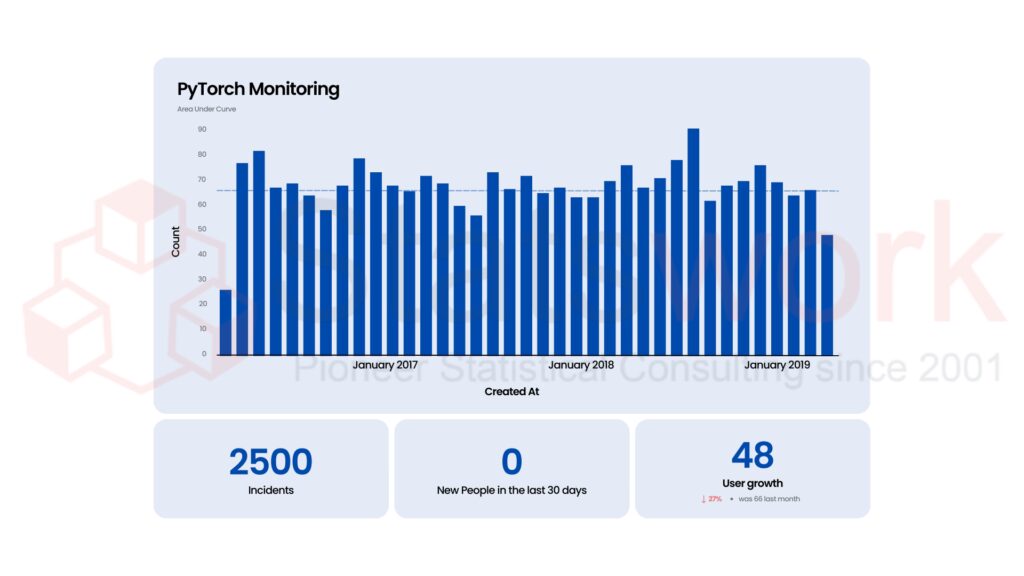
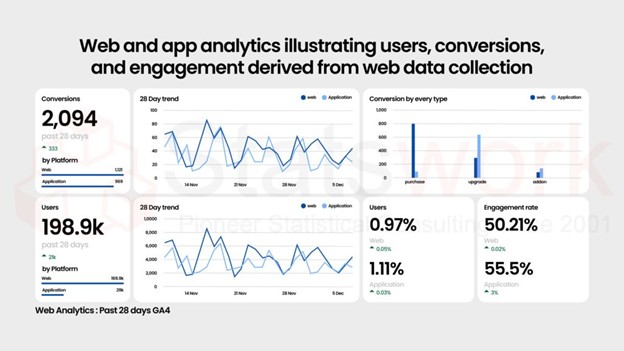
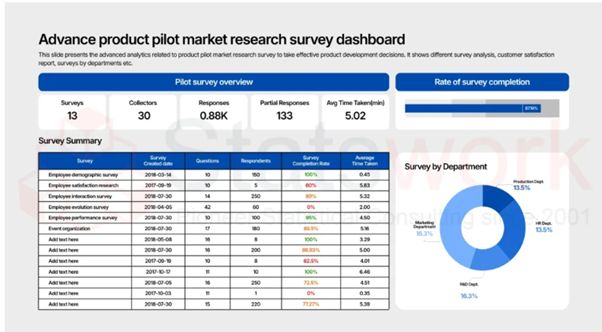
Fig 1 shows a PyTorch monitoring dashboard tracking model performance trends, incidents, and user growth over time.
Typical Use Cases of PyTorch
- Computer vision: Analyzing images to determine classification or identify objects.
- Natural language processing: Using text analysis/modeling techniques, including translations, to provide new insights via Transformers-based architectures.
- Reinforcement learning: Training agents use either available agent frameworks (TorchBeast) or developing one’s agent framework from scratch.
- Graph and geometric learning: Utilizing PyTorch Geometric for graph data structures.
- Privacy-preserving AI: Employing PySyft’s capabilities for secure model training.[4]
Challenges of Using PyTorch
- Steep learning curve: Dynamic graphs and deep learning techniques can create a challenge for beginners.
- Performance tuning: It’s hard to optimize a model by both speed and memory.
- Deployment complexity: To transfer a model from the research stage into production, more specialized tooling may be necessary.
- Limited pre-built solutions: Several of the higher-level APIs available have not yet been released in other neural network framework options.
- GPU dependency: Training large neural networks typically requires fast GPU units, which can be very costly.
Make every decision smarter with StatsWork’s AI & ML transforming data into foresight.
Reference
- Imambi, S., Prakash, K. B., & Kanagachidambaresan, G. R. (2021). In Programming with TensorFlow: solution for edge computing applications(pp. 87-104). Cham: Springer International Publishing. https://link.springer.com/chapter/10.1007/978-3-030-57077-4_10
- Ayyadevara, V. K., & Reddy, Y. (2020). Modern Computer Vision with PyTorch: Explore deep learning concepts and implement over 50 real-world image applications. Packt Publishing Ltd. https://books.google.co.in/books?hl=en&lr=&id=GfILEAAAQBAJ&oi=fnd&pg=PP1&dq=core+concepts+of+pytorch&ots=159Mc4vP
- Stevens, E., Antiga, L., & Viehmann, T. (2020). Deep Learning with PyTorch: Build, train, and tune neural networks using Python tools. Manning. https://books.google.co.in/books?hl=en&lr=&id=fff1DwAAQBAJ&oi=fnd&pg=PR15&dq=Why+PyTorch+Matters&ots=FD
- Novac, O. C., Chirodea, M. C., Novac, C. M., Bizon, N., Oproescu, M., Stan, O. P., & Gordan, C. E. (2022). Analysis of the application efficiency of TensorFlow and PyTorch in convolutional neural network. Sensors, 22(22), 8872. https://www.mdpi.com/1424-8220/22/22/8872