
What does Keras mean?
- Home
- Insights
- Article
- What does Keras mean?
Qualitative Research Service
News & Trends
Recommended Reads
Data Collection
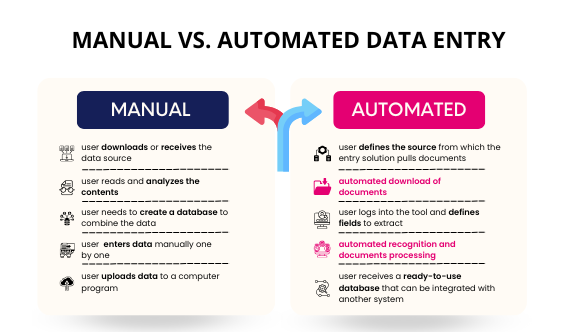
As the data collection methods have extreme influence over the validity of the research outcomes, it is considered as the crucial aspect of the studies
- 1. Introduction
- 2. DeepHealth’s Diagnostic Suite™: Revolutionizing Radiology Workflows
- 3. Key Features
- 4. AI Impact on National Screening Programs
- 5. SmartMammo™: Enhancing Breast Cancer Screening
- 6. DeepHealth AI Use Cases Across Specialties
- 7. Strategic Collaborations and Ecosystem Expansion
- 8. Impact and Adoption of DeepHealth’s AI Solutions
- 9. Conclusion: The Future of Radiology with AI
- 10. References
In current AI development, it is necessary to have a library that is both powerful and easy to use in designing neural networks. This is where the Keras deep learning framework comes in. It has a high-level interface that enables the developer to concentrate more on the logic of the program rather than the mathematical calculations. This has made it popular in both research and industry.[1]
Seamless Integration and Modular Design in Machine Learning
The architecture is designed with usability in mind and provides seamless compatibility with current machine learning environments.
- User-Friendly Design: The architecture is clean and helps to reduce development time.
- TensorFlow Compatibility: Model optimization and hardware acceleration are provided through Keras with TensorFlow.
- Modular Components: Layers, optimizers, and loss functions are easily customizable.
- Cross-Platform Support: Runs well on various operating systems and environments.
- Performance Optimization: Acceleration is provided through GPUs and TPUs for faster training.
The architecture is designed with efficiency in mind but does not lack flexibility and performance.[1]
Keras Applications in Machine Learning
The framework is essential in tackling various machine learning tasks. The framework’s flexibility is ideal for experimentation and implementation.
- Predictive Modelling: Often used in classification and regression problems with Keras for machine learning.
- Beginner Learning Path: Resourced frameworks like a Keras tutorial for beginners are essential in learning about neural networks.
- Data-Driven Insights: Aids in the conversion of raw data to useful predictions.
- Rapid Prototyping: Enables rapid prototyping of an idea before implementation.
- Model Evaluation: Includes tools that simplify the process of evaluation and adjustment.
The framework is ideal for use in both learning and working settings.[2]
Neural Network Development Process using Keras
A workflow is provided for users to follow from model construction to evaluation.
- Step 1: Layer Definition: Models are constructed by stacking layers to create neural architectures.
- Step 2: Compilation: Loss functions and optimizers are chosen during model compilation.
- Step 3: Training Phase: Data is used to train models efficiently and accurately.
- Step 4: Evaluation: Evaluation metrics are used to assess the effectiveness of models.
- Step 5: Deployment Readiness: Describes how to build neural networks using Keras for practical applications.
This step-by-step guide helps to simplify complex deep learning workflows.
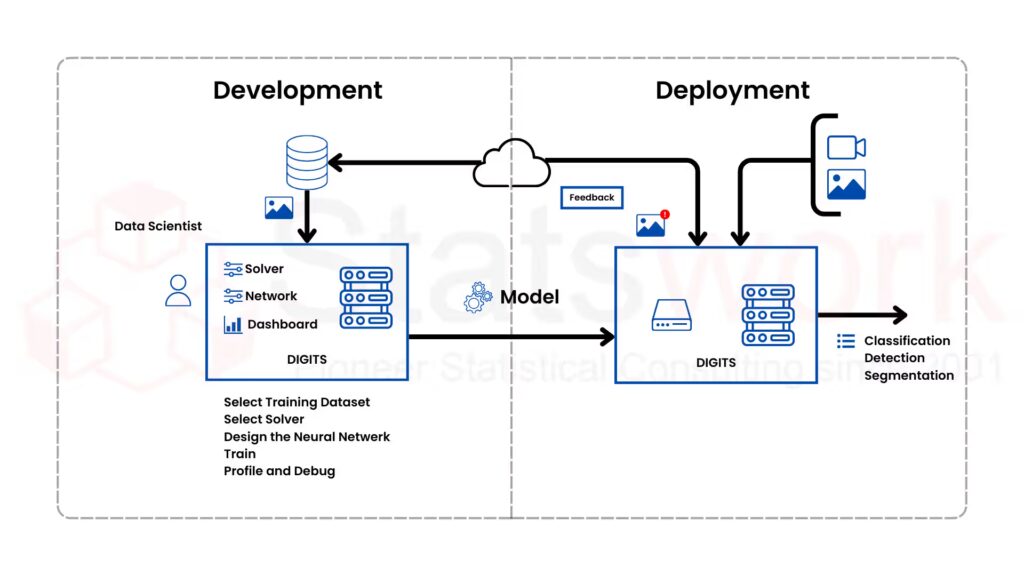
Fig 1 the Keras neural network development process from data preparation and model training to deployment and feedback integration.
Overview of Core Features and Benefits
The following table gives a summary of key features and their advantages.
Feature | Description |
Ease of Use | Simple intuitively syntax that is simple to read and use for every level |
Backend Support | Smoothly integrates into TensorFlow to facilitate the efficient computation and deployment of models |
Model Types | CNN, RNN, Dense Neural networks can all be used and support different tasks |
Scalability | Fully supports the computational capabilities of your hardware (aka CPU, GPU, TPU) for both small and large datasets |
Community | Extensive number of documentations along with tutorials and support from multiple communities to help you learn.[4] |
Real-World Projects and Use Cases
Real-world applications prove the efficiency of the framework.
- Healthcare Applications: It is used for medical image analysis and diagnosis.
- Finance Systems: It is applied for fraud detection and risk assessment.
- Recommendation Engines: It enables the delivery of personalized content.
- Image and Text Processing: It can handle vision and language tasks.
- Industry Solutions: Many Keras deep learning projects prove its versatility.
These applications prove the efficiency of the framework in turning theory into practice.[5]
In conclusion, Deep learning using Keras strikes a good balance between ease of use and expressiveness, making it suitable for simple experimentation and complex model building, especially when combined with TensorFlow.
Transform your data into insights with StatsWork’s AI & ML Solutions—build smarter models faster using Keras today!
Reference
- Ketkar, N. (2017). Introduction to keras. In Deep learning with python: a hands-on introduction(pp. 97-111). Berkeley, CA: Apress. https://link.springer.com/chapter/10.1007/978-1-4842-2766-4_7
- Gulli, A., & Pal, S. (2017). Deep learning with Keras. Packt Publishing Ltd. https://books.google.com/books?hl=en&lr=&id=20EwDwAAQBAJ&oi\
- Chengeta, K. (2019, May). A Review of Local Feature Algorithms and Deep Learning Approaches in Facial Expression Recognition with Tensorflow and Keras. In Mexican Conference on Pattern Recognition(pp. 127-138). Cham: Springer International Publishing. https://link.springer.com/chapter/10.1007/978-3-030-21077-9_12
- Koul, A., Ganju, S., & Kasam, M. (2019). Practical deep learning for cloud, mobile, and edge: real-world AI & computer-vision projects using Python, Keras & Tensorflow. O’Reilly Media. https://books.google.com/books?hl=en&lr=&id=GcS2DwAAQBAJ&oi=fnd&pg=PP1&dq=keras+Real-World+Projects+and+Use+Cases&ots=mkQLgEI155&sig=tQGWVEzhyRnOoX1_TW2eW6PVR7I