
What is ISO 11179 and how is it used in data standardization?
- Home
- Insights
- Article
- What is ISO 11179 and how is it used in data standardization?
Qualitative Research Service
- Introduction
- What is ISO 11179?
- Why ISO 11179 is Important in Data Standardization
- Core Components of ISO 11179
- How ISO 11179 is Used in Data Standardization
- Applications for ISO 11179 Across Industries
- Benefits of ISO 11179 in Data Management
- Tools and Technologies Supporting ISO 11179
- Challenges in Implementing ISO 11179
- Best Practices for ISO 11179 Implementation
- Future of ISO 11179 in Data Standardization
- Conclusion
News & Trends
Recommended Reads

Data Collection
As the data collection methods have extreme influence over the validity of the research outcomes, it is considered as the crucial aspect of the studies
- 1. Introduction
- 2. DeepHealth’s Diagnostic Suite™: Revolutionizing Radiology Workflows
- 3. Key Features
- 4. AI Impact on National Screening Programs
- 5. SmartMammo™: Enhancing Breast Cancer Screening
- 6. DeepHealth AI Use Cases Across Specialties
- 7. Strategic Collaborations and Ecosystem Expansion
- 8. Impact and Adoption of DeepHealth’s AI Solutions
- 9. Conclusion: The Future of Radiology with AI
- 10. References
In the current data-driven environment, organizations are increasingly using many systems to process and manage huge volumes of data. When unstructured, such data tends to become disorganized, ambiguous, and hard to integrate. At this point, ISO 11179 comes in handy [1].
ISO 11179 is a worldwide metadata standard that aims at helping organizations ensure that data elements are well defined, consistent, and easily shareable. It acts as a basis for data standardization, metadata management, as well as data interoperability.
What is ISO 11179?
ISO 11179 is an international standard for metadata registries. It is a framework for describing, naming, and managing data elements so they have a common understanding.
In essence, ISO 11179 is a standard that deals with:
- Data element definition with clear meaning
- Standard naming conventions for data elements
- Data element organization within a metadata registry standard
- Data governance frameworks [2]
This ensures that not only is the data stored, but it is also given a useful description.
Why ISO 11179 is Important in Data Standardization
Data standardization is a process that ensures different sources of data are represented in a uniform format. ISO 11179 is a key contributor to this process because it helps organizations create a common language for their data.
Key Importance of ISO 11179:
- It helps eliminate ambiguity in data definition
- It helps improve data interoperability standards
- It helps improve data quality
- It helps organizations comply with regulatory requirements
- It helps improve data governance [3]
Without ISO 11179, organizations are likely to encounter problems such as duplication, inconsistency, and integration.
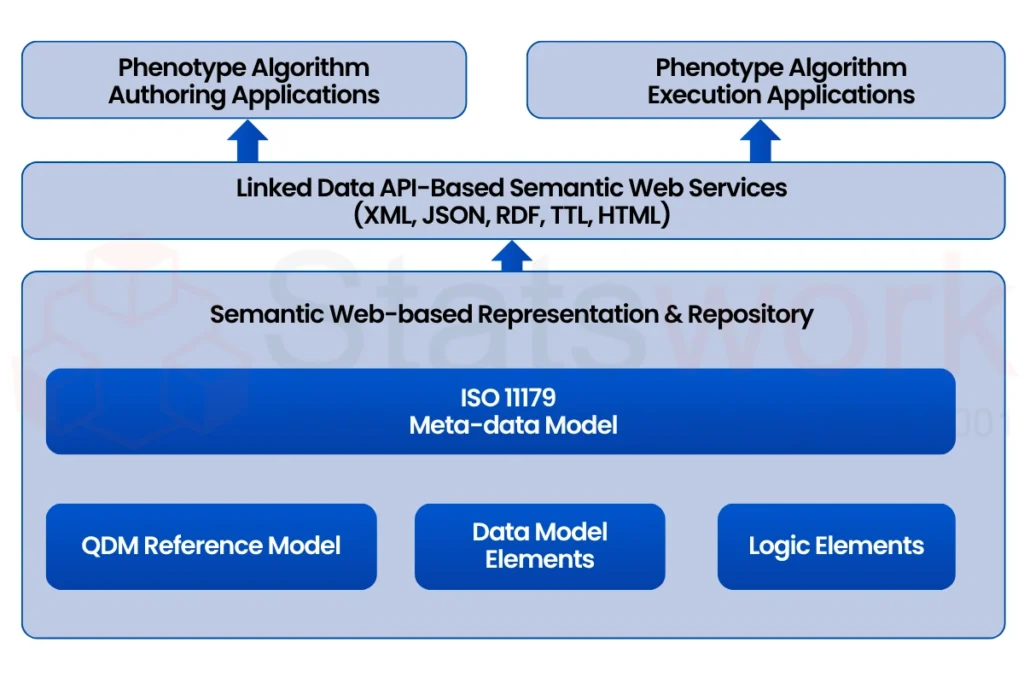
Figure 1: ISO 11179 Metadata Model in Semantic Web Architecture
The core components of ISO 11179
ISO 11179 consists of a few key components, which are the core components of ISO 11179 practices.
1. Data Element Concepts
These concepts represent the meaning of the data elements. The concepts are independent of the representations. For example, the concept of the data element is “Patient Age.”
2. Data Elements
These are the actual representations of the data elements. In the above example, the actual representation is “Age in years, integer.”
3. Value Domains
These represent the actual value domain for the data elements. In the above example, the actual value domain is numeric [3].
4. Metadata Registry
The ISO 11179 metadata registry is a central repository where the actual definitions of the data elements are maintained.
5. Naming and Identification
The actual naming conventions for the data elements make the ISO 11179 metadata management practices easy to identify [4].
The Way ISO 11179 is Used for Data Standardization
ISO 11179 is used as a methodology for the application of various data standardization techniques. ISO 11179 is used by various organizations to ensure the standardization of the definitions and formats used for the representation of the data on different platforms.
|
Step 1: Definition of Data Elements The various data elements are clearly defined using the guidelines provided by ISO 11179. This helps in the creation of a unique meaning for the various data elements. |
|
Step 2: Metadata Registry Creation A centralized metadata registry standard is established to store all data definitions. This acts as a single source of truth. |
|
Step 3: Standardization of the Naming Convention The naming convention is standardized for the purpose of clarity. This is done to eliminate the duplication of various data elements. |
|
Step 4: Creation of Value Domains The value domain is created for the purpose of defining the various value-related aspects for the different data elements. |
|
Step 5: Facilitating the Integration of the Data The standardized data elements are used for the purpose of facilitating the integration of the data. |
Applications for ISO 11179 Across Industries
ISO 11179 is used across various industries where the use of precise and standardized data is required.
1. In the field of Healthcare and Clinical Research
ISO 11179 is used for the standardization of clinical data, where precise definitions are required for patient information, lab results, and clinical trials.
2. In the field of Finance and Banking
ISO 11179 is used for the precision of financial data, which is required for reporting, risk management, and regulatory compliance [3].
3. In the field of Government and Public Sector
ISO 11179 is used for the standardization of government data, where precise definitions are required for the sharing of data between government agencies.
4. In the field of Enterprise Data Management:
ISO 11179 is used for enterprise data management, ensuring consistent data definitions across large organizational systems
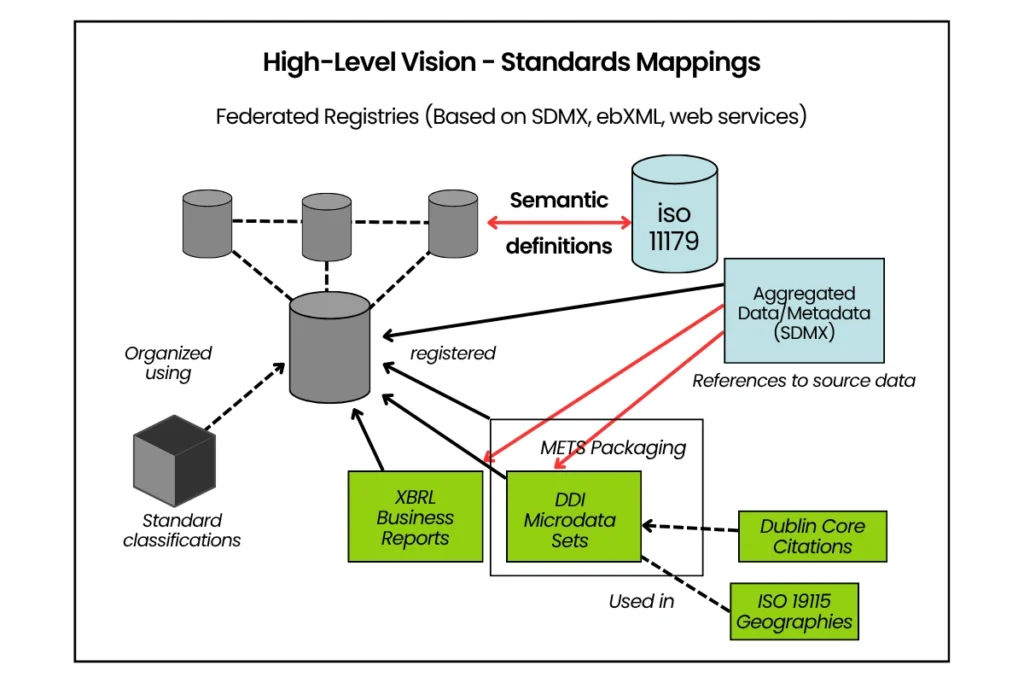
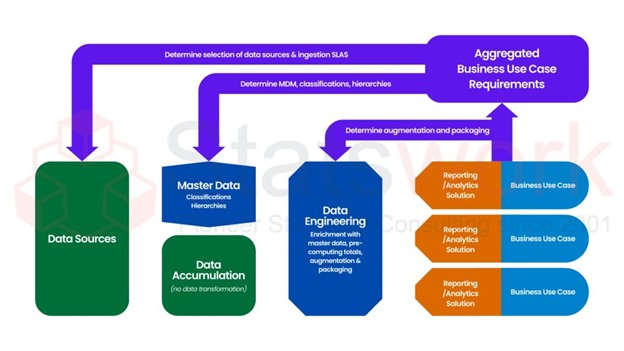
Figure 2: ISO 11179 in the Data Standardization Ecosystem
Benefits of ISO 11179 in Data Management
ISO 11179 implementation provides a wide range of advantages for organizations that seek to advance their data management approach.
1. Improved Data Quality
Definition leads to improved quality by reducing errors.
2. Improved Data Interoperability
Supports the smooth communication between different systems using data interoperability standards [4].
3. Improved Data Governance
Enhances the strength of the data governance framework.
4. Improved Data Integration
Supports the smooth integration between different platforms using data integration standards.
5. Increased Reusability
The standard allows for the reuse of the defined data elements for different projects.
Tools and Technologies Supporting ISO 11179
There are several tools and technologies used by organizations to implement metadata management using ISO 11179 successfully:
- Metadata registry tools
- Data catalog tools
- Data governance tools
- Data mapping and integration tools
These technologies assist organizations in automating the process of data management and standardization [4].
Challenges in Implementing ISO 11179
Although implementing ISO 11179 has several benefits, it also has some challenges:
- Complexity in interpreting the ISO 11179 standard
- Need for data management experts
- Integration of ISO 11179 with existing systems
- Resource and time requirements
- Maintaining data consistency
These challenges can be overcome by organizations.
Best Practices for ISO 11179 Implementation
To achieve success in ISO 11179 implementation, organizations should consider the following best practices:
- Develop a robust data governance strategy
- Implement a centralized ISO 11179 metadata registry
- Develop a strategy for using standardized naming conventions
- Develop data standardization skillsets for team members
- Regularly update and audit the ISO 11179 metadata registry
These best practices will help organizations achieve success in data standardization.
Future of ISO 11179 in Data Standardization
As organizations continue to implement digital transformation strategies, the relevance of ISO 11179 standards for data registry will increase. As data volumes continue to increase, the need for data to be well structured, interoperable, and of high quality has never been more important [3].
Technologies such as AI, machine learning, cloud computing, etc., depend heavily on data standards. ISO 11179 standards will be instrumental in the success of these emerging technologies since they provide a robust platform for data integration.
Conclusion
ISO 11179 plays a critical role in enabling data standardization, metadata management, and interoperability across modern systems. By adopting this standard, organizations can ensure consistent, high-quality, and reusable data, ultimately driving better decision-making and efficient data integration.
Partner with Statswork for expert Data Standardization Services—get a FREE consultation today and turn your data into a powerful asset!
Reference
- Patel, M. (2000, May). ISO/IEC 11179: Specification and Standardization of Data Elements: Combining multiple metadata standards in implementations: User experience and requirements. In First SCHEMAS Workshop: Combining multiple metadata standards in implementations: User experience and requirements. https://purehost.bath.ac.uk/ws/
- Warzel, D. B., & Reeves, D. M. (2016). Cross-walking health content standards using the ISO/IEC 11179 metadata registries standard. J AHIMA, 87(07), 46-9. https://journal.ahima.org/Portals/
- Bourda, Y., & Delestre, N. (2004). Improving the interoperability between distinct educational metadata schemas using ISO 11179. In EdMedia(pp. 21-27). Association for the Advancement of Computing in Education (AACE). https://www.learntechlib.org/
- Lee, S., Jeong, D., Gim, J., & Baik, D. K. (2014). Canonical sensor ontology builder based on ISO/IEC 11179 for sensor network environments: A standardized approach. International Journal of Distributed Sensor Networks, 10(3), 790918. https://journals.sagepub.com/