
What is Image Object Detection and How is it Used in Computer Vision?
- Home
- Insights
- Article
- What is Image Object Detection and How is it Used in Computer Vision?
Qualitative Research Service
News & Trends
Recommended Reads

Data Collection
As the data collection methods have extreme influence over the validity of the research outcomes, it is considered as the crucial aspect of the studies
- 1. Introduction
- 2. DeepHealth’s Diagnostic Suite™: Revolutionizing Radiology Workflows
- 3. Key Features
- 4. AI Impact on National Screening Programs
- 5. SmartMammo™: Enhancing Breast Cancer Screening
- 6. DeepHealth AI Use Cases Across Specialties
- 7. Strategic Collaborations and Ecosystem Expansion
- 8. Impact and Adoption of DeepHealth’s AI Solutions
- 9. Conclusion: The Future of Radiology with AI
- 10. References
Introduction
In today’s rapidly evolving digital environment, machines are becoming capable of understanding and interpreting images. Image object detection is a key technology in computer vision that enables systems to identify and locate objects within images and videos [1].
The application of AI object detection is changing the face of many industries. AI object detection is a powerful technology that allows businesses to use the power of machine learning computer vision.
What is Image Object Detection?
Image object detection is a computer vision technique used for detecting objects within an image. Unlike image classification, which only classifies an object, object detection not only classifies an object but also localizes it within an image. In summary, object detection has two main aspects [2].
- Object classification – The class or type of object
- Object localization – Where the object is within the image
For instance, in an image containing several objects, object detection would be able to identify all the objects within that image, such as a person, a car, a dog, and so forth, and then draw boxes around them. All this is made possible by deep learning object detection models.
How Image Object Detection Works
Object detection is a computer vision technique that uses deep learning algorithms to identify and locate objects within images.
Step 1: Image Input
The system receives the image or the video feed as input.
Step 2: Feature Extraction
The system utilizes convolutional neural networks to extract the important features from the image. Feature extraction includes the identification of edges, textures, and shapes [3].
Step 3: Object Identification
The system utilizes object detection algorithms to identify the objects present in the image.
Step 4: Localization
The system utilizes bounding boxes to identify the position of the object.
Step 5: Output Generation
The system generates output, which is utilized for the generation of a real-time object detection system [4].
The popular models utilized for the generation of the object detection system are YOLO, SSD, Faster R-CNN, etc.
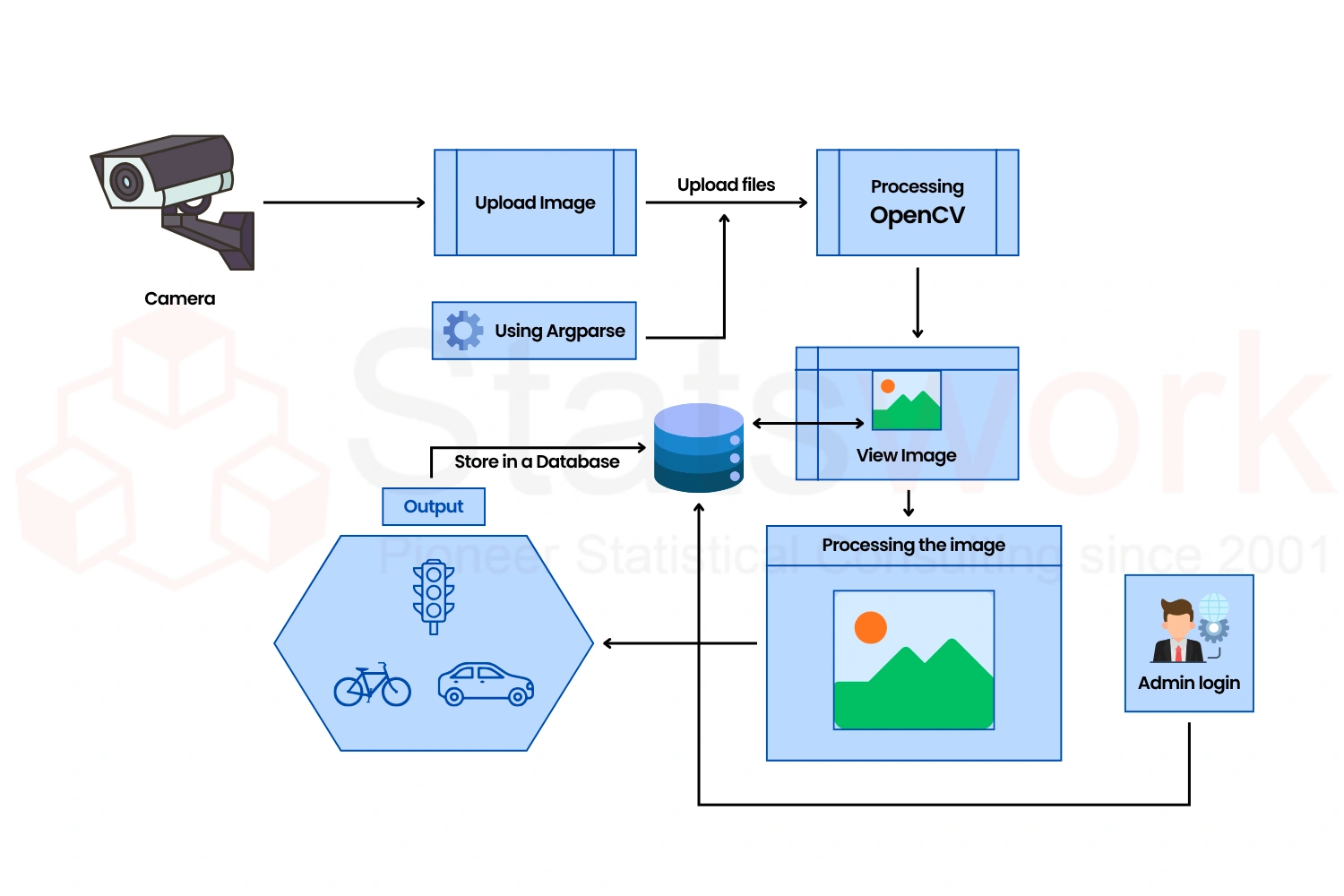
Figure 1: Image Processing and Object Detection Workflow using OpenCV
Key Techniques for Object Detection
Several techniques are employed for increasing accuracy as well as efficiency of image analysis using AI. The key techniques are as follows:
- Region-Based Detection (R-CNN): This technique finds the region of interest and then classifies it.
- Single Shot Detectors (SSD): This technique enables faster detection of objects with a single pass [5].
- YOLO (You Only Look Once): This technique facilitates real-time object detection with high accuracy as well as speed.
- Deep Learning Models: This technique uses neural networks for increasing precision.
Applications of Image Object Detection
Image object detection is used in various industries due to its versatility and efficiency.
1. Autonomous Vehicles
Self-driving cars make use of object detection technology in real-time to detect pedestrians, vehicles, traffic lights, and other road obstacles.
2. Healthcare
Object detection technology is used in the field of medical imaging to diagnose various diseases and ailments.
3. Retail and E-commerce
Object detection technology is used in the retail sector for inventory management and customer behavior analysis [3].
4. Security and Surveillance
Video surveillance is made possible using video tracking and object detection technology.
5. Manufacturing
Object detection technology is used in the manufacturing sector for quality inspection and production line automation.
6. Agriculture
Object detection technology is used in the agriculture sector for crop inspection and pest control.
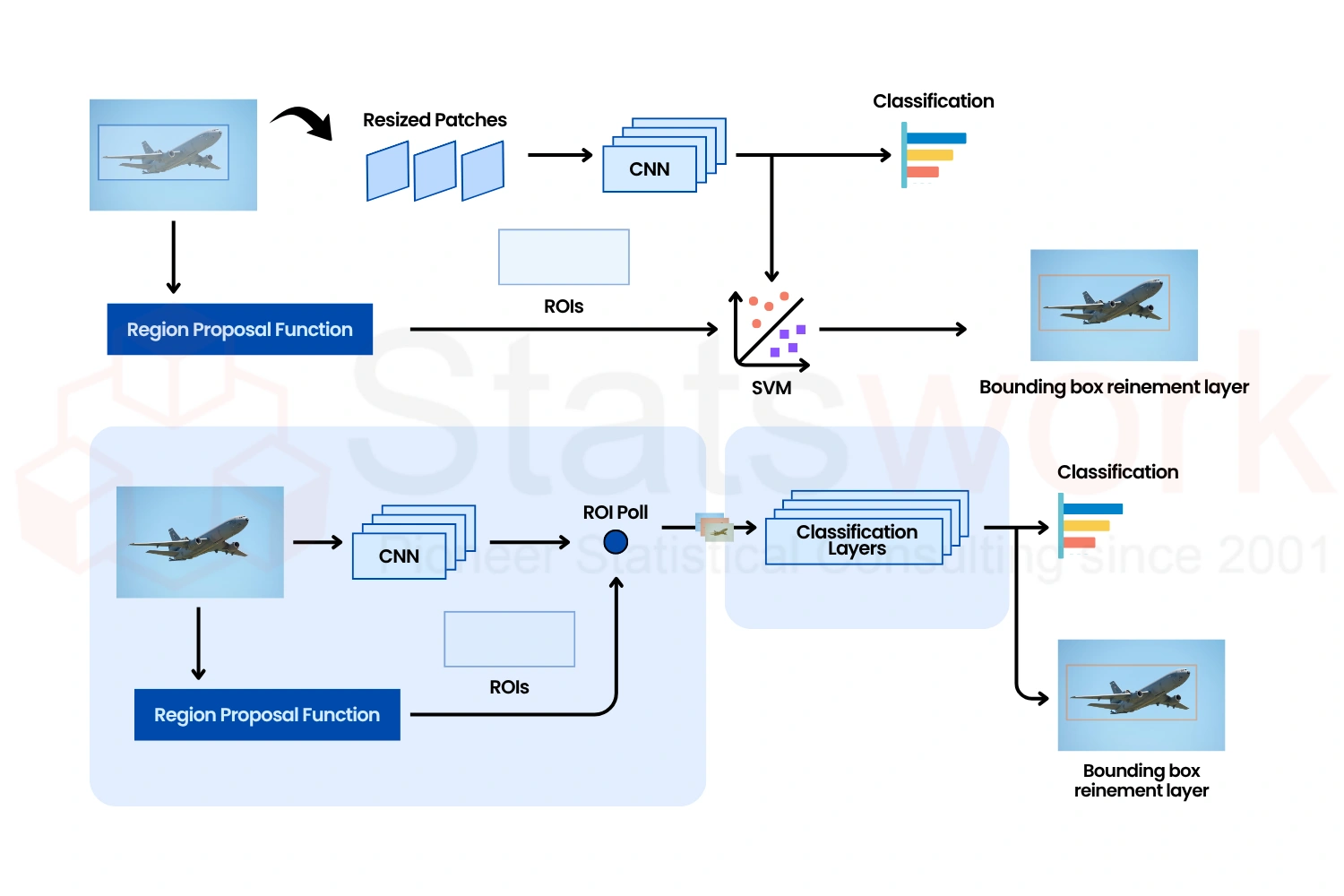
Figure 2: Image Object Detection Workflow using CNN and Region Proposal Networks
Benefits of Image Object Detection
1.Automation and Efficiency
It avoids manual efforts by using the automation feature for the inspection of images.
2. Real-Time Insights
It enables fast decision-making using real-time object detection technology.
3. Improved Accuracy
It provides high accuracy in the object detection feature using deep learning technology.
4. Scalability
It is efficient in handling a large amount of visual data [5].
5. Enhanced Business Intelligence
It helps in making informed decisions using computer vision technology.
Challenges in Object Detection
Despite its advantages, image object detection faces several challenges:
- Complex Scenes and Overlapping Objects
- Variations in Lighting Conditions, Angle, and Image Quality
- High-End Computing Needs
- Need for Large Dataset [2]
- Lack of Accuracy in Real-Time Object Detection
These disadvantages can be overcome using the advanced deep learning object detection technology.
Role of Object Detection in AI Solutions
Object detection is a significant part of computer vision solutions. Businesses are utilizing object detection for developing intelligent systems that can process visual information.
Object detection solutions, such as AI object detection for security, are revolutionizing businesses, including manufacturing, through efficiency and cost reduction.
Future of Image Object Detection
The future of object detection technology is:
- Using edge computing for faster processing
- Using object detection technology for smart cities with AI-based automation
- Increasing accuracy with advanced neural networks
- Using object detection technology for augmented reality (AR) and virtual reality (VR) [4]
As technology is evolving, object detection, along with image recognition AI, is going to play a significant role in developing intelligent systems.
Conclusion
Object detection in images is a significant technology in computer vision that allows computers to process images. It uses a combination of deep learning object detection, machine learning computer vision, and algorithms to offer robust solutions to businesses [5].
Object detection in images is a significant technology in computer vision that enables machines to interpret visual data accurately.
👉 Statswork delivers advanced AI object detection solutions, helping businesses implement scalable, real-time computer vision systems for smarter decision-making.
Reference
- Pathak, A. R., Pandey, M., & Rautaray, S. (2018). Application of deep learning for object detection. Procedia computer science, 132, 1706-1717. https://www.sciencedirect.com/science/article/pii/S1877050918308767
- Amit, Y., Felzenszwalb, P., & Girshick, R. (2021). Object detection. In Computer vision: A reference guide(pp. 875-883). Cham: Springer International Publishing. https://link.springer.com/rwe/10.1007/978-3-030-63416-2_660
- Raj, A., Kannaujiya, M., Bharti, A., Prasad, R., Singh, N., & Bhardwaj, I. (2019). Model for object detection using computer vision and machine learning for decision making. International Journal of Computer Applications, 181(43), 42-46. https://d1wqtxts1xzle7.cloudfront.net/74943506/ijca2019918516-libre.pdf?1637469669=&response-content-disposition=inline%3B+filename%3DModel_for_Object_Detection_using_Compute.pdf&
- Dorner, J., Kozák, Š., & Dietze, F. (2015, June). Object recognition by effective methods and means of computer vision. In 2015 20th International Conference on Process Control (PC)(pp. 198-202). IEEE. https://ieeexplore.ieee.org/abstract/document/7169962
- Holm, E. A., Cohn, R., Gao, N., Kitahara, A. R., Matson, T. P., Lei, B., & Yarasi, S. R. (2020). Overview: Computer vision and machine learning for microstructural characterization and analysis. Metallurgical and Materials Transactions A, 51(12), 5985-5999. https://link.springer.com/article/10.1007/S11661-020-06008-4