

Q & A
Data Analysis
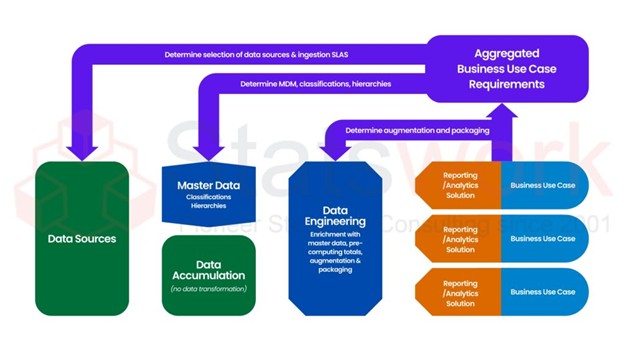
Q: What are the Various Steps Involved in Any Analytics Project?

1. Problem identification
Before defining a business problem, one must identify the business’s goals. This will help you stay focused on your stakeholders, and the project will move in the right direction.
2. Data collection and cleaning
- After defining a problem, the next step is to gather the appropriate data to assist in resolving that problem. You will need to combine multiple forms of data, whether through database queries, web service connections, or through opening and processing external data files.
- Cleaning the data you are collecting will also be critical. You need to ensure the data has the proper attributes at the proper time and in the proper format to make it usable.
3. Exploratory Data Analysis (EDA)
- The purpose of EDA is to explore the collected data to understand what it looks like, the type of data, how you could group it, and if there are any grouping possibilities for data analysis purposes.
- Some forms of EDA include, but are not limited to, examining the following items: averages, histograms, time-series plots, correlation, etc.
4. Modelling
- Once you have collected, cleaned, and explored your data, the next step is to build models using statistical and/or machine learning techniques to provide insights, forecasts, or answers to the business problem.
- Depending on the type of data you are using and what type of answer you are trying to obtain (ex: predictions for future values) will determine what type of model is built (ex: regression-based model for continuous values, classification / clustering models, etc.).
5. Reporting of Insights
- After you have completed your data analysis, you will need to communicate your findings with your stakeholders so they understand how those findings can be utilized to help the overall business achieve its goals.
- Reports for stakeholders can be provided via visualizations (e.g., charts), concise summaries of your discoveries and conclusions, etc.