
What is Data Integration?
- Home
- Insights
- Article
- What is Data Integration?
Qualitative Research Service
News & Trends
Recommended Reads
Data Collection
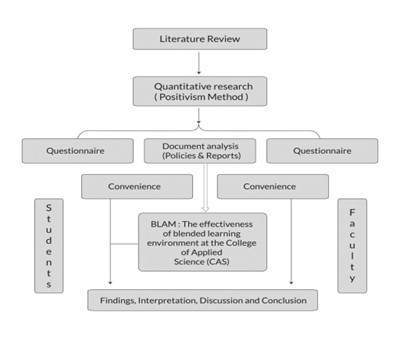
As the data collection methods have extreme influence over the validity of the research outcomes, it is considered as the crucial aspect of the studies
- 1. Introduction
- 2. DeepHealth’s Diagnostic Suite™: Revolutionizing Radiology Workflows
- 3. Key Features
- 4. AI Impact on National Screening Programs
- 5. SmartMammo™: Enhancing Breast Cancer Screening
- 6. DeepHealth AI Use Cases Across Specialties
- 7. Strategic Collaborations and Ecosystem Expansion
- 8. Impact and Adoption of DeepHealth’s AI Solutions
- 9. Conclusion: The Future of Radiology with AI
- 10. References
The way businesses today operate produces a great deal of data stored in many different places; these include multiple systems, such as databases, applications, spreadsheets, and cloud services. Data integration will enable the gathering of all this dispersed information into one cohesive view so that businesses can analyze their data more effectively and have one definitive place from which to base their business decisions.[1]
How Data Integration Drives Better Decisions and Analytics
The importance of efficient approaches to managing your organization’s data has never been more evident, with successful implementations of integrated data allowing for:
- Data-driven decisions that produce accurate and complete information.
- Eliminating duplication of effort in collecting and cleansing data.
- Reduced inconsistency between the various divisions and systems of the organization.
- Improved analytical capabilities that inform the creation of dashboards, reports and artificial intelligence-based insights.[2]
Primary Data Sources for Effective Integration
Data can come from multiple data sources, including:
- Relational and NoSQL databases handle structured as well as unstructured data.
- Nowhere is data more visible than in tools such as CRM, ERP, and HR platforms – watching how businesses run and connect with customers.
- Spreadsheets sit alongside CSV files – handy when sharing reports or holding tiny datasets.
- Outside sources like websites or live feeds bring in data – real time or collected later.
- Data lives on multiple cloud services and apps when hosted there.
Information gathered from these sources helps build a clearer, connected picture of data – useful for studying and choosing paths forward.[3]
Understanding the ETL Process for Data Integration
ETL (Extract Transform Load) is the basis of data unification or integration because:
- Data extraction: All relevant data is gathered from various data sources.
- Data transformation: All data is cleaned, formatted and standardized.
- Data loading: Processed data is stored in the target data storage system (e.g. data warehouse or analytic platform).
With this systematic approach, we have confidence in the accuracy of our data and our ability to analyze it.[4]
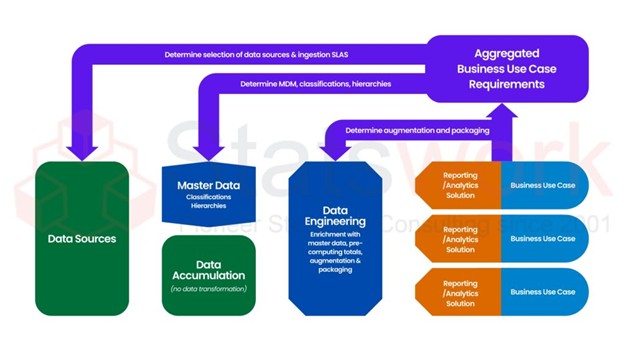
Fig 1 how data from multiple sources is integrated into a unified view to generate insights through analytics.
Exploring the Main Types of Data Integration
The choice of the appropriate strategy is based upon the organization’s environment.
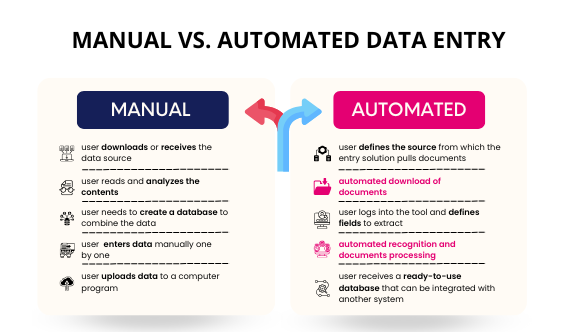
- Manual integration: Basic spreadsheets or basic file formats (time-consuming, likelihood of errors).
- Middleware and application-based integration: Automatically associates multiple system databases in real-time.
- Cloud data integration: Perfect for large scale databases spread out over multiple computer systems, and no manual transfer required.
- Data virtualization: Access to database information in real-time, without physically storing.[5]
Example,
CRM, Website & Accounting Data
↓
Data Combined into Unified View
↓
Revenue, Customer Trends & Performance Tracked
↓
Insights Generated Through Analytics
In summary, Data Integration is an essential component of successful data management as it allows for the transformation of multiple disparate data sources into useful, actionable insight that is utilized to make more intelligent decisions, increase the rate of analytics and support ongoing growth for the business.
Simplify data complexity through secure Data Management and intelligent data integration by StatsWork.
Reference
- Doan, A., Halevy, A., & Ives, Z. (2012). Principles of data integration. Elsevier. https://books.google.com/books?hl=en&lr=&id=s2YCKGrO10YC&oi=fnd&pg=PP2&dq=Data+Integration&ots=SPRPv2SVT5&sig
- Lenzerini, M. (2002, June). Data integration: A theoretical perspective. In Proceedings of the twenty-first ACM SIGMOD-SIGACT-SIGART symposium on Principles of database systems(pp. 233-246). https://dl.acm.org/doi/abs/10.1145/543613.543644
- Doan, A., Domingos, P. M., & Levy, A. Y. (2000, May). Learning source description for data integration. In WebDB (informal proceedings)(pp. 81-86). http://homes.cs.washington.edu/~pedrod/papers/webdb00.pdf
- Huang, S., Chaudhary, K., & Garmire, L. X. (2017). More is better: recent progress in multi-omics data integration methods. Frontiers in genetics, 8, 84. https://www.frontiersin.org/journals/genetics/articles/10.3389/fgene.2017.00084/full
- Benedikt, M., Chan, C. Y., Fan, W., Freire, J., & Rastogi, R. (2003, June). Capturing both types and constraints in data integration. In Proceedings of the 2003 ACM SIGMOD international conference on Management of data(pp. 277-288). https://dl.acm.org/doi/abs/10.1145/872757.872792