The appropriate statistical method used in quantitative research is just as vital to the success of any study as is obtaining a good-quality dataset. Within this very broad range of data analysis methodologies, ANOVA is perhaps one of the most frequently used. This ANOVA statistical test will enable a researcher to assess if there are significant differences between means of groups. Unfortunately, in some cases, researchers become confused about which kind of ANOVA to use.[1]
A good research question is the basis for proper statistical analysis. It is important to clearly define what is being compared to select the proper method of analysis.
One-way ANOVA can be applied in a research study when the objective is to determine the effect of a single variable on a continuous variable.
In many real-world research problems, more than one factor may be operating simultaneously. Two-way ANOVA makes it possible to analyse the combined effects of such factors, and the results become more meaningful and realistic.
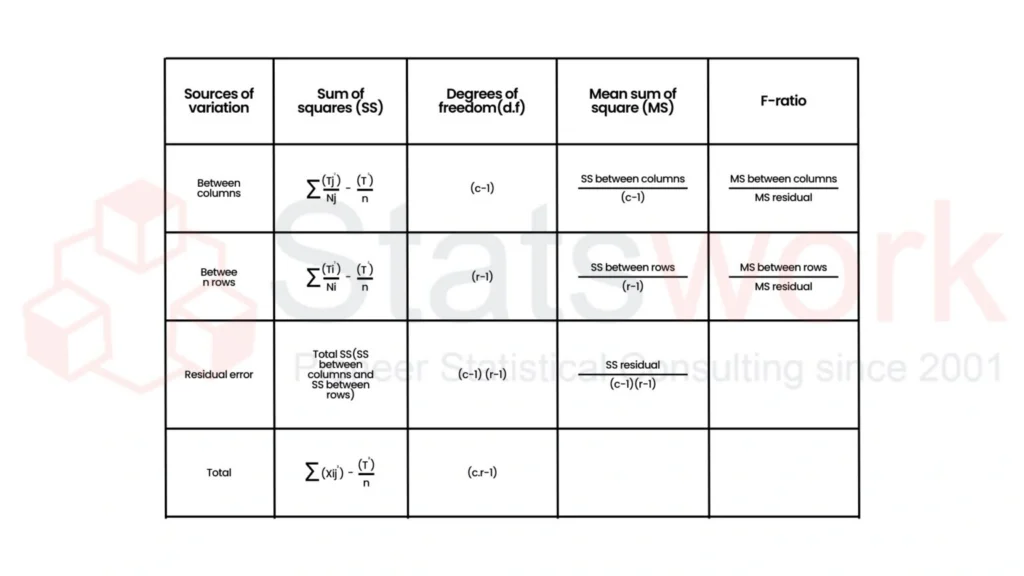
Fig 1 shows ANOVA table illustrating sources of variation, degrees of freedom, and F-ratio calculations.
Interaction effects enable researchers to comprehend the impact of variables on outcomes collectively, rather than individually.
No matter the procedure followed, there are certain assumptions that need to be checked before the analysis is done. These assumptions are crucial in ensuring the validity of the results.
Assumption | Why It Matters | How to Check |
Normality | Ensures accurate mean comparisons | Shapiro-Wilk test, Q–Q plots |
Homogeneity of variance | Prevents biased test results | Levene’s test |
Independence of observations | Maintains statistical validity | Study design verification |
Failure to consider these assumptions may affect the validity of the ANOVA statistical test, even if the data is well organized. This is a crucial part of step-by-step ANOVA analysis guide.[4]
Using real-life examples can assist researchers in determining whether one-way ANOVA or two-way ANOVA should be used.
Research Scenario | Study Focus | Suitable ANOVA Approach |
Comparison of recovery time among treatment groups | Effect of a single treatment factor | One-way ANOVA |
Comparison of exam scores among teaching methods | Effect of a single instructional approach | One-way ANOVA |
Analysis of treatment effectiveness by gender and age | Combined effect of two factors | Two-way ANOVA |
Analysis of productivity among role type and work shift | Interaction between two variables | Two-way ANOVA |
This comparison makes it abundantly clear that there is a choosing between one-way and two-way ANOVA.[5]
Choosing the right approach to ANOVA is an essential part of good research analysis. Through proper understanding of research design, testing assumptions, and following a systematic procedure, researchers can apply the right test with confidence. Being proficient in this procedure not only helps in difference between one-way and two-way ANOVA but also enhances the overall quality of research analysis. In the end, making the right statistical decisions helps in arriving at the right research conclusions.
StatsWork transforms your data analysis journey, converting ANOVA results into practical research strategies.
WhatsApp us