Data Analysis services

Meta-Analysis Research Services

Data Collection Services

Statistical Programming & Biostatistics services

Data Management Services

Research methodology services

Tool development services
Statistical Interpretation services

Statistical Interpretation services
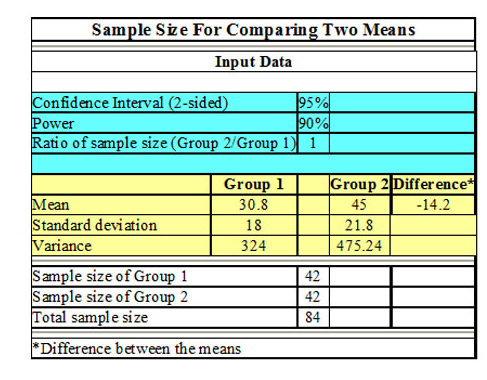
Sample Size Calculation Services

Sample Size Calculation Services
Artificial Intelligence and Machine Learning Services

Artificial Intelligence and Machine Learning Services
Report generation Service

Report generation Services

Data Analysis services

Meta-Analysis Research Services

Data Collection Services

Statistical Programming & Biostatistics services

Data Management Services

Research methodology services

Tool development services
Statistical Interpretation services

Statistical Interpretation services
Sample Size Calculation Services

Sample Size Calculation Services
Artificial Intelligence and Machine Learning Services

Artificial Intelligence and Machine Learning Services
Report generation Service

Report generation Services
Contract Research Organizations (CROs) are an important part of the pharmaceutical company with respect to pharmaceutical drug development. In an increasingly complex clinical trial development and regulatory constraints environment, high-quality and evidence-based strategies have never been as important as they are now. One of the strategies that CROs can take advantage of about enhancing their clinical strategy is using meta-analysis. Meta-analysis is aggregating the data from multiple studies to reach robust, statistically meaningful conclusions and provides a more holistic understanding of treatment effect.[1]
This article will look at how CROs can utilize meta-analysis to streamline trial design, enhance patient and community recruitment, provide a development framework for regulatory submission, and occur faster drug development timeframes.
In the ever-increasing competitive environment of the pharmaceutical industry, CROs have the challenge of providing data that is both reliable and actionable. To respond to the ever-increasing demands of regulatory bodies and stakeholders, CROs must provide:
Figure 1: Best Evidence Synthesis Guidelines outlining criteria for evaluating study quality, consistency, and quantity to ensure reliable, reproducible results in clinical trials.
Even with the expertise of CROs, there are still challenges that exist with clinical trials:
FIG 2: Clinical Trial Costs by Phase and Therapeutic Area
This figure shows the variation in trial costs across phases and therapeutic areas, reflecting challenges like study variability and small sample sizes.
| Meta-Analysis Benefit | Definition | % Benefit |
| Statistical Power and Precision | The advantage of combining data is the increased sample size, which gives greater accuracy and reduces the chance of false results. | 30% |
| Improved Precision and Confidence | Pooling data improves statistical confidence and minimizes the risk of false positives/negatives. | 25% |
| Identifying Small Effects | Enables detection of small treatment effects that may not be significant in individual trials. | 20% |
| Subgroup Analysis | Allows analysis of subgroups (e.g., age, comorbidities) to derive treatment relevance. | 15% |
| Personalized Medicine Approach | May improve treatment targeting for specific patient populations. [2] | 10% |
| Safety Assessment | Pools adverse events to identify rare or long-term safety risks. | 10% |
| Evaluating Durability of Treatment Effects | Assesses how long treatment effects are maintained over time. | 5% |
| Benefit–Risk Profile | Compares efficacy versus safety to support benefit–risk decision-making. | 15% |
| Positioning a New Treatment Purpose | Compares new treatments with existing therapies to support approval decisions. | 5% |
Table 1: shows you that meta-analysis boosts clinical strategies by enhancing statistical power, precision, safety, and the benefit-risk profile.
Improving Trial Design
Best Practices for Conducting Meta-Analysis
For a Contract Research Organization (CRO), the meta-analysis can be an important method that can significantly increase a clinical strategy. Meta-analysis can increase statistical power by combining information in many studies, detail subgroup analyses, improve safety, and enhance the benefit-risk assessment of treatments.[5] For a CRO, the addition of meta-analysis into clinical trials and regulatory submissions will advance the speed of drug development and further strengthen the case for approval. Embracing a foundation based on evidence allows for better risk management, improved clinical strategy, and the development of richer, more meaningful, and actionable insights and advice for pharmaceutical companies while speeding the rate to market for new therapies.
Boost your clinical strategy with data-driven insights.
At Statswork, we specialize in meta-analysis services that help CROs and pharmaceutical companies achieve faster, more reliable results. Contact us today to learn more!
WhatsApp us