The Value of Text Summarization in Healthcare

Making Sense of Big Text: The Value of Text Summarization

Making Sense of Big Text: The Value of Text Summarization

May 2025 | Source: News-Medical

Introduction

The healthcare sector generates tremendous volumes of data daily, from electronic health records (EHRs) to medical studies to clinical notes. The challenges of processing and gaining useful knowledge from that data can be overwhelming for healthcare workers. Text summarization, the act of placing large volumes of text into small understandable text, is one such realm of promise. First, by utilizing text summarization for medical texts, clinicians can access pertinent information in a timely manner which can lead to better decisions and enhanced care of the patient. The purpose of this article is to discuss the significance of text summarization and the impact of data collections services in healthcare.[1]

Importance of Text Summarization in Healthcare

Text summarization helps to understand the “big text” and condenses a lot of information into a concise document. The significance of text summarization in healthcare is highlighted by the following points:

  • Enhanced Efficiency: Text summarization enables healthcare professionals to quickly access important patient information which allows the professional to save time and make more timely clinical decisions.[2]
  • Enhanced Clinical Decision-Making: Text summarization allows for faster, more-informed clinical decisions by summarizing data for providers reviewing lab results, changing patient conditions, or monitoring a patient’s clinical progress.
  • Enhanced Patient Outcomes: Faster assimilation of data leads clinicians to provide more accurate and timely care while summarizing long and complex patient histories into vital patient information.
  • Cost Reduction: Text summarization reduces a healthcare professional’s time/costs associated with reviewing lengthy documents, resource utilization, and organization of data, allowing for more effective healthcare delivery.[3]
Importance of Text Summarization in Healthcare

Text Summarization Techniques:

Extractive Summarization

This technique constructs a summary by selecting sentences, phrases, or directly excerpting from the original document. This is beneficial for structured data, such as clinical notes or test results.

Abstractive Summarization

This technique paraphrases the original text and generates a condensed, yet accurate, text version. This works well with unstructured text, such as a medical study or clinical patient narrative.[4]

In each of the summarized examples, either technique can be effectively applied, depending on the type of text. Extractive summarization is preferred when working with structured data, while abstractive summarization is suitable for unstructured data.[2]

Role of Text Data Collection Services in Healthcare

Text data collection services play a crucial role in collecting, organizing, and structuring raw data in healthcare settings to summarize such raw data. The summarization process depends on the quality of the text data. Important text data collection services include:

EHR Data Collection: This service allows for the collection of patient data from Electronic Health Records (EHRs), including medical histories, diagnosis, lab results, etc. The service offers a quick and concise review of patient information. [3]

Example: A physician reviewing a summarized format of all available information in a patient’s medical background to make quick decisions.

Clinical Data Annotation Service: A clinical data annotation service can label clinical/methodological data for identification purposes and tag the model for potential use in a machine learning model where relevant data is extracted from the annotated data for synthesis.[5]

Example: Annotating a clinical note for key and relevant medical terminologies to enhance the overall text data being used for the synthesis of the event in the clinical setting.

Medical Literature Scraping: This service summarizes data from medical journals/research articles, and other publications to retrieve or discern time-sensitive and relevant readings or data.

Example: Summarizing peer-reviewed medical clinical trial results to allow the healthcare provider quick access to recent medical literature.

NLP Solutions: Bluntly stated, Natural Language Processing (NLP) services convert unstructured qualitative clinical data into more easily summarized and structured data formats.[4]

Example: Converting free form patient notes into structured data for syntheses in a clinical setting.

Benefits of Text Data Collection for Healthcare

Text data collection for healthcare is an important step in the summarization process, and aids in ensuring accuracy, relevance, and timeliness, with different potential benefits as summarized below.[5]

Complete Data Coverage:

Provides comprehensive information by aggregating text data from several different sources (clinical records, clinical research, and lab test results) to develop a complete profile of each patient.

Data Quality and Accuracy:

Text data collection helps ensure the patient summary is accurate and done based on pertinent evidence and up to date data when developing medical (clinical) decision-making summaries.

Efficiency Opportunities:

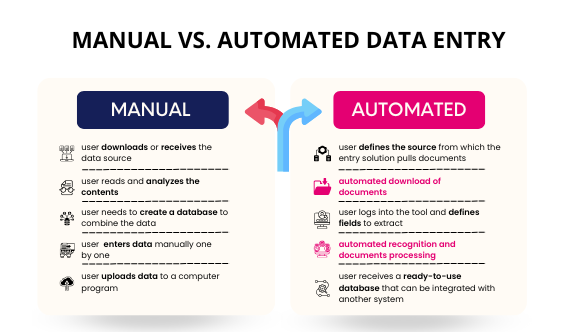
workflow process becomes more efficient because of quick, data gathering process relieves manual data entry and provides decision-makers quick data access, thereby allowing more time with patients.


Compliance to privacy regulations:

All HCP summaries maintain compliance with patient privacy regulations (such as HIPAA) to ensure patient data is eligible and legally supported to summarize.[2]


Challenges and Future Directions

While text summarization and data collection services are immensely beneficial, they also face several challenges:

Challenge

Description

Future Direction

Data Privacy

Assuring that information related to the patient is processed and categorized while preserving anonymity.

Increased privacy and security assurances and measures implemented for the summarization tool.

Domain-Specific

Language Medical terminology compounds challenges when summarizing or categorizing patient records.

Medical terminology integrated into language and AI models for NLP.

Scalability

With increased data points in healthcare data, the need for acceptable or reliable summarization tools is necessary.

Acceptable scalability would be systems capable of handling larger datasets in real-time.

Conclusion

Text summarization presents a vital and efficient service to the healthcare space by providing better management and reasoning of the large amount of data produced every day. By summarizing information for healthcare professionals into actionable summaries, text summarization has the potential to improve decision making, enhance patient outcomes, and save time and costs.[3] With the advancements in AI and natural language processing technologies, text summarization will become much more efficient and impactful, fundamentally changing the healthcare space and healthcare providers’ access to, and use of medical information.

Call to Action
Stay ahead in healthcare with Statswork’s text summarization solutions. Contact us today to explore how our AI-driven tools can streamline your workflows and enhance patient care.

References

  1. Abualigah, L., Bashabsheh, M. Q., Alabool, H., & Shehab, M. (2019). Text summarization: a brief review. Recent Advances in NLP: the case of Arabic language, 1-15.https://link.springer.com/chapter/10.1007/978-3-030-34614-0_1
  2. Babar, S. A., & Patil, P. D. (2015). Improving performance of text summarization. Procedia Computer Science46, 354-363.https://www.sciencedirect.com/science/article/pii/S1877050915000952
  3. Kanan, T., Zhang, X., Magdy, M., & Fox, E. (2015, June). Big data text summarization for events: A problem-based learning course. In Proceedings of the 15th ACM/IEEE-CS Joint Conference on Digital Libraries(pp. 87-90).https://dl.acm.org/doi/abs/10.1145/2756406.2756943
  4. Gambhir, M., & Gupta, V. (2017). Recent automatic text summarization techniques: a survey. Artificial Intelligence Review47(1), 1-66.https://link.springer.com/article/10.1007/s10462-016-9475-9?sap-outbound-
  5. Onah, D. F., Pang, E. L., & El-Haj, M. (2022, December). A data-driven latent semantic analysis for automatic text summarization using lda topic modelling. In 2022 IEEE International Conference on Big Data (Big Data)(pp. 2771-2780). IEEE. https://ieeexplore.ieee.org/abstract/document/10020259