Contact Us

Importance of Data Collection Methods and Tools for Accurate Research and Market Insights

Introduction: The Role of Data Collection in Research and Market Insights

In the current business environment where data plays a critical role, evidence-based decisions have always proven to be better than decisions made on assumptions. While organizations are involved in the launch of products, expansion into new markets, or improving the customer experience, the validity of the information obtained depends on the methods used in collecting the data. Data collection methods offer organized and valid means of obtaining information, allowing organizations to use effective research data collection techniques.[1]

Foundation of Effective Data Collection Methods

To ensure the reliability of your research, it is essential to collect data and collect it properly to support your decision-making process.

  • A list of clearly established research goals.
  • Selection of suitable Research Methodology (Surveys, Interviews, Observations).
  • The sample should represent the target population.
  • Data must be accurate and reliable.
  • Data collected must be subjected to Ethical practices and Confidentiality.
  • Methods should be regularly reviewed and refined.[1]

Key Data Collection Methods Used in Research and Market Studies

To understand trends, consumer behaviour, and research results, market research data collection is critical. Selecting the correct approach will provide the most effective, valid, and actionable insights.

  • Surveys & Questionnaires: Efficiently gather structured feedback from a large group of people.
  • Interviews: Qualitative and quantitative data Collection through individual interviewing.
  • Focus Groups: Learn about opinions and perceptions through group discussions.
  • Observations: Observe the occurrence of events or behaviours, rather than controlling them.
  • Experiments & Field Trials: Test your hypotheses in a mediated environment.
  • Secondary Data Analysis: Reference previous work (reports, databases, and publications).
  • Online Analytics & Social Media Monitoring: Track the digital behaviour and trends of individuals.[2]
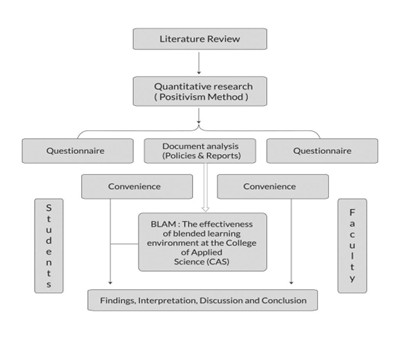
Data Collection Methods

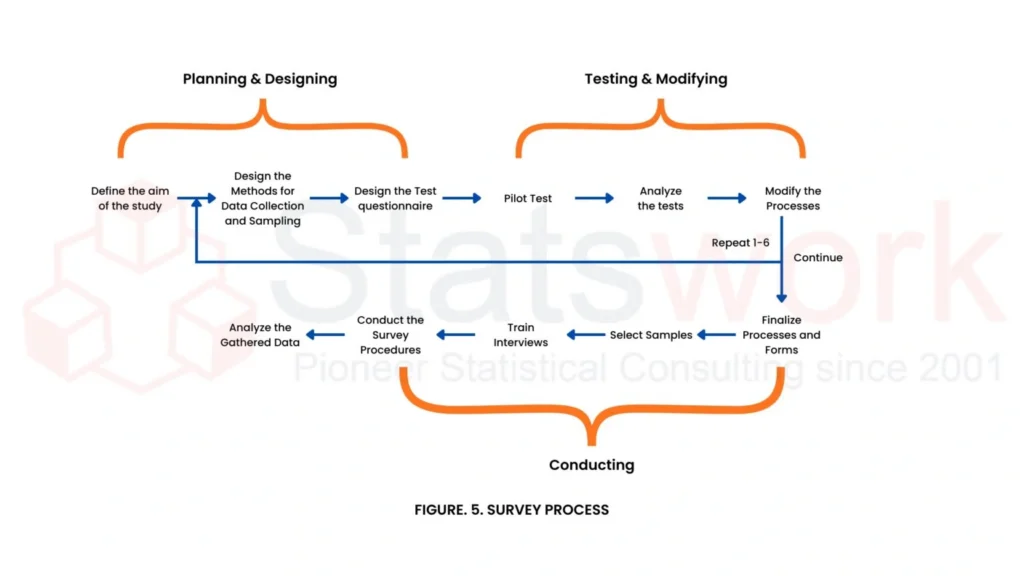
Fig 1 shows the complete workflow for effective survey design for data collection.

Tools and Technologies That Enable Accurate and Scalable Data Collection

Effective and scalable data collection tools for research depends on modern tools and technologies that simplify processes, minimize errors, and deliver useful insights in real time.

  • Online Surveys: Use Google Forms and Qualtrics for large-scale, structured responses.
  • Mobile Apps: Use KoBoToolbox and ODK for field and remote data capture.
  • CRM Systems: Use Salesforce to track customer behaviour and engagement.
  • IoT & Sensors: Collect real-time, automated data on usage and the environment.
  • Big Data Tools: Use Hadoop and Spark to process massive datasets efficiently.
  • Social Media Tools: Use Brandwatch and Hootsuite to monitor trends, sentiment, and engagement.[3]

Why Data Quality and Accuracy Are Critical for Research Outcomes

High-quality data is the foundation of reliable research. Poor data can result in wrong conclusions, wasted resources, and flawed decision-making.

  • Reliable Results: Accurate data ensures conclusions reflect reality.
  • Informed Decisions: High-quality data supports better strategies and policies.
  • Reproducibility: Trustworthy data allows research to be validated and replicated.
  • Efficiency: It reduces errors, saving time, effort, and money.
  • Credibility: It builds trust in findings among stakeholders and peers.
  • Regulatory Compliance: It meets ethical and legal standards in research practices.[4]

Common Data Collection Methods and Their Business Use Cases

Primary and Secondary Data collection methods are vital for shaping market insights and strategies. They show customer behaviour, preferences, trends, and competitive dynamics that inform business decision.

Data Collection Method

Key Market Insights

Strategic Impact

Surveys & Questionnaires

Customer needs, preferences, satisfaction

Informs product design, pricing, and service improvements

Interviews

Deep motivations and pain points

Refines positioning and value propositions

Focus Group

Collective opinions and reactions

Guides branding, messaging, and concept validation

Observations

Actual customer behaviour

Improves user experience and process efficiency

Digital & Analytics Data

Online behaviour and engagement trends

Optimizes digital marketing and targeting strategies.[5]

Why Reliable Data Collection Improves Decision-Making and Business Performance

Accurate, timely reporting improves a company’s ability to make informed, objective decisions.

  • Better Decisions: Organisations can confidently strategize through data analysis.
  • Risk Reduction: Data reduces uncertainty, mistakes and expense around the planning and execution of business activities.
  • Operational Efficiency: Data improves processes, produces more productivity and maximises resource used.
  • Performance Measurement: Data enables clear tracking of goal attainment, Key Performance Indicators (KPI) and overall business results.
  • Competitive Advantage: Data provides an opportunity for organisations to respond quickly to changing market conditions and demands from customers.[5]

Conclusion: Maximizing Research and Market Value Through Robust Data Collection

To ensure the accuracy of research results and increase the overall marketplace value of a data collection service for research study, data must be collected in a robust manner. Using high-quality data and reliable methods allows an organization to gain greater insight, reduce risk, and make more informed decisions. Strong data collection practices enable strategic planning, improved performance, and the ability to adapt to shifting market circumstances.

Make smarter moves with data that’s built right from the start—experience next-gen data collection with StatsWork.

Reference

  1. Bar-Ilan, J. (2001). Data collection methods on the Web for infometric purposes—A review and analysis. Scientometrics50(1), 7-32. https://akjournals.com/view/journals/11192/50/1/article-p7.xml
  2. Hox, J. J., & Boeije, H. R. (2005). Data collection, primary versus secondary. https://dspace.library.uu.nl/bitstream/handle/1874/23634/hox_05_data+collection,primary
  3. Sandelowski, M. (2000). Combining qualitative and quantitative sampling, data collection, and analysis techniques in mixed‐method studies.Research in nursing & health23(3), 246-255. https://onlinelibrary.wiley.com/doi/abs/10.1002/1098-240X(200006)23:3%3C246::AID-NUR9%3E3.0.CO;2-H
  4. Kairuz, T., Crump, K., & O’Brien, A. (2007). Tools for data collection and analysis. Pharmaceutical Journal278. https://www.researchgate.net/profile/Keith-Crump/publication/43499524_Perspectives_on_qualitative_research_Part_2_Useful_tools
  5. Holden, R. J., McDougald Scott, A. M., Hoonakker, P. L., Hundt, A. S., & Carayon, P. (2015). Data collection challenges in community settings: insights from two field studies of patients with chronic disease. Quality of Life Research24(5), 1043-1055. https://link.springer.com/article/10.1007/s11136-014-0780-y

Contact us