
- Services
- Data Analysis services
- Sample Work
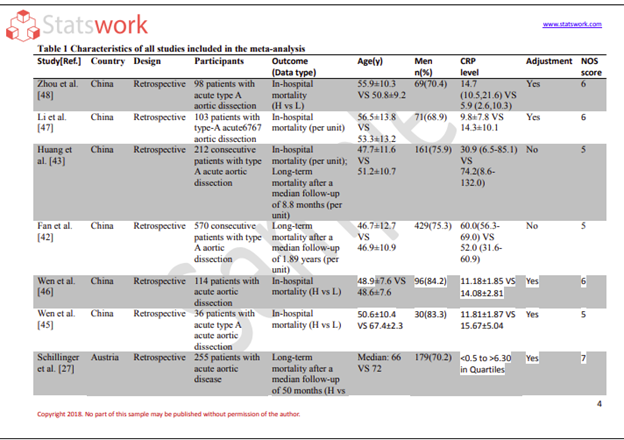
Data Analysis services
- Secondary Qualitative Research Services
- Secondary Quantitative Research Services
- Meta-Analysis Research services
- Sample Work
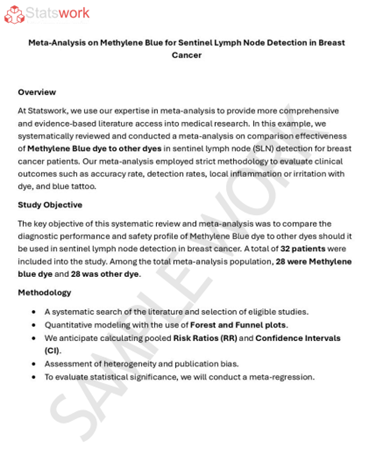
Meta-Analysis Research Services
- Data Collection Services
- Sample Work
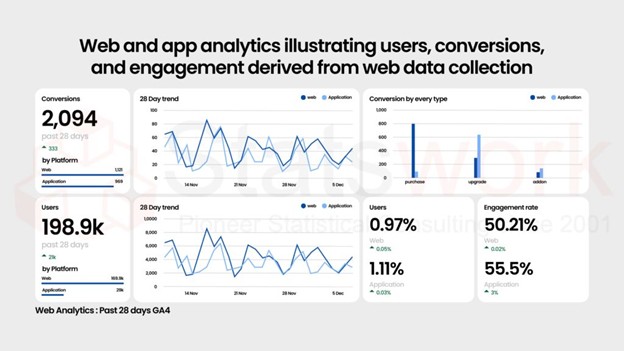
Data Collection Services
- Statistical & Biostatistics services
- Sample Work
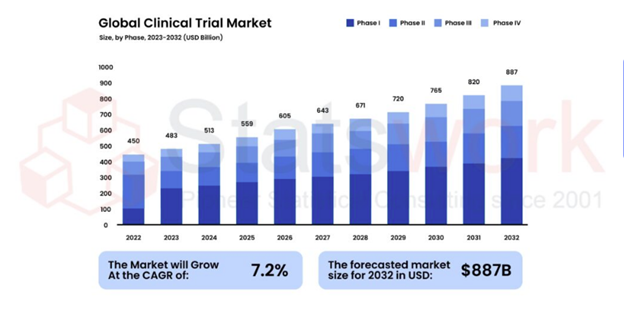
Statistical Programming & Biostatistics services
- Data Management Services
- Sample Work
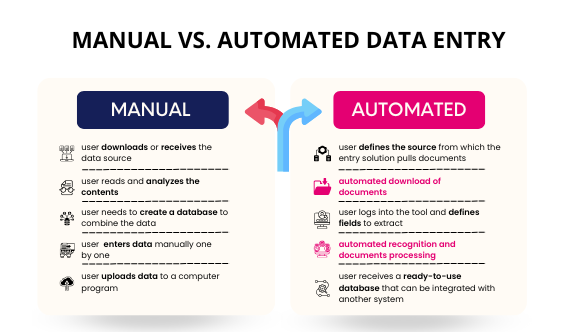
Data Management Services
- Research methodology services
- Sample Work
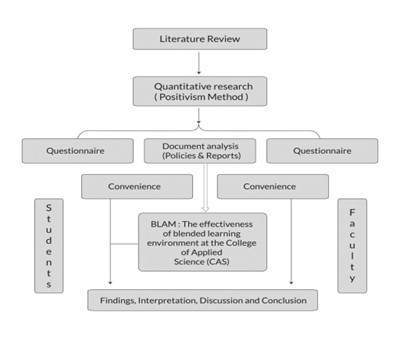
Research methodology services
- Tool Development Services
- Sample Work
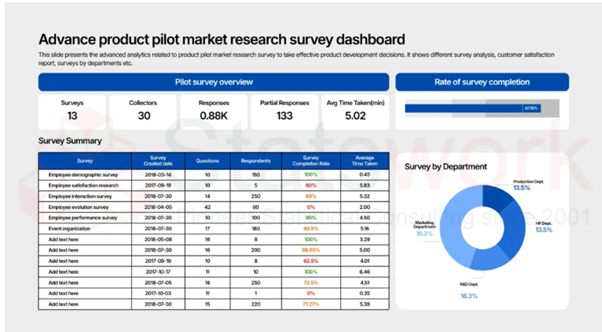
Tool development services
- Statistical Interpretation services
-
Statistical Interpretation services
- Sample Work
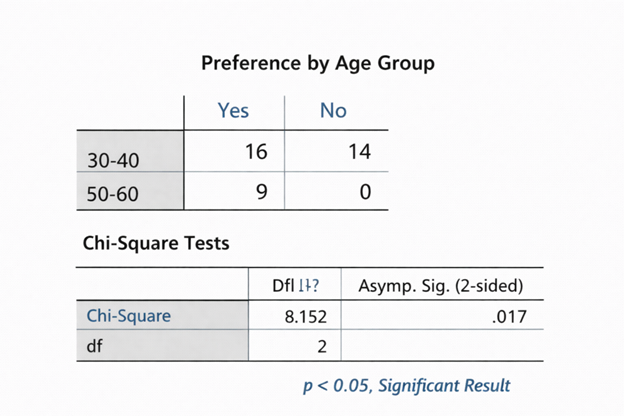
Statistical Interpretation services
-
- Sample Size Calculation Services
-
Sample Size Calculation Services
- Sample Work
Sample Size Calculation Services
-
- AI & ML Services
-
Artificial Intelligence and Machine Learning Services
- Sample Work
Artificial Intelligence and Machine Learning Services
-
- Meaningful Visualization Services
- Thought Leadership Services
- Report Generation Services
-
Report generation Service
- Sample Work
Report generation Services
-
- Data Analysis services
- Industries
- About Us
- Blog
- Insights
- Contact Us
- Services
- Data Analysis services
- Sample Work
Data Analysis services
- Secondary Qualitative Research Services
- Secondary Quantitative Research Services
- Meta-Analysis Research services
- Sample Work
Meta-Analysis Research Services
- Data Collection Services
- Sample Work
Data Collection Services
- Statistical & Biostatistics services
- Sample Work
Statistical Programming & Biostatistics services
- Data Management Services
- Sample Work
Data Management Services
- Research methodology services
- Sample Work
Research methodology services
- Tool Development Services
- Sample Work
Tool development services
- Statistical Interpretation services
-
Statistical Interpretation services
- Sample Work
Statistical Interpretation services
-
- Sample Size Calculation Services
-
Sample Size Calculation Services
- Sample Work
Sample Size Calculation Services
-
- AI & ML Services
-
Artificial Intelligence and Machine Learning Services
- Sample Work
Artificial Intelligence and Machine Learning Services
-
- Meaningful Visualization Services
- Thought Leadership Services
- Report Generation Services
-
Report generation Service
- Sample Work
Report generation Services
-
- Data Analysis services
- Industries
- About Us
- Blog
- Insights
- Contact Us
The Future of B2B Growth: AI-Driven Data Analysis and Business Intelligence
Data analysis
- B2B Companies' Strategic Imperatives in Data-Driven Era
- Bridging Gaps in Data Management, Insight Generation, and Strategic Decision-Making
- Enhancing Operational Efficiency and Profitability Through AI and BI Integration
- Driving Competitive Advantage and Innovation with AI-Powered Business Intelligence
- The Future of B2B: Emerging Trends in AI and Data Analytics
- Conclusion
News & Trends
Recommended Reads
Contact us
AI-Powered Analytics: The Future of Brand Growth and Business Intelligence
Introduction: Discovering a New Chasm of B2B Expansion.
B2B Expansion is defined by how effectively companies manage and utilize data. Today, organizations are under extreme pressure due to current market dynamics and increased competitive activity. Companies are utilizing predictive analytics for B2B companies, as well as AI, BI, and other advanced analytical tools, to assist companies in these endeavors. These advanced analytical technologies will provide businesses with an opportunity to convert large, complex amounts of data into actual sable insights; therefore, facilitating informed, accurate and timely decisions about their businesses and their clients.
The utilization of the technologies, coupled with the use of previously established insights generated through brands relationships, will provide B2B organizations with the tools required to ensure continued innovation and optimization of B2B strategies and activities while continuing to maintain their competitive advantage.
B2B Companies' Strategic Imperatives in Data-Driven Era
For B2B organizations to maintain a competitive edge, they should focus on critical strategic imperatives around the use of data:
- Data Driven Decision Making: Business Intelligence service gives companies access to real-time data insights, which help them make better-informed, more strategic business decisions that drive growth and mitigate risk.
- Customer Focused Innovation: Predictive Analytics for B2B provides companies with a detailed understanding of customer behavioural and preferences. This insight allows companies to provide better-than-ever customer services and products aimed at increasing customer loyalty.[2]
- Execution Agility: Today’s rapidly changing market requires companies to be responsive and agile. The use of B2B Data Analytics allows companies to prepare for changes in the business environment by providing them with an early warning system for change; thus, B2B companies can respond quickly and strategically to anticipated market changes.
- Effective Scaling of Operations: With the help of advanced data analytical services, companies can efficiently scale their operations while minimizing the negative impacts of large-scale information loads, or other process constraints, on their organization’s ability to function efficiently within a given time frame (e.g., customer support, on-boarding, inventory control, etc.).
By adopting each of these imperatives, B2B organizations have the potential to establish new business opportunities for further growth and enhance their competitiveness in the B2B marketplace.
Bridging Gaps in Data Management, Insight Generation, and Strategic Decision-Making
| Challenge | Proposed Solution | Expected Impact |
| Data Unification | B2B Data Analytics enables integration of data from each department. | Enables strategic decisions based on the full dataset instead of partial data. |
| Data Reliability | Implement real-time, reliable, high-quality data systems using B2B analytics. [4] | Provides access to reliable data for efficient organizational strategy development. |
| Real-Time Decision-Making | Implement predictive analytics for real-time business intelligence. | Faster and more accurate decision-making. |
| Data Automation | Use automated processes for data access and handling. | Improves speed to market and supports business growth. |
Harnessing AI and Business Intelligence to Overcome Critical Growth Barriers
AI and BI are essential in overcoming several common barriers to B2B growth:
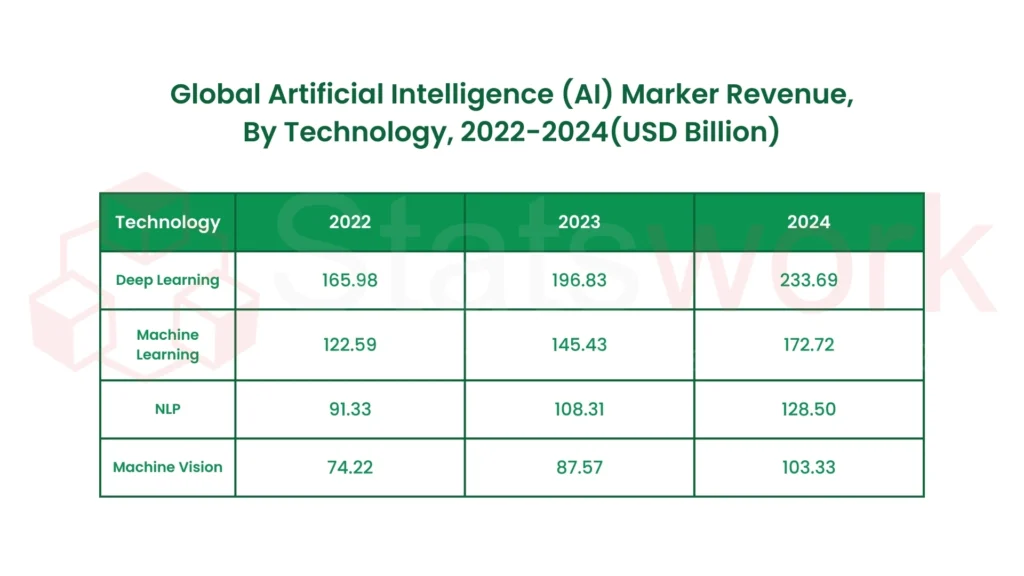
“As shown in Figure 1, global AI market revenue by technology is expected to grow significantly from 2022 to 2024.”
- Data Overload: Large quantities of data can be a barrier to finding valuable insights. AI powered Data Analytics can analyze and extract those insights quickly.
- Operations that are not Efficient: Reporting and data input are examples of repetitive tasks that remove resources. Business Intelligence eliminates these, allowing the operation to operate more effectively.[5]
- No Predictive Capabilities: Companies must have forecast capabilities to grow. Predictive Analysis allows companies to see emerging trends and strategically adapt their businesses to those trends.
B2B operations are now becoming more data driven and have high performance through the combination of AI and Business Intelligence Services.
Enhancing Operational Efficiency and Profitability Through AI and BI Integration
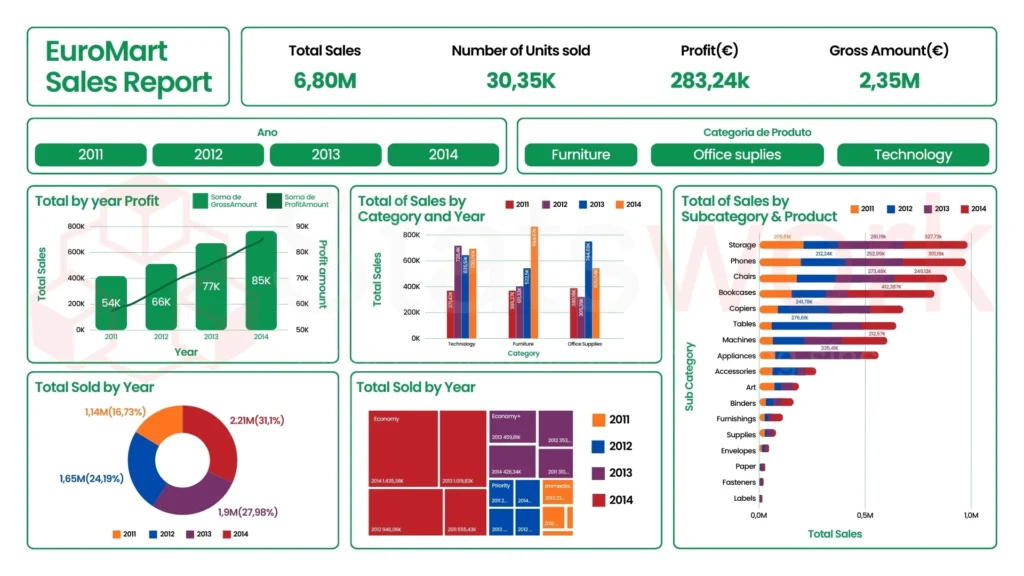
“As shown in Figure 2, Euro Mart’s sales and profit data demonstrates how AI and BI integration can optimize resource allocation, improve sales forecasting, and enhance profitability.”
- Sales and Profit Analysis: Through categorizing and analyzing product performance in various categories (Technology, Furniture, etc.) AI & BI are optimizing business’ Sales Strategies.
- Resource Allocation: AI identifies segments of the business that have the highest performance & opportunity and allows companies to allocate resources accordingly.[2]
- Shipping Optimization: By leveraging AI / BI to analyze shipping trend data, companies can reduce shipping and logistics costs & increase shipping efficiency.
- Year-Over-Year Insight: By leveraging the capability to analyze historical data against current results (Year-Over-Year), companies can learn from past successes (or failures) & replicate those strategies moving forward.
- Overall Impact: Bring together AI & BI for more streamlined and organized functions within the Business environment leads to better-informed decision-making processes and maximizing Profitability.
Driving Competitive Advantage and Innovation with AI-Powered Business Intelligence
| Focus Area | Description |
| Market Intelligence | B2B analytics enable businesses to monitor and evaluate trends, competitors, and customer sentiment to make real-time business decisions. |
| Product Development | Predictive analytics provide insights into potential future markets, helping guide product development through identification of market gaps and customer needs. |
| Future Planning | AI tools support growth planning by forecasting future market conditions and consumer behaviour, enabling proactive strategy development. |
The Future of B2B: Emerging Trends in AI and Data Analytics
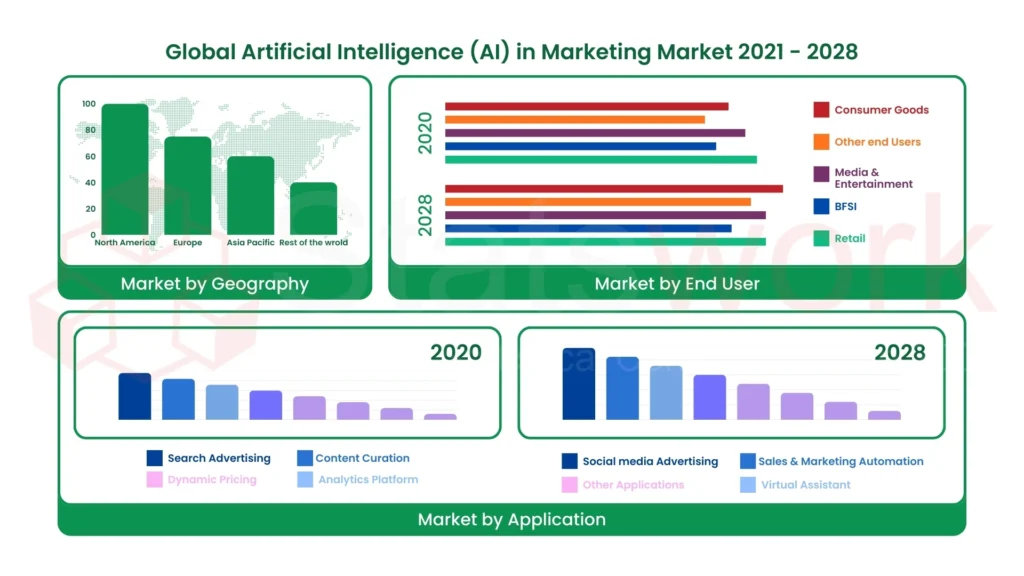
As shown in Figure 3, AI in marketing is shifting towards Social Media Advertising and Sales & Marketing Automation by 2028.
There are three key trends that will shape future B2B Growth as AI and BI continue to evolve:
- Hyper-personalization: The ability to deliver unique customer experiences, powered by AI-based analytics, will become increasingly possible on a large scale.
- Tech Integration: The combination of AI with other technologies such as Big Data, Blockchain, and IoT will increase the interconnectedness of these technologies, leading to a higher level of data-driven insight.[4]
- Ethical AI: Compliance with regulations, as well as ensuring transparency, privacy, and fairness about data use, will be critical in building and maintaining trust in AI solutions.
Conclusion: Advancing B2B Growth Through Strategic AI and Business Intelligence Adoption
The B2B Environment is changing and now it is vital for businesses to implement AI-based data analysis and business intelligence services to ensure that they are well-positioned for future growth through analysis of large amounts of data quickly as well as providing predictive analytics and decision-making capabilities to be able to optimize their processes and innovate quicker than their competitors.[5] Therefore, as B2B organizations plan for future growth, implementing AI and BI solutions would be one of the essential components to achieve an advantage over the competition and achieve continued success in the long-term.
Unlock your B2B growth with Statswrok’s AI-driven data analysis. Contact us today to gain actionable insights and stay ahead of the competition!
References
- Jafarzadeh, H., Barać, D., & Simić, M. (2024, December). The Role of AI in B2B E-business. In International Conference on Marketing and Technologies(pp. 173-191). Singapore: Springer Nature Singapore.https://link.springer.com/chapter/10.1007/978-981-96-3077-6_10
- Kumar, N. (2024, August). AI-Driven Decision-Making: Assessing the Role of Salesforce Einstein Analytics in Modern Businesses. In International Conference on Mobile Radio Communications & 5G Networks(pp. 457-472). Singapore: Springer Nature Singapore.http://link.springer.com/chapter/10.1007/978-981-96-4226-7_34
- Latinovic, Z., & Chatterjee, S. C. (2022). Achieving the promise of AI and ML in delivering economic and relational customer value in B2B. Journal of Business Research, 144, 966-974.https://www.sciencedirect.com/science/article/abs/pii/S0148296322000650