Contact Us

Quantitative Techniques Shaping the Future of Decision Making

Introduction

In today’s rapidly changing world, making correct and timely decisions is highly necessary. Organizations, scientists, and specialists make use of quantitative data analysis services and quantitative techniques in decision-making processes to analyse data, detect patterns, and make predictions beyond assumptions. The article will discuss some prominent concepts, approaches, advantages, difficulties, as well as applications associated with these methods in making decisions, which can change the way people make decisions.[1]

Understanding Quantitative Techniques

Techniques of the quantitative type involve mathematical and statistical ways of analysing numerical information. These approaches enable a person to make decisions objectively through numeric facts rather than subjective views.

Major Elements Include:

  • Statistical techniques for decision making: Examining data trends, correlations, or probabilities.
  • Quantitative modelling techniques: Creating mathematical models to simulate real-world situations.
  • Predictive analytics methods: Using historical data to forecast future outcomes.
  • Decision support systems (DSS): Integrating data, models, and analytics for decision-making.

By utilizing Quantitative Data Analysis Services, organizations can practice truly data-driven decision-making, ensuring that decisions are informed, accurate, and measurable.[2]

Why Quantitative Techniques Matter in Decision Making

Undertaking quantitative approaches provides several benefits:

  • Accuracy: Reduces errors resulting from human bias.
  • Efficiency: Increases the pace of decision-making
  • Predictive power: Expresses expectations of trends and future
  • Objective evaluation: Encompasses transparent and measurable outcomes
  • Strategic advantage: Improves competitiveness using knowledge from data.[3]

For example,

business analytics services help organizations identify profitable markets and allocate resources efficiently. Through Quantitative Data Analysis Services, companies ensure every decision is supported by reliable data.

Primary Quantitative Approaches for Decision Support

Some methods that can be used to assist decision-making:

  • Statistical techniques for decision making: Tools such as regression, hypothesis testing, as well as variance, assist in identifying patterns, trends, as well as correlations between data points.
  • Predictive analytics methods: Methods like forecasts, machine learning algorithms, and trend analysis are used to predict future outcomes.
  • Quantitative modelling techniques: Modelling techniques such as linear programming, simulation, and optimization can be used in solving complex problems and managing resources.
  • Decision support systems (DSS): Software that combines data and models in a way that facilitates decision-making.
  • Quantitative research services: Structured surveys, experiments, and data gathering techniques yield credible information for analysis.

A blending of these methods allows organizations to apply quantitative analysis in decision making to arrive at informed decisions based on evidence.[3]

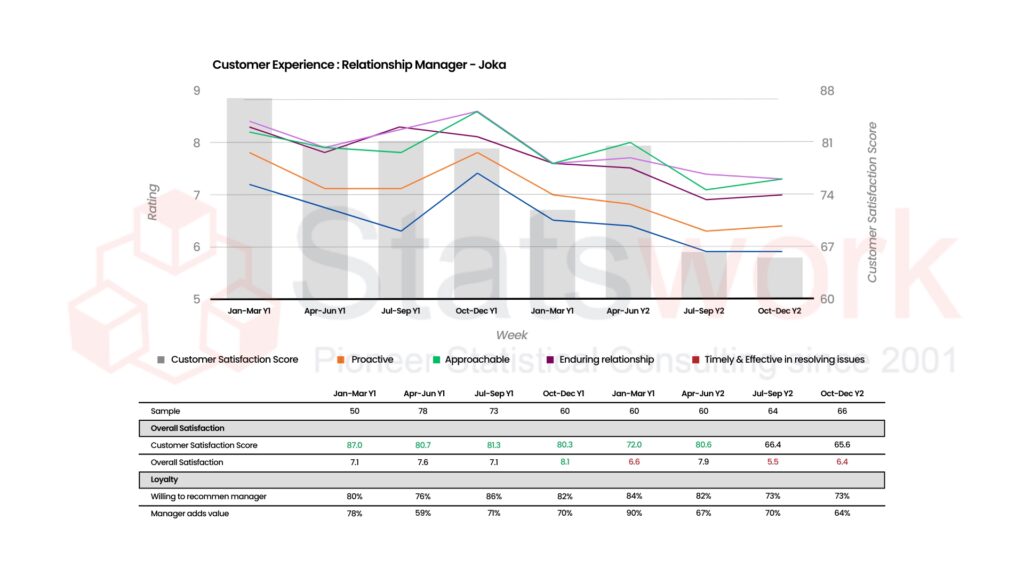
Quantitative Techniques

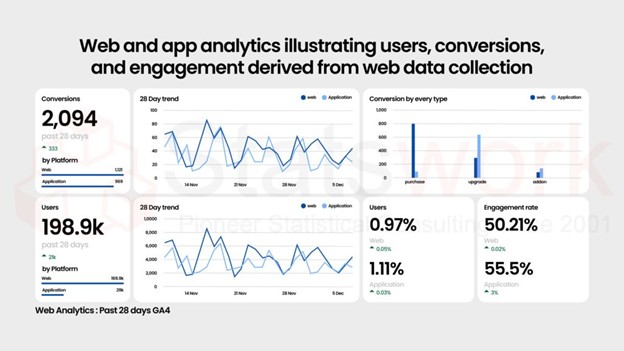
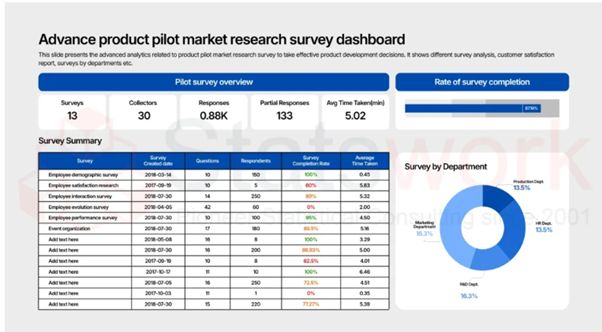
Fig 1 shows a quantitative analysis chart tracking customer satisfaction and performance trends over time.

Quantitative Techniques and Its Applications

The table below represents the primary methods used in decision support for business operations.

Quantitative Technique

Practical Application

Regression Analysis

Sales trend and customer behaviour prediction

Forecasting Models

Inventory and resource allocation planning

Simulation Models

Testing for risk management purposes

Optimization Techniques

Maximizing profit or minimizing operation costs

Decision Support Systems (DSS)

Providing real-time data as support to strategic business decision-making.[2]

Limitations and Best Practices in Quantitative Decision Making

Quantitative methods offer tremendous potential; however, they have limitations:

  • Data quality issues: If the data is poor/incomplete, numerical results will lead to incorrect conclusions.
  • Complexity: Developing and validating advanced statistical/predictive models require high levels of statistical expertise.
  • Overreliance on models: By disregarding qualitative aspects of information, many businesses make incomplete decisions.
  • Interpretation risks: Data trend interpretation is used to develop strategic plans for organisations.

Best practices include:

  • Assurance of accurately collected and clean data [correct] Static Models
  • Combining the results of quantitative analysis with qualitative insights
  • Model validation and updating [to ensure accuracy in predictions] continuously
  • Providing Decision-Makers with training on Basic Data Literacy and Probability.[4] 

Real-World Applications:

Quantitative methods are applied across all sectors:

  • Healthcare: Predicting patient outcomes and optimizing treatment plans.
  • Finance: Assessment of risks, evaluation of investments, and
  • Marketing: Customer segmentation and campaign performance evaluation.
  • Supply Chain: Inventory optimization, logistics planning, and demand forecasting.
  • Government and Policy Making: Planning resources, analysing social trends, and improving public services.

The role of predictive analytics in future decisions has become very important, as organizations can anticipate challenges and opportunities beforehand.[5]

Conclusion

The use of quantitative techniques is revolutionizing the future of data-driven decision making. It allows for decisions to be made based on facts, and the accuracy, efficiency, and effectiveness of organizational decisions have improved. Starting from the use of quantitative analysis in decision-making, statistical analysis, and modelling, to decision support systems, the tools have empowered decision-makers.

With the ever-increasing nature and complexities in data, it will not only be a distinct advantage to incorporate quantitative methods in decision-making but will rather become a requirement in achieving success itself.

Turn complex data into confident decisions with StatsWork’s expert quantitative analysis.

Reference

  1. Sheard, J. (2018). Quantitative data analysis. Research Methods: Information, Systems, and Contexts,, 429-452. https://books.google.co.in/books?
  2. Cramer, D. (2003). Advanced quantitative data analysis. McGraw-Hill Education (UK). https://books.google.com/books?
  3. Eldabi, T., Irani, Z., Paul, R. J., & Love, P. E. (2002). Quantitative and qualitative decision‐making methods in simulation modelling.Management Decision40(1), 64-73. https://www.emerald.com/insight/content/doi/10.1108/00251740210413370/full/html?queryID=7%2F5410112
  4. Cullen, A. C., & Small, M. J. (2004). The role and limits of quantitative assessment. Risk Analysis and Society. T. McDaniels and MJ Small. New York, Cambridge University Press, 163-212. https://www.cetjournal.it/cet/23/99/032.pdf
  5. Hagena, M., Besser, M., Schlüter, D., & Leiss, D. (2025). Using Qualitative and Quantitative Arguments in Decision-Making Situations. In International Horizons in Mathematics Modelling Education(pp. 125-135). Cham: Springer Nature Switzerland. https://link.springer.com/chapter/10.1007/978-3-031-53533-8_8

Contact us