

The Many Ways You Can Use Statistics Business, Finance, Science, Medical, Economics And Much More
January 27, 2017How to Make Your Statistical Software Fit You Perfectly
February 21, 2017A Short Guide for researchers/scholars interested in a Statistics

Thus, many researchers and scholars are keenly interested in statistics for researchers and its various methods and analytical techniques to ascertain the credibility and usefulness of the data and information collected from their respective academic research studies.
This short guide provides essential information relating to important statistical concepts, like sampling methods and the role of research statistics in scientific research, to facilitate researchers and scholars in conducting a well-designed statistical research study.
What is Statistics?
Statistics is generally described as a field of science useful to collect, analyze and to make inference from the various available data. This highly useful branch of mathematics comprise of two branch of study namely
• Descriptive Statistics
• Inferential Statistics
Descriptive Statistics:
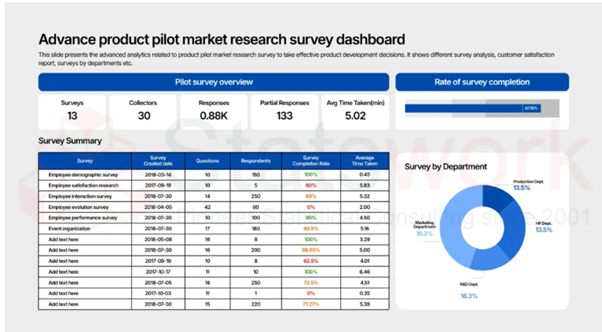
Descriptive statistics is concerned with the description of population under study and involves the usage of statistical methods to summarize the data collection in research statistics. It is useful in organizing, analyzing and presenting the collected information in a meaningful manner. Appropriate charts, graphs and tables are used in descriptive statistics to describe a situation, the existing data available and to summarize samples for academic research.
Measures of central tendency and measures of spread are the two levels of measurement in statistical concepts that are used to describe data and population under study using commonly used parameters like mean, median, mode, quartiles, variance and standard deviation.
Inferential Statistics:
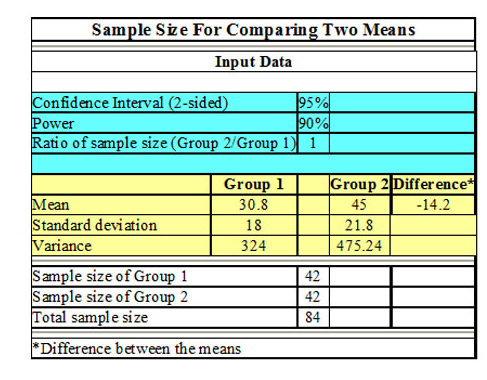
This branch of statistics focuses on drawing conclusions about the population by selecting appropriate samples from the population and making an observation and analysis of the selected samples in research statistics. Sampling techniques in statistics are commonly employed in various academic research studies, and the commonly used sampling methodologies include
- Simple Random Sampling
• Systematic Sampling
• Stratified Sampling
• Cluster Sampling
• Probability and non-probability sampling
Inferential statistical techniques enable researchers to select a small proportion of samples from a population using any of the sampling methodologies mentioned above and to use these selected samples to generalize the population under study in statistics for researchers. Inferential statistics involves comparison, testing and prediction of data and utilizes probability techniques to explain the chances of occurrence of a particular event.
By employing these statistical concepts, researchers and scholars can attempt to reach their desired conclusion by investigating a few samples, thus allowing them to learn about the whole population by spending considerably less time, resources and cost in academic research.
A Masters in statistics will provide students with in-depth knowledge of the various useful statistical tools and techniques involved in descriptive and inferential research statistics.
Importance of Statistics in Research Studies:
Social science academic research uses a number of different statistical approaches to investigate an array of research-related issues. Regardless of the type of research area, all studies commence with a general idea in the form of a research question or hypothesis using statistics for researchers.
A research question is a simple general question like, for instance, “What are the effects of students’ test anxiety levels on their overall academic achievement?” This question discusses the relationship between two variables and is a key component of research statistics.
On the other hand, a hypothesis is a more specific question and the researcher has to make a prediction about a particular outcome. The major difference between a research question and hypothesis is that a hypothesis provides prediction of the study outcome in academic research.
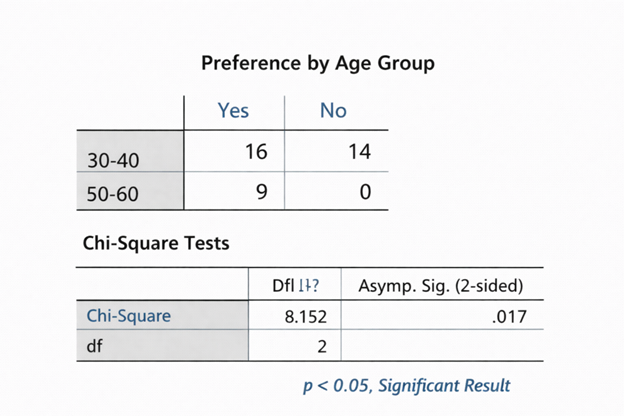
Hypothesis testing is a formal statistical procedure employed in all research statistics studies to accept or reject the research hypothesis. The critical value approach of hypothesis testing enables researchers to understand how to find critical values in statistical concepts related research studies.
How to Do Statistical Research?
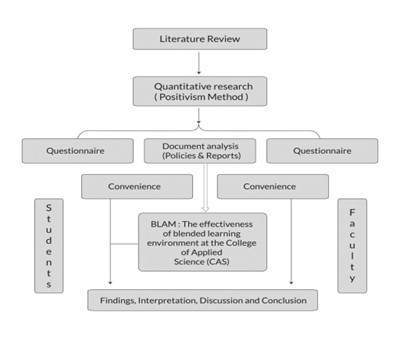
There are various steps involved in planning and conducting a well-designed academic research study using statistics for researchers, which include
- Identification of suitable research topic
• Determination of research questions and statement of null and alternate hypotheses
• Design of the research study indicating when, where and how to conduct the study
• Identification of data collection methods based on sample size
• Analysis of collected data using research statistics techniques
• Interpretation of data and generation of findings
• Data validation
• Presentation of research reports using statistical graphical presentations
Thus, it is imperative for researchers and scholars to gain sufficient knowledge of statistical concepts and statistics for researchers to conduct well-structured academic research. A sound understanding of research statistics helps in gathering reliable information, assessing credibility, and publishing dependable research findings.
No wonder, faculty research interests in research statistics have grown considerably among researchers and scholars in recent years.