
Professional Data Analysis and Statistical Tests in R Services for Research and Business Applications
Qualitative Research Service
- Why Organizations Choose R for Statistical Analysis
- Importance of Professional Data Analysis Services
- Statistical Tests Available in R
- Professional Data Analysis Workflow
- Business Applications of Statistical Analysis in R
- Research Applications of Statistical Analysis in R
- Benefits of Outsourcing Data Analysis and Statistical Tests in R
- Deliverables Offered Through Professional R Services
- Conclusion
News & Trends
Recommended Reads

Data Collection
As the data collection methods have extreme influence over the validity of the research outcomes, it is considered as the crucial aspect of the studies
Brief Summary:
Data Analysis and Statistical Tests in R Services provide businesses and researchers an opportunity to transform their data into actionable information using statistical analysis and scientific techniques. R is an ideal platform for preparing the data, conducting statistical tests, building models and visualizations, and reporting findings in the realms of research, medicine, finance, marketing, and many others. Utilizing professional statistical assistance allows for making informed decisions and reduces risks through receiving reliable information.
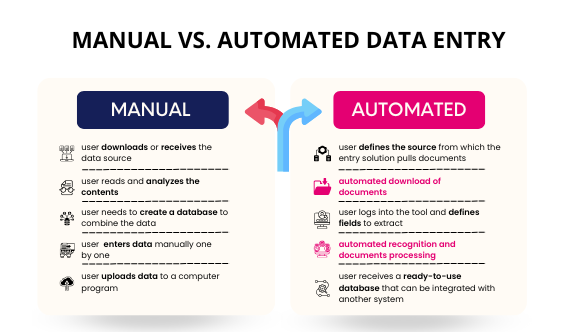
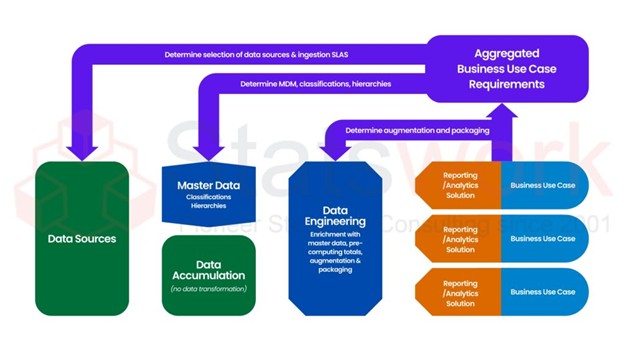
In today’s data-driven environment, organisations rely on accurate data analysis to make informed decisions, identify opportunities, and solve complex business challenges. While collecting data is an important first step, deriving meaningful insights requires robust statistical methodologies and analytical expertise. Professional Data Analysis and Statistical Tests in R Services help organisations transform raw data into actionable intelligence, enabling evidence-based decision-making across research and business applications [1].
R has emerged as one of the most powerful and widely used programming languages for statistical computing and data analysis. Its flexibility, extensive package ecosystem, and advanced analytical capabilities make it an ideal solution for handling complex datasets in academic, healthcare, finance, engineering, and corporate sectors. Organizations seeking reliable analytical outcomes increasingly turn to R-based statistical services to improve accuracy, efficiency, and research quality.
Why Organizations Choose R for Statistical Analysis
R provides a comprehensive environment for performing both basic and advanced statistical analyses. It supports a wide range of analytical techniques while offering complete flexibility for customisation and automation.
Key Advantages of R
- Open-source and cost-effective statistical software
- Supports advanced statistical modelling and hypothesis testing
- Handles large and complex datasets efficiently
- Produces high-quality graphical visualisations
- Enables reproducible and transparent research workflows
- Integrates with databases, cloud platforms, and business intelligence tools
- Widely accepted across academic, scientific, and business communities
These advantages make R a preferred platform for organizations seeking reliable analytical solutions without the limitations often associated with proprietary software [2] .
Importance of Professional Data Analysis Services
Data analysis involves more than simply applying statistical tests. Selecting appropriate methodologies, validating assumptions, preparing datasets, and accurately interpreting results are critical steps that determine the reliability of findings.
Professional analysts ensure that:
- Data is cleaned and validated before analysis
- Appropriate statistical techniques are selected
- Assumptions underlying statistical tests are verified
- Results are interpreted correctly
- Findings are presented in an understandable format
- Recommendations are supported by evidence
By leveraging expert statistical support, organizations can minimize analytical errors and maximize the value of their data assets [3].
Statistical Tests Available in R
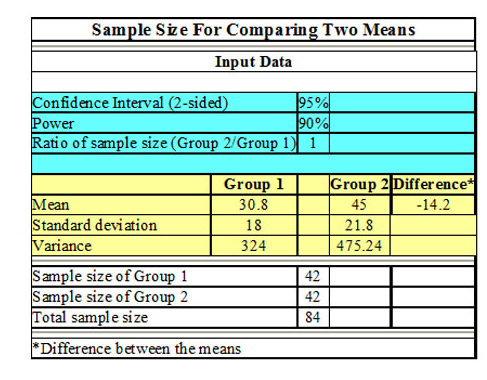
Professional R-based statistical services encompass a wide range of analytical techniques designed to address diverse research and business requirements.
| Statistical Test | Purpose | Common Applications |
| Descriptive Statistics | Summarise data characteristics | Research reports, performance monitoring |
| T-Test | Compare means between groups | Product evaluation, experimental studies |
| ANOVA | Compare multiple groups simultaneously | Market research, operational comparisons |
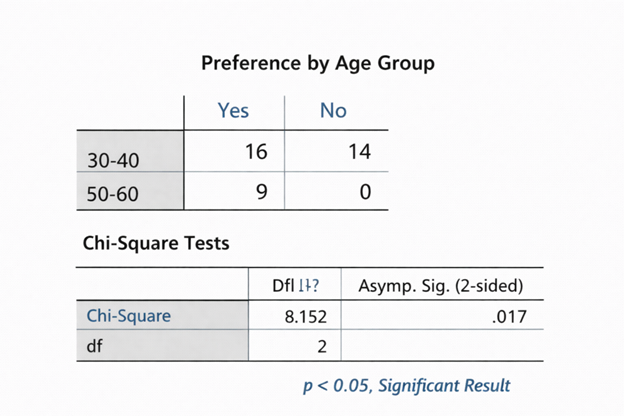
| Chi-Square Test | Analyze categorical variables | Survey analysis, customer segmentation |
| Correlation Analysis | Measure relationships between variables | Business forecasting, academic studies |
| Regression Analysis | Predict outcomes and assess relationships | Sales forecasting, financial modeling |
| Non-Parametric Tests | Analyze data without normality assumptions | Social science and healthcare research |
| Factor Analysis | Identify underlying constructs | Questionnaire development and validation |
| Cluster Analysis | Group similar observations | Customer profiling and segmentation |
| Time Series Analysis | Analyze trends over time | Demand forecasting, financial analysis |
Each statistical method serves a specific purpose, making proper test selection essential for obtaining valid and meaningful results.
Professional Data Analysis Workflow
Standard Workflow
- Data Collection and Assessment
- Data Cleaning and Preparation
- Exploratory Data Analysis
- Statistical Test Selection
- Assumption Verification
- Statistical Analysis in R
- Interpretation of Results
- Visualization and Reporting
- Recommendations and Decision Support
This structured approach ensures consistency and enhances the credibility of analytical outcomes.
Business Applications of Statistical Analysis in R
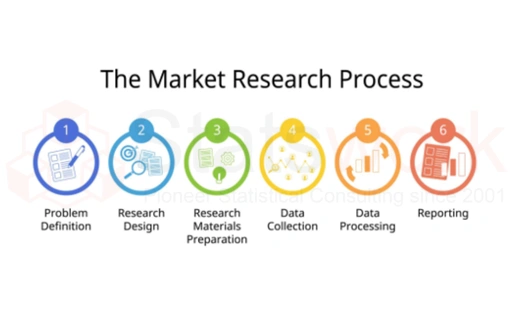
Organizations across industries leverage statistical analysis to improve operational efficiency, enhance customer experiences, and support strategic planning.
Marketing and Consumer Analytics
- Customer segmentation
- Market basket analysis
- Campaign effectiveness evaluation
- Consumer behavior prediction
- Brand perception studies
Financial Analytics
- Risk assessment
- Fraud detection
- Investment performance evaluation
- Revenue forecasting
- Credit scoring models
Operations and Manufacturing
- Quality control analysis
- Process optimization
- Supply chain analytics
- Inventory forecasting
- Production efficiency assessment
Human Resource Analytics
- Employee performance evaluation
- Attrition prediction
- Recruitment effectiveness analysis
- Workforce planning
- Employee satisfaction assessment
By utilizing statistical insights, organizations can identify trends, mitigate risks, and improve overall business performance [3].
Research Applications of Statistical Analysis in R
Researchers across disciplines rely on R for conducting rigorous statistical investigations. Its versatility makes it suitable for a wide range of academic and scientific studies.
Common Research Applications
- Hypothesis testing
- Survey data analysis
- Experimental research
- Longitudinal studies
- Predictive modeling
- Psychometric evaluation
- Clinical and healthcare research
- Social science investigations
Professional support ensures that research methodologies align with academic standards and publication requirements.
Benefits of Outsourcing Data Analysis and Statistical Tests in R
Many organizations choose to outsource statistical analysis to experienced professionals to gain access to specialized expertise and advanced analytical capabilities.
| Benefit | Organizational Value |
| Expert Statistical Knowledge | Improved analytical accuracy |
| Faster Turnaround Time | Accelerated project completion |
| Access to Advanced Methods | Better decision-making support |
| Cost Efficiency | Reduced operational expenses |
| Customized Solutions | Tailored analytical approaches |
| Comprehensive Reporting | Clear interpretation of results |
| Data Security | Confidential handling of information |
Outsourcing allows businesses and researchers to focus on their core objectives while ensuring high-quality analytical outcomes [2].
Deliverables Offered Through Professional R Services
Organizations can expect a wide range of analytical deliverables, including:
- Data cleaning and preprocessing
- Descriptive statistical analysis
- Hypothesis testing
- Regression modeling
- Survey data analysis
- Multivariate analysis
- Predictive analytics
- Publication-ready tables and figures
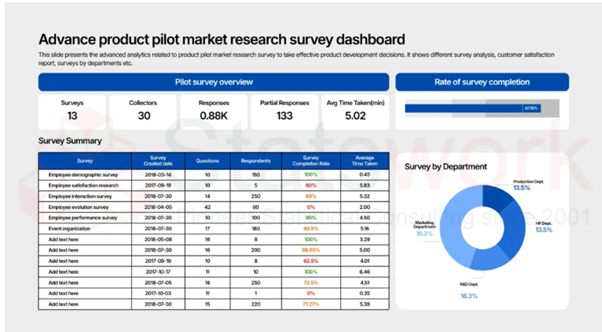
- Data visualization dashboards
- Comprehensive statistical reports
- Research interpretation and recommendations
These deliverables help stakeholders understand findings and make data-driven decisions confidently.
Conclusion
Professional Data Analysis and Statistical Tests in R Services enable organizations and researchers to transform complex datasets into meaningful, evidence-based insights [4]. By applying appropriate statistical techniques and ensuring accurate interpretation, businesses can make informed decisions while researchers can enhance the quality and credibility of their studies. At Statswork, our expert Research Methodology Services and R-based statistical analysis solutions help clients achieve reliable results, strengthen research outcomes, and support data-driven decision-making with confidence.
Frequently asked Question
R supports a wide range of statistical tests, including t-tests, ANOVA, chi-square tests, correlation analysis, regression analysis, non-parametric tests, factor analysis, cluster analysis, and time-series analysis. The choice of test depends on the research objectives and data characteristics.
R is widely preferred because it is open-source, highly flexible, and equipped with thousands of packages for advanced statistical analysis, predictive modeling, machine learning, and data visualization. It also supports reproducible research and handles complex datasets efficiently.
Yes, R is extensively used in both academic and business environments. Researchers use it for hypothesis testing, survey analysis, and experimental studies, while businesses use it for customer analytics, forecasting, risk assessment, and performance evaluation.
Professional analysts follow a structured process that includes data cleaning, validation, statistical test selection, assumption checking, analysis execution, and interpretation of results. This approach helps ensure the reliability and accuracy of findings.
Industries such as healthcare, finance, education, manufacturing, marketing, retail, engineering, and consulting benefit from R-based statistical analysis. These services support evidence-based decision-making and operational improvements across sectors.
Statswork provides expert Research Methodology Services and R-based statistical analysis solutions tailored to academic, research, and business requirements. Our team assists with data preparation, hypothesis testing, predictive modeling, interpretation, and comprehensive reporting to help clients achieve reliable and actionable results.
References
- Molete, O. B., Mokhele, S. E., Ntombela, S. D., & Thango, B. A. (2025). The impact of IT strategic planning process on SME performance: A systematic review. Businesses, 5(1), 2.https://www.mdpi.com/2673-7116/5/1/2
- Mokhele, S., Thango, B., Molete, O., & Ntombela, S. D. (2024). The impact of IT strategic planning process on SME performance: A systematic review. Available at SSRN 4958932.https://papers.ssrn.com/sol3/papers.cfm?abstract_id=4958932
- Paila, N. (2026). SAP IBP vs Custom AI Planning Engines: A Comparative Performance Study. Journal of Data Science and Information Technology, 3(1), 1-16.https://d1wqtxts1xzle7.cloudfront.net/132041754/247-libre.pdf?1773169315=&response-content-disposition=inline%3B+filename%3DSAP_IBP_vs_Custom_AI_Planning_Engines_A.pd
- Biloslavo, R., Edgar, D., Aydin, E., & Bulut, C. (2025). Artificial intelligence (AI) and strategic planning process within VUCA environments: a research agenda and guidelines. Management Decision, 63(10), 3599-3624.https://www.emerald.com/md/article/63/10/3599/1259506