
- Services
- Data Analysis services
- Sample Work
Data Analysis services
- Secondary Qualitative Research Services
- Secondary Quantitative Research Services
- Meta-Analysis Research services
- Sample Work
Meta-Analysis Research Services
- Data Collection Services
- Sample Work
Data Collection Services
- Statistical & Biostatistics services
- Sample Work
Statistical Programming & Biostatistics services
- Data Management Services
- Sample Work
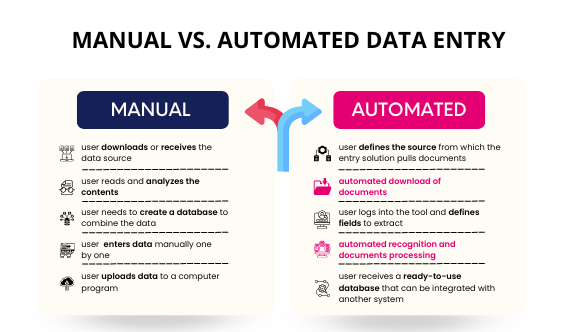
Data Management Services
- Research methodology services
- Sample Work
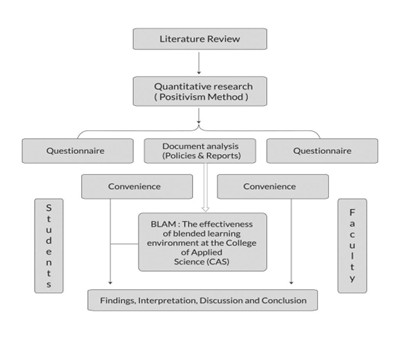
Research methodology services
- Tool Development Services
- Sample Work
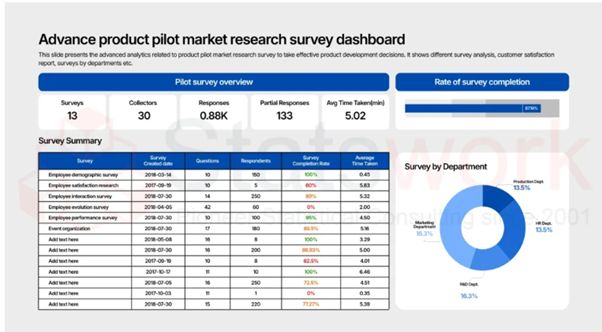
Tool development services
- Statistical Interpretation services
-
Statistical Interpretation services
- Sample Work
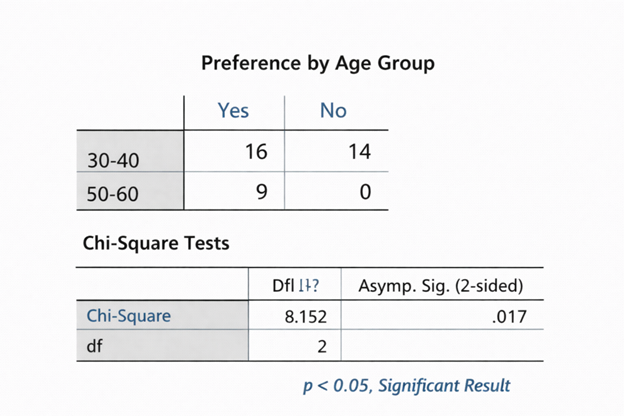
Statistical Interpretation services
-
- Sample Size Calculation Services
-
Sample Size Calculation Services
- Sample Work
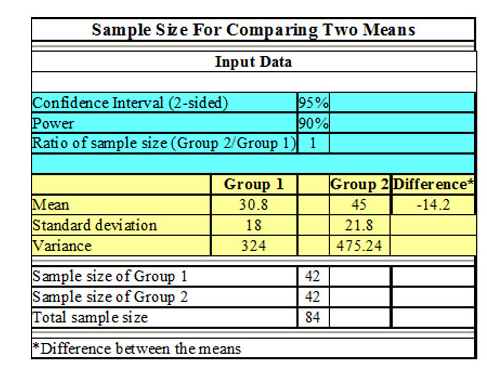
Sample Size Calculation Services
-
- AI & ML Services
-
Artificial Intelligence and Machine Learning Services
- Sample Work
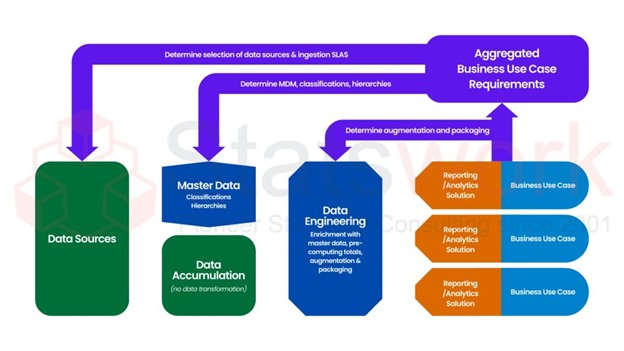
Artificial Intelligence and Machine Learning Services
-
- Meaningful Visualization Services
- Thought Leadership Services
- Report Generation Services
-
Report generation Service
- Sample Work
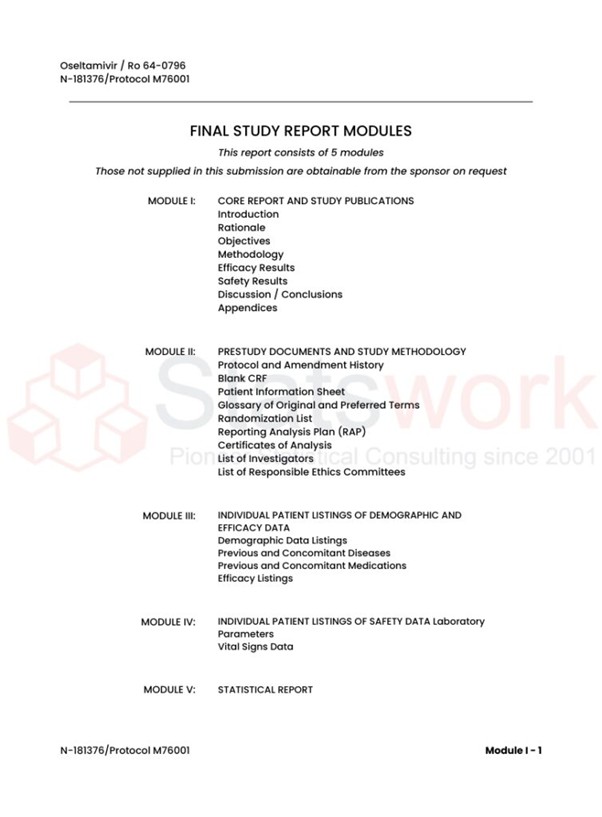
Report generation Services
-
- Data Analysis services
- Industries
- About Us
- Blog
- Insights
- Contact Us
- Services
- Data Analysis services
- Sample Work
Data Analysis services
- Secondary Qualitative Research Services
- Secondary Quantitative Research Services
- Meta-Analysis Research services
- Sample Work
Meta-Analysis Research Services
- Data Collection Services
- Sample Work
Data Collection Services
- Statistical & Biostatistics services
- Sample Work
Statistical Programming & Biostatistics services
- Data Management Services
- Sample Work
Data Management Services
- Research methodology services
- Sample Work
Research methodology services
- Tool Development Services
- Sample Work
Tool development services
- Statistical Interpretation services
-
Statistical Interpretation services
- Sample Work
Statistical Interpretation services
-
- Sample Size Calculation Services
-
Sample Size Calculation Services
- Sample Work
Sample Size Calculation Services
-
- AI & ML Services
-
Artificial Intelligence and Machine Learning Services
- Sample Work
Artificial Intelligence and Machine Learning Services
-
- Meaningful Visualization Services
- Thought Leadership Services
- Report Generation Services
-
Report generation Service
- Sample Work
Report generation Services
-
- Data Analysis services
- Industries
- About Us
- Blog
- Insights
- Contact Us
CCPA Explained: What Every Business Needs to Know
- Home
- Insights
- Article
- CCPA Explained: What Every Business Needs to Know
Qualitative Research Service
News & Trends
Recommended Reads
Contact us
Introduction
Data is one of the most important business resources in the modern digital economy. The main reason for collecting customer information is that companies want to enhance their service offerings to their customers to help them grow and develop [1]. Due to increased worries about data privacy, many countries are implementing new laws regarding the protection of consumers’ private information. One of the major privacy laws in the USA is the California Consumer Privacy Act.
This law was designed for protecting residents of California and providing more transparency when collecting personal information from the users. After the introduction of the CCPA, all companies that work in processing and managing customers’ private information should be aware of what actions should be taken to comply with the new privacy law.
What Is the CCPA?
The CCPA is a privacy law adopted in the state of California and went into force on January 1, 2020. The purpose of adopting this act was to protect consumers’ privacy by ensuring the availability of relevant information and exercising more control over how personal data was used. According to the law, it applies to businesses that collect personal information from California residents and meet some criteria [2].
The main aim of the CCPA is to provide consumers with more opportunities for protecting their privacy and having more control over their personal data. It also creates responsibilities for businesses concerning informing consumers about their data collecting actions and responding to specific requests.
Whom Does the CCPA Apply To?
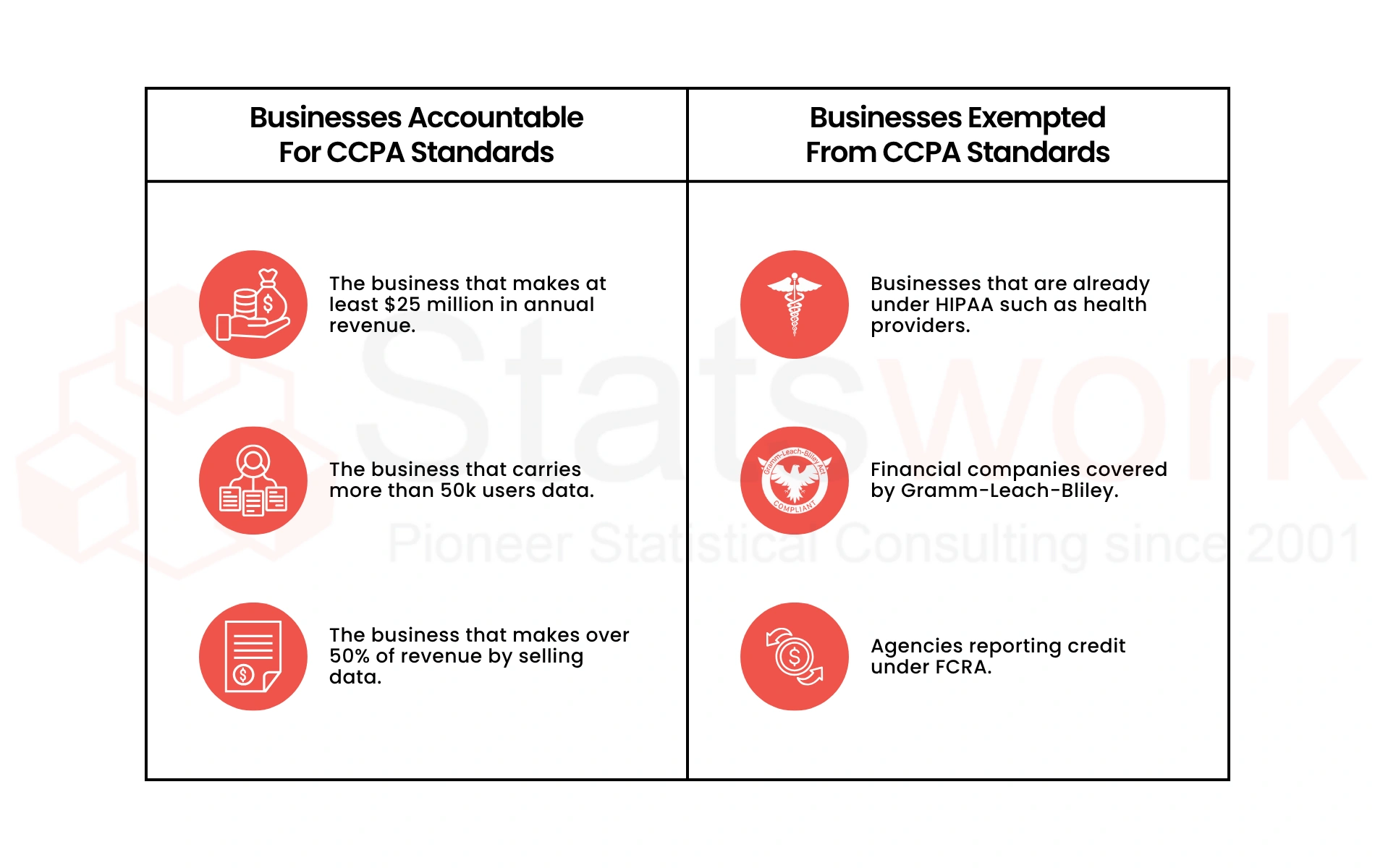
The CCPA refers to for-profit companies operating in California and meeting the following requirements:
- Having an annual income exceeding $25 million;
- Selling, buying, or sharing the personal information of not fewer than 100,000 residents or devices in California;
- Gaining 50% or more of its annual income by selling people’s personal information.
Even companies located outside California can be included under the CCPA since they are obliged to protect personal information of Californian residents [3].
Consumer Rights under the CCPA
The next significant characteristic of the CCPA that deserves special attention is several rights of the consumers.
Right to Know
Every consumer is provided with the opportunity to obtain information regarding types and purposes of collecting personal data as well as its further use or sale.
Right to Delete
Consumers can demand deleting personal data from business databases based on some legal reasons. However, a certain mechanism should be established to handle such requests [4].
Right to Opt Out
Consumers could prevent businesses from selling any kind of personal data. Every organization that sells personal data should establish an adequate “Do Not Sell My Personal Information” link.
Right to non-discrimination
Businesses are prohibited from discriminating against their clients in relation to CCPA rights. In other words, a consumer cannot be deprived of some services or products because he/she opted out of data sales.
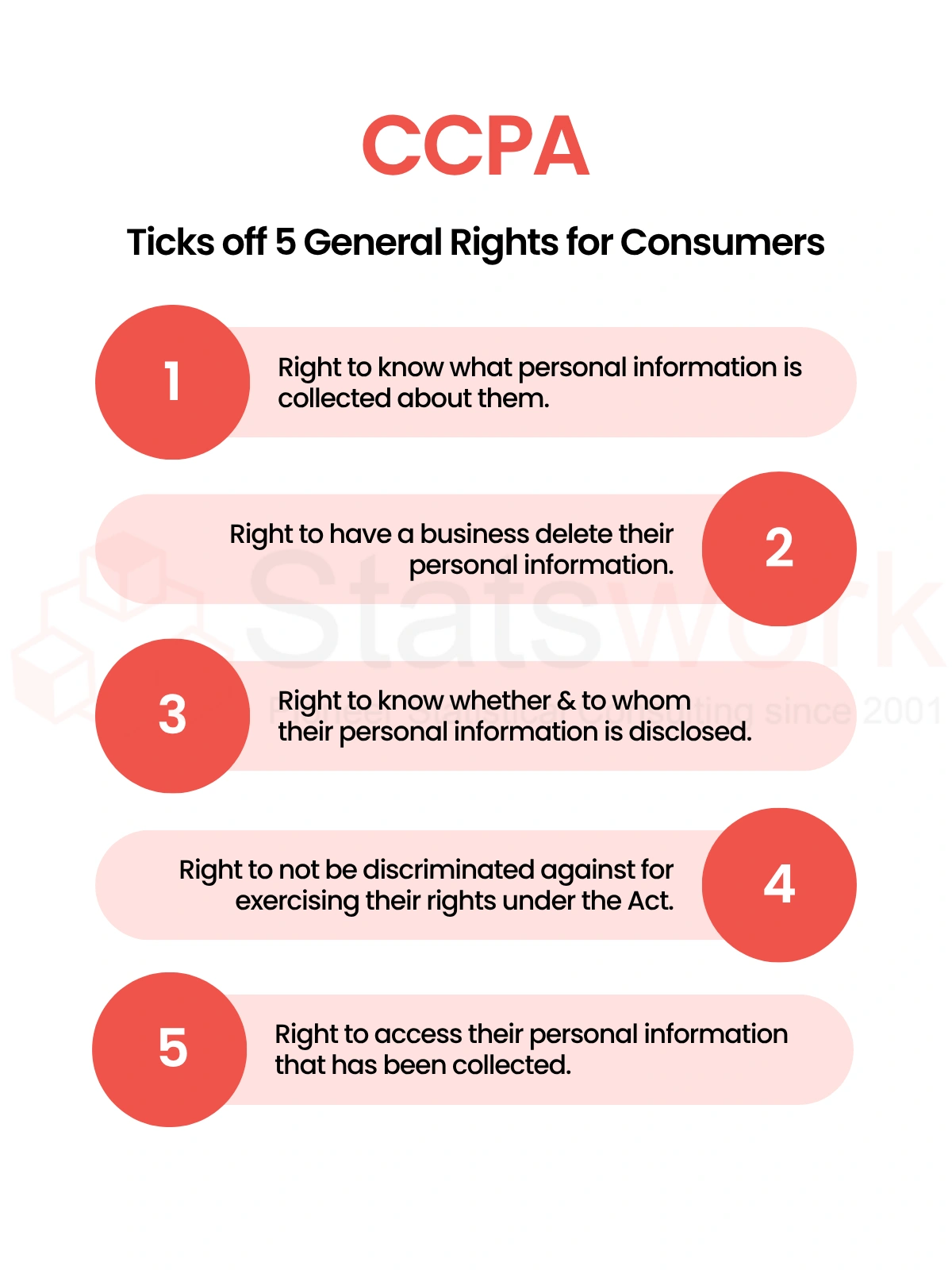
Right to Correct Information
Based on recent changes made to the original version of the Act, consumers have the right to correct information stored in business databases [3].
Definition of Personal Information
Under the CCPA, personal information is widely defined. All the information that identifies, relates to, or can be associated with a consumer or household is included under this definition.
Examples include:
- Consumer names and addresses
- Consumer email addresses
- Phone numbers
- IP addresses
- Browsing history
- Location tracking data
- Purchase history
- Biometric data
As such, personal information covers a broad scope of information types.
Responsibilities of Businesses under the CCPA
To ensure that they comply with the requirements of the CCPA, businesses should develop clear strategies in data management and privacy-related policies.
Privacy Notices
Businesses need to make public their practices in collecting consumer data, stating how the information collected is going to be utilized. Privacy notices are included in privacy policies and posted on websites.
Data Request Procedures
Businesses need to develop a mechanism through which consumers’ requests for their data to be accessed or deleted would be received, verified, and responded to. Usually, the processing of requests takes up to 45 days.
Training Employees
For businesses, it is crucial to provide training for employees who deal with data requests and other activities related to the compliance with the law.
Security
According to the CCPA, it would be reasonable for businesses to implement security measures for protection against any violations associated with consumers’ data.
Penalties for non-compliance
Violations under the CCPA are punishable by substantial fines that might range from:
- $2,500 per unintentional violation
- $7,500 per intentional violation
What is more, failure to implement security measures might bring about lawsuits because of personal information exposure.
Implications of the CCPA on Businesses
Since the adoption of the CCPA, businesses have started treating data privacy and governance differently compared to before. Transparency and consumer rights have become priorities in most business operations.
Some of the tasks that organizations need to complete include:
- Updating Privacy Policies
- Revising third-party vendor contracts
- Auditing databases
- Improving cybersecurity systems
- Creating consent management programs
Though there is some expenditure that comes with compliance, it does offer opportunities for businesses to enhance customer relations through transparency and accountability.
Advantages of Being CCPA Compliant
Despite resistance from some businesses when adopting the CCPA, there are significant benefits that come with being compliant with this law.
Customer Trust
As privacy concerns increase among consumers, organizations that exhibit solid privacy practices can create a good reputation among customers.
Effective Data Management
Most times, efforts towards CCPA compliance end up resulting in effective management of data resources in an organization [2].
Competitive Edge
Organizations that exhibit solid privacy standards can distinguish themselves in the market and attract privacy-conscious customers.
Adaptation to Future Privacy Laws
Privacy legislation is increasing across the globe. By complying with the CCPA, businesses will be better prepared for future compliance like the GDPR.
Data Privacy of the Future
The CCPA has been a turning point the way companies handle consumers’ data in the United States. In addition, privacy legislation and other changes to privacy-related policies continue to emerge since the passing of the CCPA, such as the CPRA, which enhances the privacy rights of consumers.
Businesses need to ensure that they are up to date with the latest privacy legislation and act to be compliant. Data privacy is now considered to be more than just legislation; it should form part of the normal operations of any business.
Conclusion
The CCPA can be regarded as a crucial initiative when it comes to consumer privacy and company responsibility. The CCPA has provided consumers with more power and influence over their personal data by allowing businesses to make necessary adjustments [4].
For businesses, it is important that they consider privacy a priority because compliance with legislation will enable them to improve customer relations.
It is impossible not to underline the importance of having privacy-oriented tools like Statswork Data Analytics Services since such tools allow businesses to work with their customer information in a better way, at least, in compliance with such legislation as CCPA. Thanks to the implementation of privacy-oriented tools and analytics, companies can take actions and create relations with customers.
Reference
- Kumar, S., & Sharma, P. (2026, January). Regulatory compliance for cybersecurity with GDPR and CCPA. In AIP Conference Proceedings(Vol. 3345, No. 1, p. 020031). AIP Publishing LLC. https://pubs.aip.org/aip/acp/article-abstract/3345/1/020031/3376543/
- Huang, M. L. (2025). Digital Privacy in the Age of Surveillance: A Comparative Study of GDPR and CCPA. OTS Canadian Journal, 4(7), 65-74. https://journal.canadian-ots.ca/index.php/ots/article/view/95
- Nayak, R., Ghugar, U., Gupta, P., Dash, S., & Gupta, N. (2025). Data privacy and compliance in information security. Securing the Digital Frontier: Threats and Advanced Techniques in Security and Forensics, 17-33. https://onlinelibrary.wiley.com/doi/
- Sonani, R., & Prayas, L. (2025). Machine Learning-Driven Convergence Analysis in Multijurisdictional Compliance Using BERT and K-Means Clustering. arXiv preprint arXiv:2502.10413. https://arxiv.org/abs/2502.10413