
- Services
- Data Analysis services
- Sample Work
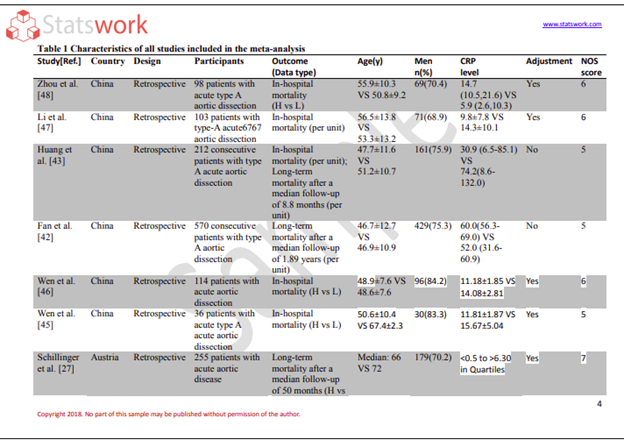
Data Analysis services
- Secondary Qualitative Research Services
- Secondary Quantitative Research Services
- Meta-Analysis Research services
- Sample Work
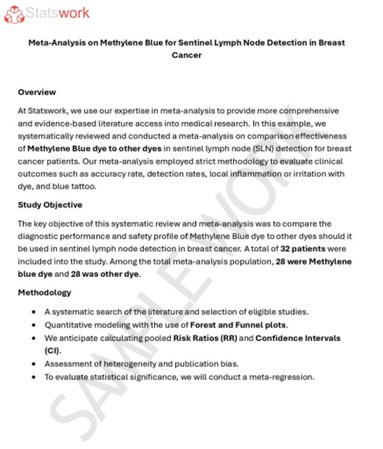
Meta-Analysis Research Services
- Data Collection Services
- Sample Work
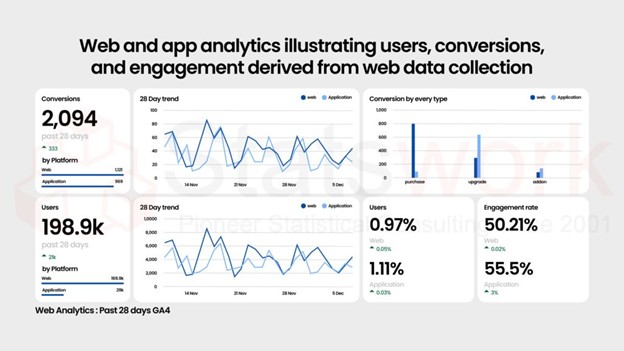
Data Collection Services
- Statistical & Biostatistics services
- Sample Work
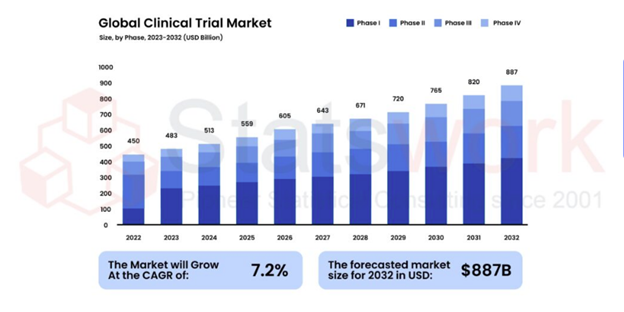
Statistical Programming & Biostatistics services
- Data Management Services
- Sample Work
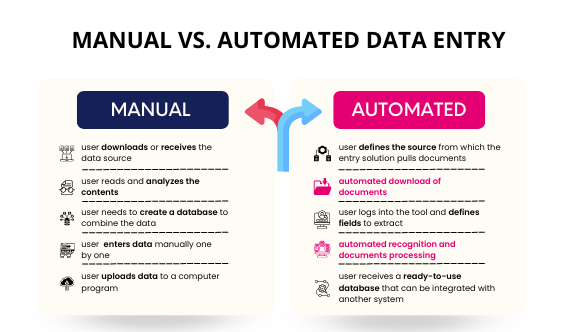
Data Management Services
- Research methodology services
- Sample Work
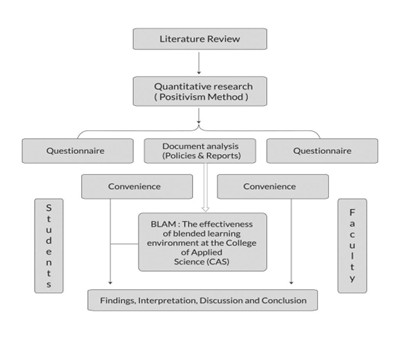
Research methodology services
- Tool Development Services
- Sample Work
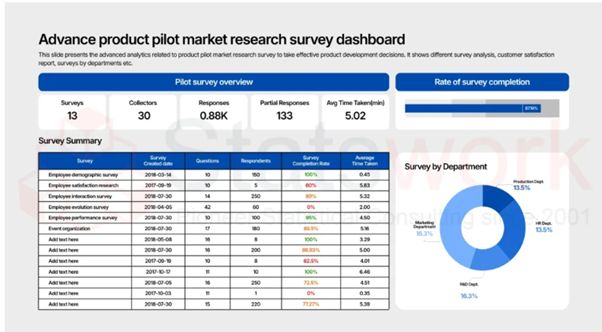
Tool development services
- Statistical Interpretation services
-
Statistical Interpretation services
- Sample Work
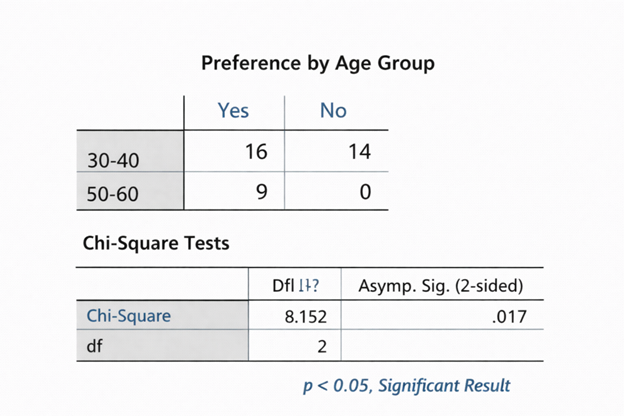
Statistical Interpretation services
-
- Sample Size Calculation Services
-
Sample Size Calculation Services
- Sample Work
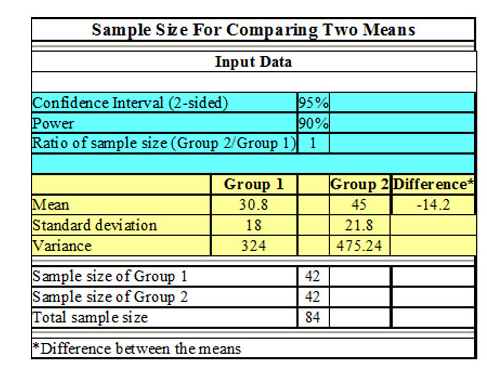
Sample Size Calculation Services
-
- AI & ML Services
-
Artificial Intelligence and Machine Learning Services
- Sample Work
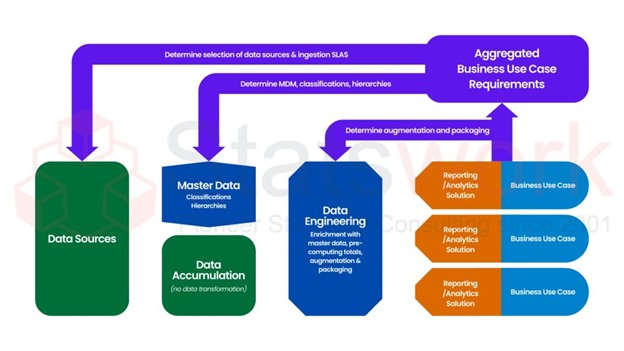
Artificial Intelligence and Machine Learning Services
-
- Meaningful Visualization Services
- Thought Leadership Services
- Report Generation Services
-
Report generation Service
- Sample Work
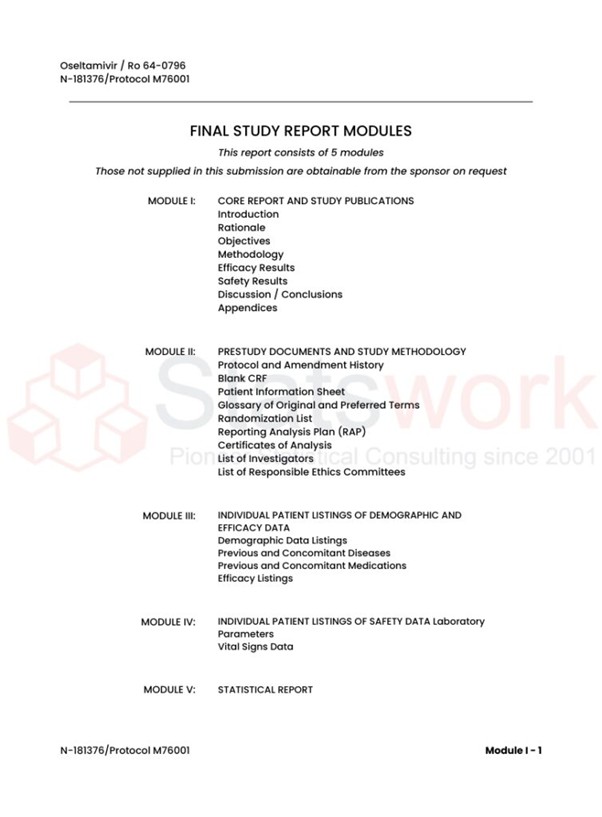
Report generation Services
-
- Data Analysis services
- Industries
- About Us
- Blog
- Insights
- Contact Us
- Services
- Data Analysis services
- Sample Work
Data Analysis services
- Secondary Qualitative Research Services
- Secondary Quantitative Research Services
- Meta-Analysis Research services
- Sample Work
Meta-Analysis Research Services
- Data Collection Services
- Sample Work
Data Collection Services
- Statistical & Biostatistics services
- Sample Work
Statistical Programming & Biostatistics services
- Data Management Services
- Sample Work
Data Management Services
- Research methodology services
- Sample Work
Research methodology services
- Tool Development Services
- Sample Work
Tool development services
- Statistical Interpretation services
-
Statistical Interpretation services
- Sample Work
Statistical Interpretation services
-
- Sample Size Calculation Services
-
Sample Size Calculation Services
- Sample Work
Sample Size Calculation Services
-
- AI & ML Services
-
Artificial Intelligence and Machine Learning Services
- Sample Work
Artificial Intelligence and Machine Learning Services
-
- Meaningful Visualization Services
- Thought Leadership Services
- Report Generation Services
-
Report generation Service
- Sample Work
Report generation Services
-
- Data Analysis services
- Industries
- About Us
- Blog
- Insights
- Contact Us
Data Validation and Cleaning Across Industries: Ensuring Accuracy, Compliance, and Growth
- Home
- Insights
- Article
- Data Validation and Cleaning Across Industries: Ensuring Accuracy, Compliance, and Growth
Qualitative Research Service
- What is Data Validation and Why Does It Matter?
- How Data Cleaning Enhances Data Quality
- Key Techniques Used Across Industries
- Industry-Specific Applications of Data Cleaning
- Compliance and Regulatory Requirements
- How Data Validation Drives Business Growth
- Challenges and Best Practices for Implementation
- Conclusion
News & Trends
Recommended Reads
Contact us
Introduction
- 1. What is Data Validation and Why Does It Matter?
- 2. How Data Cleaning Enhances Data Quality
- 3. Key Techniques Used Across Industries
- 4. Industry-Specific Applications of Data Cleaning
- 5. Compliance and Regulatory Requirements
- 6. How Data Validation Drives Business Growth
- 7. Challenges and Best Practices for Implementation
- 8. Conclusion
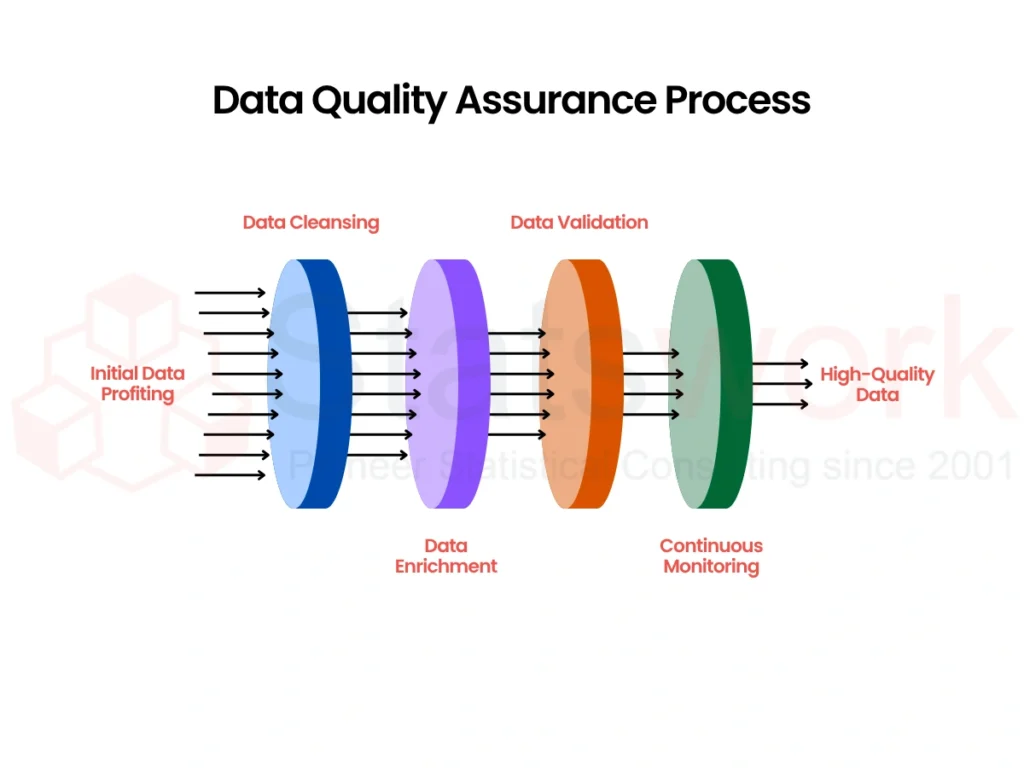
In the current age where everything operates using information, companies depend greatly on proper and uniform data to be used in decision-making. In whichever industry a firm is operating in, such as healthcare, financial services, retail, or manufacturing, inaccurate data is detrimental in many ways. In this case, the use of data validation, cleaning techniques, and good data governance becomes important in making sure that the data is sound.
What is Data Validation and Why Does It Matter?
Data validation is defined as the checking of data for accuracy, completeness, and compliance with certain criteria prior to being used anywhere.
- This helps to prevent data entry into a system or application of erroneous or invalid data because it serves as an insurance policy for preventing problems in the future.
- Filtering erroneous data prevents errors of results from incorrect data processing which can affect the company’s performance.
- Validation of data helps in following regulatory standards and increases trust in data analysis results.
- Even the simplest form of data validation such as checking the correctness of email addresses and validity of numbers can save many problems because working with invalid data can cause serious problems. [1]
How Data Cleaning Enhances Data Quality
- Focus on Existing Errors: Data cleaning aims at correcting inaccurate, incomplete, or inconsistent information that has already been stored in various systems and databases.
- Removes Duplicates: Data cleaning finds out any duplicate information and removes it in order to ensure reliability of data.
- Standardizes Data Formats: Inconsistencies in the format of date, name, or address data are corrected by means of data cleaning.
- Handles Missing Values: Data cleaning involves dealing with missing data.
- Enhances Overall Data Quality: Clean data will allow performing effective analyses and make forecasts using machine learning techniques. [1]
Key Techniques Used Across Industries
Some of the fundamental practices that are widely adopted by companies in all sectors to ensure data accuracy and consistency include:
| Technique | Description |
| Data Standardization (Retail product catalogues) | Transforming data into a standard and normalized format |
| Deduplication (Customer databases in banking) | Deletion of duplicate entries for maintaining accuracy and avoiding repetition |
| Validation Rules (Healthcare patient records) | Implementation of constraints including formats and ranges to verify correctness |
| Error Detection (Manufacturing quality checks) | Recognizing anomalies and outliers in order to determine possible problems |
| Overall Impact Across Industries | This forms the basis of data management as it ensures the reliability of data |
The above-mentioned practices assist organizations in achieving higher quality of data and making informed decisions. [2]
Industry-Specific Applications of Data Cleaning
Validation and cleaning methods have distinct applications within different sectors that require such services:
- Healthcare: To ensure the accuracy and completeness of patient data so that there will be no misdiagnoses
- Financial Services: To ensure that the transaction information is clean and fraud will be prevented
- Retail: To help in segmenting the customers and managing inventory
- Manufacturing: To enable predictive maintenance of equipment and quality assurance
In all sectors, data integrity plays an important role because the slightest mistakes may result in further complications.
Compliance and Regulatory Requirements
| Regulation/Standard | Industry | Role of Data Validation & Cleaning |
| GDPR | All industries | Data accuracy for individuals and ensuring compliance with user rights |
| HIPAA | Healthcare | Data accuracy and protection of patient confidentiality |
| SOX | Finance | Financial reporting accuracy and transparency |
| ISO Standards | Manufacturing | Quality control and process documentation |
Compliance is mandatory for organizations. There is a need to establish comprehensive data governance practices. This will prevent legal problems and reputation issues for the organization.
How Data Validation Drives Business Growth
Superior quality data doesn’t only provide an environment free of potential mistakes; it also may promote the growth of any enterprise. Implementing solid validation and cleansing processes for data means that the organization is going to receive additional benefits that include:
- Making sound, confident decisions based on accessible information
- Continuing to develop ways to personalize how we serve our customers
- Higher efficiency and less chance of error in our operations
- More accurate forecasting and planning
Organizations that have clean and validated data are able to identify trends, respond to changes, and continue to be competitive. [4]
Challenges and Best Practices for Implementation
Even though it is very important, there are still some difficulties in implementing data validation and cleansing which need to be taken care of by the companies:
Some common difficulties:
- Dealing with huge amounts of complicated data from different sources
- Incorporating data from various systems consistently and accurately
- Keeping real-time data accuracy in rapidly changing conditions
Some useful practices:
- To automate data validation and cleansing procedures to improve performance and avoid mistakes
- Creating data standards and guidelines within the company
- Auditing data regularly
- Training staff to use data correctly
With all of this in mind, a company will be able to create a stable data system.
Conclusion
The validation and cleaning of data are no longer something that one can opt out of doing—it is now an integral part of conducting business in today’s world. Whether it is achieving compliance or fostering innovation, these activities become crucial in turning information into actionable intelligence. It has become necessary to focus on areas such as data validation, cleaning, quality, management, integrity, governance, and compliance.
Organizations that will prioritize accuracy and reliability when it comes to handling their data will succeed in becoming leaders in tomorrow’s world.
Turn messy, unreliable data into accurate, actionable insights with Statswork’s expert data validation and cleaning services
Reference
- Mendenhall, D. W. (1989). Cleaning validation. Drug Development and Industrial Pharmacy, 15(13), 2105-2114. https://www.tandfonline.com/doi/pdf
- Liebchen, G. A. (2010). Data cleaning techniques for software engineering data sets(Doctoral dissertation, Brunel University, School of Information Systems, Computing and Mathematics). https://bura.brunel.ac.uk/handle/243
- Pomerantseva, V., & Ilicheva, O. (2011). Clinical data collection, cleaning and verification in anticipation of database lock: practices and recommendations. Pharmaceutical Medicine, 25(4), 223-233. https://link.springer.com/article/10.10