
What Are Custom Research Tools for Business Performance and Strategic Planning Research?
Qualitative Research Service
- Understanding Custom Research Tools in Business Research
- Why Businesses Need Custom Research Tools
- Key Types of Custom Research Tools Used in Corporate Research
- Research Tools to Assess Employee Engagement
- Custom Research Tool Development Process
- Benefits of Custom Research Tools for Strategic Planning
- How Custom Research Tools Improve Business Performance
- Conclusion
News & Trends
Recommended Reads

Data Collection
As the data collection methods have extreme influence over the validity of the research outcomes, it is considered as the crucial aspect of the studies
Brief Overview:
Custom research tools are specific tools designed for gathering business data in order to evaluate its performance. Contrary to generic surveys, custom research tools focus on addressing the needs of organizations by enabling them to obtain precise information regarding customer satisfaction, employee motivation, market conditions, etc. By providing businesses with valuable information that could be used for decision making, assessing risks, allocating resources and conducting competitive analysis, custom research tools serve a very important purpose of enhancing business performance and implementing business strategies. Businesses can leverage Custom Research Tool Development Services for designing custom research tools.Organisations operate in an ever-evolving business environment characterised by growth, efficiency, and achievement of their objectives. Nonetheless, for organisations to obtain data that can drive them towards achieving their objectives, more than surveys and standardised questionnaires are required. This is where custom research tools come in handy.
Custom research tools are tailor-made instruments designed for collecting, analysing, and interpreting data with respect to the specific business objectives, performance, and strategic plans of an organisation. Custom research tools allow organisations to gain accurate insights about their customers, employees, market trends, efficiency, and growth opportunities [1].
Today, organisations are focusing on acquiring custom research tool development services due to the relevance of data generated from such research tools.
Understanding Custom Research Tools in Business Research
Custom research tools are instruments for collecting and analyzing data in order to meet certain business goals. In contrast with general instruments, custom research tools can be tailored to fit the specific needs of organizations, industries, target groups, and research purposes.
Examples of these tools include:
- Customer satisfaction surveys
- Employee engagement questionnaires
- Market research instruments
- Business performance assessment tools
- Strategic planning assessment tools
- Organizational effectiveness surveys
- Leadership assessment questionnaires
- Competitive analysis tools
Such tools enable organizations to gather credible data to guide their business decisions [2].
Why Businesses Need Custom Research Tools
All businesses operate in different market environments, with different customer demands and strategic considerations. Standardized tools cannot help in gathering information necessary to make proper decisions.
Custom research tools assist companies in:
Making Better Decisions
Businesses benefit from research instruments which take into account particular variables and indicators. The information gathered is valuable for decision making.
Assessing Company’s Performance Accurately
The performance of employees, their productivity levels, as well as customer satisfaction can be measured using custom instruments.
Planning Strategically
Information about the strengths, weaknesses, opportunities and threats faced by an organisation helps in developing a strategy. Custom research tools facilitate strategic planning [3].
Gaining Insights into New Markets
The analysis of customers’ preferences and behaviour, as well as market opportunities will show potential directions of growth for the company.
Key Types of Custom Research Tools Used in Corporate Research
Research Techniques to Measure Customer Satisfaction
Customer satisfaction is an important aspect in influencing customer retention, brand loyalty, and profitability in organisations. Custom surveys are used to determine customer expectations and experience.
Parameters that may be commonly assessed are:
- Loyalty
- Service quality
- Product satisfaction
- Customer retention
- NPS
Research Tools to Assess Employee Engagement
Employee engagement is very critical in the overall organizational performance. Custom engagement surveys can be used to gauge factors that influence productivity and job satisfaction.
Parameters that may be used to measure include:
- Culture
- Leadership
- Communication
- Welfare
- Professional development [3]
Research Techniques to Measure Market Research
Market research techniques aim at evaluating market dynamics like consumer behavior and preferences, competition, industry trends, and more.
Applications may include:
- Preference
- Brand perception
- Product testing
- Market segmentation
- Competitive intelligence
Research Techniques to Assess Strategic Planning
Strategic planning techniques are used by companies to measure organizational capability, resource readiness, risk and opportunity assessment, and more.
These techniques may be used to:
- Assess strategy
- Evaluate organizational performance
- Determine organizational gaps
- Risk assessment
- Evaluate strategic initiatives
Custom Research Tool Development Process
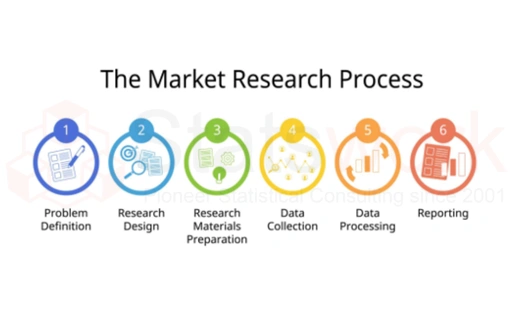
1. Defining Research Objectives
Firstly, business objectives, research questions and outcomes are established. Well-defined objectives guarantee that the tool measures variables correctly.
2. Identification of KPIs
These metrics are chosen according to the needs of a company. They help assess business performance.
3. Designing Research Questions
The questions must collect the necessary information. A correct design will help eliminate bias.
4. Conducting Pilot Test
A small test checks whether a survey instrument works properly.
5. Checking Validity and Reliability of the Tool
Statistical methods help ensure consistency in measuring variables.
Some of them are:
- Cronbach’s Alpha
- Factor Analysis
- Content Validity Evaluation
- Construct Validity Evaluation
6. Implementation of the Tool
The instrument can be implemented after testing [5].
Benefits of Custom Research Tools for Strategic Planning
Better Accuracy of Information
Research tools collect information that is relevant to the objectives of the organization and hence no unnecessary collection of information.
Risk Assessment
Research helps in identifying risk and uncertainty issues before they affect any business activity.
Competitive Advantage
Information related to customer needs, competitor strategies, and market opportunities can be identified through research.
Effective Management of Resources
Planning of budgeting and personnel allocation can be effectively managed using the research findings.
Business Growth
Good research leads to sustainable business growth due to good decision-making.
How Custom Research Tools Improve Business Performance
Organizational performance studies involve the analysis of organizational performance on different measures.
Some key performance measures are as follows:
- Financial performance
- Customer satisfaction
- Efficiency
- Productivity
- Innovation
- Competitiveness
Custom research instruments help analyze the above performance dimensions in detail and allow organizations to improve their performance by capitalizing on their strengths and overcoming their weaknesses [4].
Best Practices for Developing Effective Custom Research Tools
In order for organisations to conduct effective research and obtain benefits from it, they need to:
- Have research objectives.
- Have research objectives that relate to organisational goals.
- Test measurement devices.
- Conduct pilot research before implementing full-scale research.
- Test reliability and validity.
- Conduct regular updates in order to cope with changes in the business environment.
- Conduct statistical analysis.
All the actions mentioned above will help organisations benefit from the research.
Conclusion
Custom research tools are very crucial in current evaluations and strategic planning studies in terms of business performance [4]. Through custom research tools, businesses can be able to gain important insights on ways to enhance their efficiency, growth, and attain their strategic objectives. If you need scientific research instruments, then the best way to go about this is to seek help from Custom Research Tool Development Services. Statsworkv offers its clients quality Custom Research Tool Development Service where customized research instruments are created for enhancing business performance.
Frequently asked Question
Business research uses various tools such as surveys, questionnaires, interviews, focus groups, observation methods, market research instruments, data analytics software, and custom research tools to collect and analyse information for informed decision-making.
Custom research refers to a research approach in which data collection methods, questionnaires, surveys, and analytical frameworks are specifically designed to address the unique objectives, challenges, and information needs of a particular organisation or project.
The seven commonly used business analysis techniques are SWOT Analysis, PESTLE Analysis, MOST Analysis, CATWOE Analysis, Business Process Modelling (BPM), Use Case Modelling, and Requirements Analysis, all of which help organisations evaluate performance and improve decision-making.
The seven major types of research include Basic Research, Applied Research, Descriptive Research, Exploratory Research, Explanatory Research, Quantitative Research, and Qualitative Research, each serving different purposes in generating knowledge and solving problems.
Business performance is commonly measured using tools such as Key Performance Indicators (KPIs), Balanced Scorecards, Benchmarking, Business Intelligence Dashboards, Customer Satisfaction Surveys, Employee Performance Assessments, and Financial Performance Metrics.
References
- Altwaijri, A. S., & Alhomedan, R. H. A. (2025). Strategic planning techniques and tools in business enterprises: A systematic literature analysis. Journal of Project Management, 10(2).https://www.proquest.com/openview/e1d7f588391c32d1239358ae782cad44/1?pq-origsite=gscholar&cbl=7620166
- Molete, O. B., Mokhele, S. E., Ntombela, S. D., & Thango, B. A. (2025). The impact of IT strategic planning process on SME performance: A systematic review. Businesses, 5(1), 2.https://www.mdpi.com/2673-7116/5/1/2
- Mokhele, S., Thango, B., Molete, O., & Ntombela, S. D. (2024). The impact of IT strategic planning process on SME performance: A systematic review. Available at SSRN 4958932.https://papers.ssrn.com/sol3/papers.cfm?abstract_id=4958932
- Paila, N. (2026). SAP IBP vs Custom AI Planning Engines: A Comparative Performance Study. Journal of Data Science and Information Technology, 3(1), 1-16.https://d1wqtxts1xzle7.cloudfront.net/132041754/247-libre.pdf?1773169315=&response-content-disposition=inline%3B+filename%3DSAP_IBP_vs_Custom_AI_Planning_Engines_A.pd
- Biloslavo, R., Edgar, D., Aydin, E., & Bulut, C. (2025). Artificial intelligence (AI) and strategic planning process within VUCA environments: a research agenda and guidelines. Management Decision, 63(10), 3599-3624.https://www.emerald.com/md/article/63/10/3599/1259506