
What is Systematic coding and Qualitative Data?
- Home
- Insights
- Article
- What is Systematic coding and Qualitative Data?
Qualitative Research Service
News & Trends
Recommended Reads

Data Collection
As the data collection methods have extreme influence over the validity of the research outcomes, it is considered as the crucial aspect of the studies
- 1. Introduction
- 2. DeepHealth’s Diagnostic Suite™: Revolutionizing Radiology Workflows
- 3. Key Features
- 4. AI Impact on National Screening Programs
- 5. SmartMammo™: Enhancing Breast Cancer Screening
- 6. DeepHealth AI Use Cases Across Specialties
- 7. Strategic Collaborations and Ecosystem Expansion
- 8. Impact and Adoption of DeepHealth’s AI Solutions
- 9. Conclusion: The Future of Radiology with AI
- 10. References
Introduction
Qualitative research revolves around exploring experiences, views, actions, and social relationships based on non-numeric information. Under research methodology, qualitative data consists of interview data, observations, case studies, and open-ended surveys. Qualitative approach allows the researcher to delve deep into meanings and gain more insight into topics that cannot be quantitatively measured.
For meaningful analysis of non-numerical information, systematic coding procedures are applied. Important terms related to qualitative data analysis include systematic coding, research methodology, qualitative data analysis, thematic analysis procedure, and qualitative research approach. [1]
Understanding Qualitative Data in Research Methodology
The use of qualitative data allows researchers to gain insight into human experience, behavior, and opinion using descriptive data that is not numerical.
- Interviews: The researchers obtain extensive answers from the subjects to gain insight into their opinions, feelings, and experiences.
- Focus Groups: Discussions are carried out in groups to determine the attitudes and behavioral tendencies of several people.
- Observations: Researchers observe actions, interactions, and human behavior in actual settings to obtain qualitative information.
- Documents and Records: Written documents, such as journals, surveys, case studies, and reports, are reviewed for relevant information. [2]
What is Systematic Coding?
Systematic coding refers to a systematic approach that involves organizing and analyzing qualitative data through finding themes and patterns within the data.
- Data Categorisation: Scientists categorize qualitative data based on similar words, phrases, and ideas.
- Theme Identification: This process involves finding concepts or themes that are frequently appearing in interviews, observations, and texts.
- Data Interpretation: The process involves comparing responses so that the data can be interpreted effectively to meet the objectives of the research.
- Manual and Software Coding: Systematic coding may be done manually or using software applications like NVivo and Atlas.ti. [3]
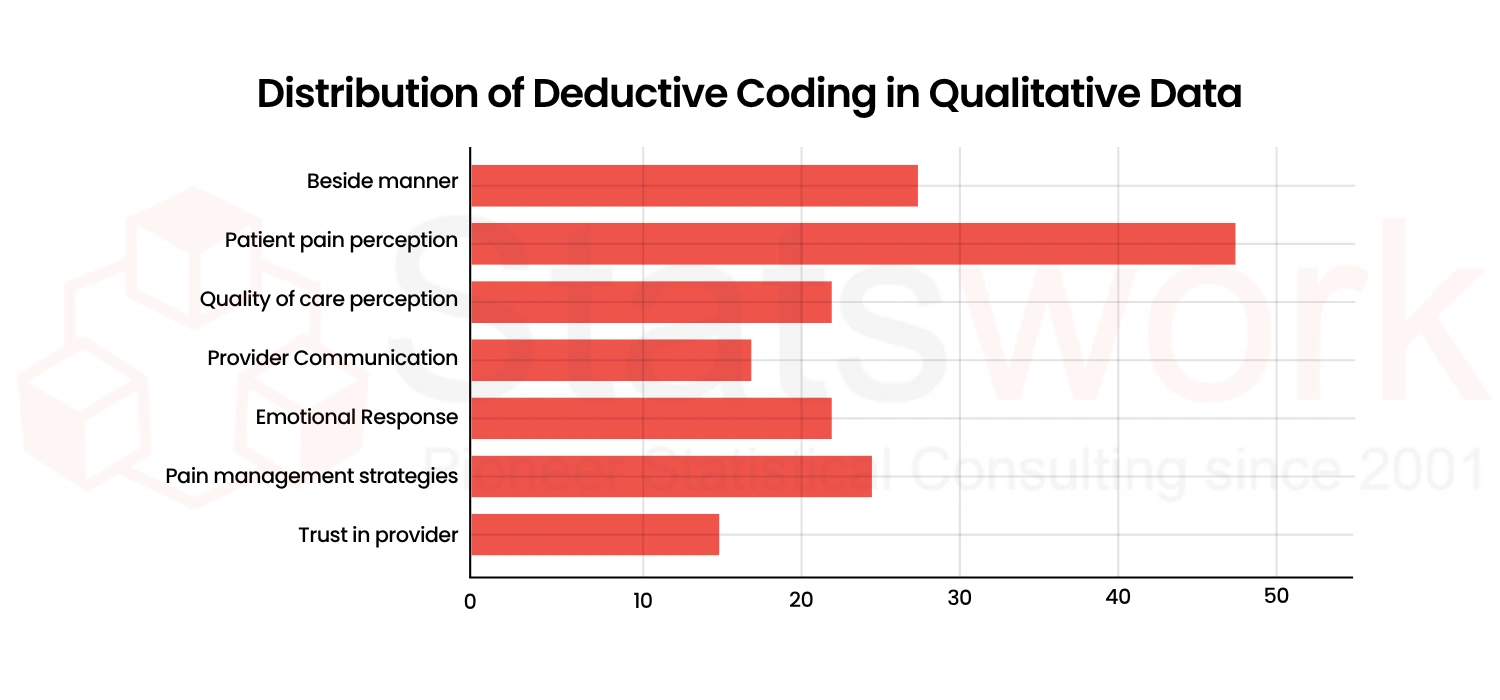
Types of Coding in Qualitative Research
Here is a table describing some of the coding techniques utilized in qualitative research methodologies:
| Coding Type | Purpose |
| Open Coding | Identifies key ideas, concepts, and meanings from raw qualitative data during the initial analysis stage |
| Axial Coding | Connects categories, subcategories, and relationships to organise data into a structured framework |
| Selective Coding | Develops major themes and integrates findings to create meaningful research conclusions |
| Descriptive Coding | Summarises the primary topic or central idea of specific qualitative data segments |
| Thematic Coding | Identifies repeated patterns, themes, and behavioural trends across collected research data |
Some of the coding processes described above can be utilized in organizing qualitative data effectively. [3]
Importance of Systematic Coding
Systematic coding is extremely important for qualitative research as it enables researchers to interpret complicated pieces of information.
- Improved Data Organization: Through coding, researchers find ways of arranging large volumes of qualitative data into categories.
- Identification of Similar Patterns and Ideas: Researchers can easily establish similar behaviors and ideas contained in interviews, observations, and written materials.
- Research Reliability Enhancement: Coding contributes to making research more systematic and reliable [4].
- Decreasing Research Bias: The systematic nature of coding makes researchers avoid their personal biases while interpreting the qualitative data.
- Interpretation of Results: This technique facilitates the accurate interpretation of results relative to research goals and theoretical concepts.
Challenges in Systematic Coding
Some of the problems that researchers may encounter while carrying out qualitative data analysis may include:
- Problems of Time Consumption: Qualitative information takes a lot of time to code because of the need to conduct a thorough thematic analysis of data.
- Problems Related to Consistent Coding: Coding can become inconsistent since different researchers might interpret the same data in different ways.
- Maintaining the Validity of Research: It is vital for researchers to adhere to coding guidelines to make sure of consistent qualitative results.
- Utilization of Coding Software and Methods: Some of the methods used include use of NVivo software and inter-coder reliability measures. [5]
Conclusion
Systematic coding and qualitative data analysis form critical parts of research methodology. This is because qualitative data helps understand people’s experiences, behaviors, and opinions, whereas systematic coding assists in organizing and analyzing this data. Coding allows for the identification of useful themes that enable accurate analyses and valid research results. Systematic coding will continue to be vital in qualitative research as more research is being carried out in different disciplines.
Turn Complex Qualitative Data into Clear, Structured Research Findings with Statswork’s Advanced Systematic Coding Expertise.
References
- Riazi, M., Ghanbar, H., & Rezvani, R. (2023). Qualitative data coding and analysis: A systematic review of the papers published in the Journal of Second Language Writing. Iranian Journal of Language Teaching Research, 11(1), 25-47. https://ijltr.urmia.ac.ir/article
- Lacity, M. C., & Janson, M. A. (1994). Understanding qualitative data: A framework of text analysis methods. Journal of Management Information Systems, 11(2), 137-155. https://www.tandfonline.com/
- WILLIAM, A. (1993). Systematic coding for research synthesis. The handbook of research synthesis, 125. https://books.google.com/books
- Popat, S., & Starkey, L. (2019). Learning to code or coding to learn? A systematic review. Computers & Education, 128, 365-376. https://www.sciencedirect.com/
- Schroll, J. B., Maund, E., & Gøtzsche, P. C. (2012). Challenges in coding adverse events in clinical trials: a systematic review. PloS one, 7(7), e41174. https://journals.plos.org/plosone