

What is the Purpose of an Independence Sample T-Test?
- Home
- Insights
- Article
- What is the Purpose of an Independence Sample T-Test?
Qualitative Research Service
News & Trends
Recommended Reads

Data Collection
As the data collection methods have extreme influence over the validity of the research outcomes, it is considered as the crucial aspect of the studies
- 1. Introduction
- 2. DeepHealth’s Diagnostic Suite™: Revolutionizing Radiology Workflows
- 3. Key Features
- 4. AI Impact on National Screening Programs
- 5. SmartMammo™: Enhancing Breast Cancer Screening
- 6. DeepHealth AI Use Cases Across Specialties
- 7. Strategic Collaborations and Ecosystem Expansion
- 8. Impact and Adoption of DeepHealth’s AI Solutions
- 9. Conclusion: The Future of Radiology with AI
- 10. References
Introduction
Comparison of two independent groups is one of the most important steps in statistical research for various categories of people, including researchers, students, healthcare specialists, and business people. The Independence Sample T-Test is a popular statistic procedure that can be used to test whether there are any significant differences between the means of two different samples.
The core objective of conducting the independence sample t-test includes comparison of means in two different groups and determination of their statistical significance testing. Independence sample t-test is commonly applied in such fields as education, healthcare, and business in order to ensure reliable results. [1]
Understanding the Purpose of an Independence Sample T-Test
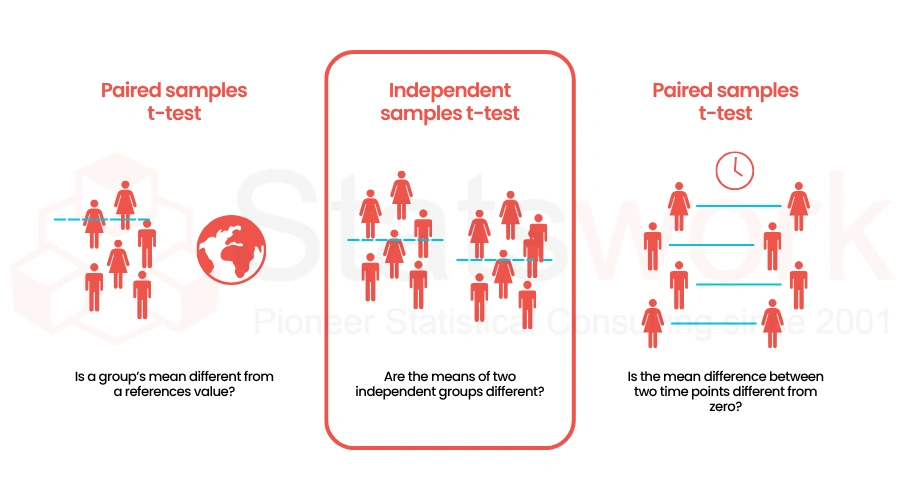
The independence sample t-test is a statistical procedure that aids in making comparisons between two independent groups.
- Hypothesis Testing: The independence sample t-test is useful in statistical hypothesis testing regarding the differences between two independent populations.
- Differences Between Independent Samples: The procedure helps in comparing the means of two independent groups to detect significant differences between them.
- Effects of Variables on Each Other: Using the test procedure, the researchers can check if one variable affects another.
- Uses of Test Procedure in Research: The independence sample t-test procedure can be applied to various types of researches including health care, educational and business sectors.
- Enhancing Reliability of Research Studies: This test aids in providing objective results to quantitative research analysis. [2]
Key Features and Assumptions of the Test
Prior to performing an independence sample t-test, it is imperative for researchers to satisfy some conditions. Such conditions increase the validity and precision of the test outcomes. The below table presents these critical conditions and their importance
| Assumption | Explanation | Importance |
| Independent Groups | The two groups being compared should not overlap | Prevents biased results |
| Normal Distribution | Data should be approximately normally distributed | Ensures accurate statistical interpretation |
| Equal Variance | Variability between groups should be similar | Ensures fair comparison between groups |
| Continuous Data | Data should be measured on a continuous scale | Allows calculation of means |
| Random Sampling | Samples should be selected randomly | Reduces sampling bias |
It is crucial to have knowledge of these conditions to conduct proper data analysis methods. [3]
Applications of Independence Sample T-Test
The independence sample t-test is commonly applied in numerous sectors in order to compare differences between two distinct groups.
- Medical Research: Scientists conduct the test in order to compare the effectiveness of treatment programs among different medical groups.
- Marketing Analysis: The independence sample t-test is applied by businesses when comparing the reaction of customers to diverse advertising campaigns.
- Educational Research: The test allows educational scientists to compare the performance of students under diverse teaching methodologies.
- Business Decision-Making: This test is commonly applied in organisations for measuring employee productivity, training and performance improvements.
- Social Science Studies: Psychologists and sociologists conduct the independence sample t-test in order to measure the behaviour of distinct groups of individuals. [4]
Benefits of Using an Independence Sample T-Test
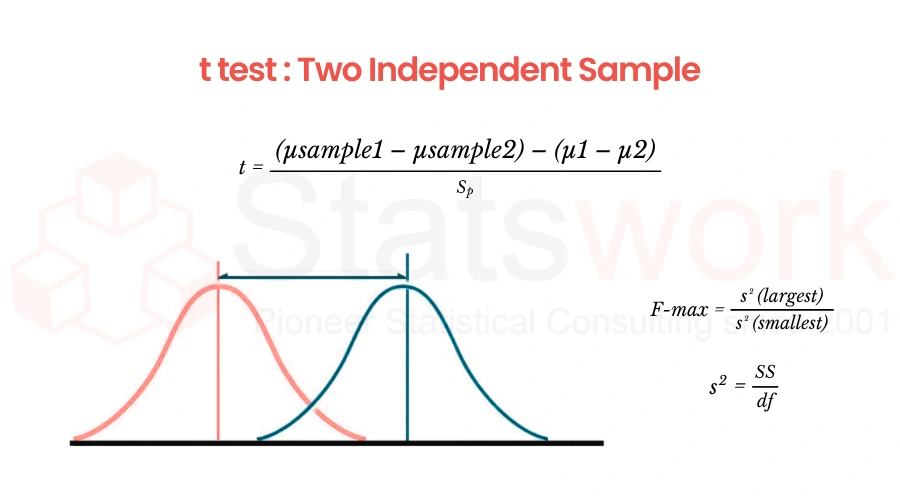
There are numerous benefits associated with the use of independence sample t-test which makes it one of the popular methods of quantitative research.
- Simple to Use: Comparing two different independent groups does not require complicated statistical techniques.
- Enhances Accuracy of Research: By decreasing the degree of randomness in the findings, the test allows researchers to draw statistically significant conclusions.
- Quick Analysis Process: This test allows comparing the two groups in a shorter time period.
- Informs Evidence-Based Decision Making: Evidence-based decisions can be made on the basis of accurate statistical data.
- Widespread in Research Practice: The test is frequently employed by researchers in different fields such as academic, medical, business, and social sciences. [5]
Conclusion
The independence sample t-test is an important tool in statistical studies, where it assists the researcher in comparing the averages of two different independent samples. The main objective of using this test is to establish whether the variations observed in the study are significant, or they just occur by coincidence. The independence sample t-test has numerous applications in healthcare, education, marketing, and social sciences.
Applying this test is only effective once the researcher understands its assumptions, application, and advantages. Integrating independent sample t-test analysis with other aspects of conducting the research will ensure the correct interpretation of the quantitative information collected during the investigation.
Simplify your research results with Statswork’s expert Tables Interpretation and accurate Independence Sample T-Test analysis.
References
- Kim, H. Y. (2019). Statistical notes for clinical researchers: the independent samples t-test. Restorative Dentistry & Endodontics, 44(3). https://synapse.koreamed.org/
- Akpan, E. E., & Clark, L. J. (2023). Independent T-test statistics: It’s relevance in educational research. J. Eminent Sch, 10(1), 79-88. https://mail.globalacademicstar.com/download/article/independent-t-test-statistics-it-s-relevance-in-educational-research.pdf
- Verma, J. P., & Abdel-Salam, A. S. G. (2019). Testing statistical assumptions in research. John Wiley & Sons. https://books.google.com/books?hl=en&lr=&id=BuSLDwAAQBAJ
- Mishra, P., Singh, U., Pandey, C. M., Mishra, P., & Pandey, G. (2019). Application of student’s t-test, analysis of variance, and covariance. Annals of cardiac anaesthesia, 22(4), 407-411. https://journals.lww.com/aoca/
- Sedgwick, P. (2010). Independent samples t test. Bmj, 340. https://www.bmj.com/content/