
AI-Powered Language & Vision: The Future of Business Intelligence
- Home
- Insights
- Article
- AI-Powered Language & Vision: The Future of Business Intelligence
Video-AI Data Collection for Computer Vision
News & Trends
Recommended Reads
Data Collection
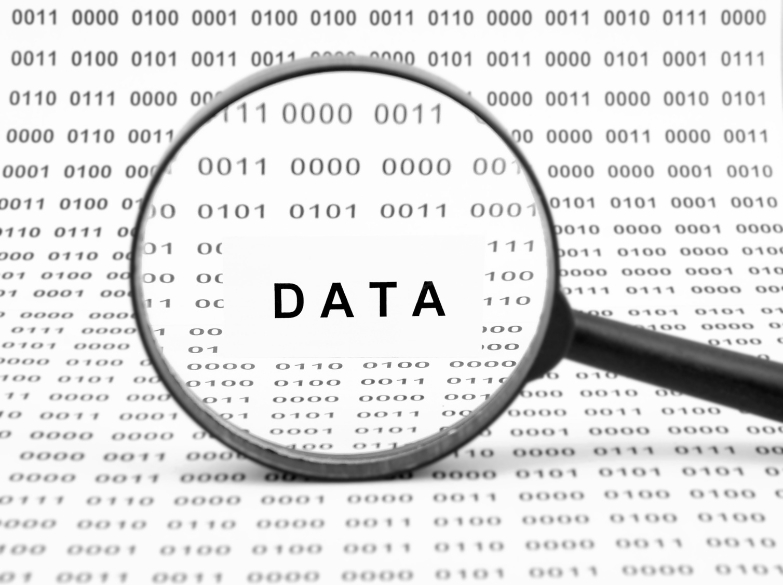
As the data collection methods have extreme influence over the validity of the research outcomes, it is considered as the crucial aspect of the studies
AI-Powered Language & Vision: The Future of Business Intelligence
Introduction: The Influence of AI on Business Intelligence
In today’s rapidly changing world of change, businesses are using AI technologies to position themselves more accurately, act based on their insights. Artificial Intelligence, and specifically, Natural Language Processing (NLP) and Computer Vision, is a catalyst for changing how businesses understand the use of data.
AI is not only for tech companies. It is enabling many businesses in numerous sectors—retail, healthcare, finance, and manufacturing—to make more intelligent decisions. NLP and Computer Vision allow businesses to monitor and analyse data, such as text and images, and monitor large amounts of data in real-time while identifying trends and new opportunities for improvement.
In this, we will examine the ways in which these two AI technologies are revolutionizing business intelligence (BI), and how you might use them to grow and improve your business.
The Impact of NLP on Business Intelligence
NLP (Natural Language Processing) is a field of AI that enables computers to comprehend, interpret, and communicate with users in human language. In general, it is about teaching a computer how to read, understand, and generate human language in a manner that is beneficial and informative.
How NLP Functions
NLP uses computational linguistics and machine learning methods and emerging deep learning methods to analyse and process large amounts of text. It can determine the grammatical and semantic structure of a sentence, identify entities (for instance, dates and locations), and ascertain the sentiment or emotions expressed in the text.
Ways NLP Assists in Business Intelligence
Use Case | Description |
Feedback Analysis | Automatically analyses feedback to obtain insights into satisfactions and trends. |
Sentiment Analysis | Analyses customer sentiment to improve their product and service. |
Text Categorization | Automatically categorizes a piece of text or body of text to improve efficiency and decision making. |
Chatbots & Assistants | Power chatbot experiences to engage customers and improve service efficiency. |
What is Computer Vision Technology?
Computer vision refers to a subset of artificial intelligence technology that allows a machine to understand and make sense of visual information in the world, such as images and video. Essentially, computer vision technologies are designed to teach a computer/application to recognize objects, identify patterns, and infer something based on visual information.[4]
How Does Computer Vision Work?
Computer vision is a technology that uses the algorithms and models to assess visual information, images or videos, observe and detect colours, patterns, edges and other visual indicators. In the example of deep-learning algorithms, we can teach these models to “see” and interpret the meaning of an image in a human-like manner. [5]
The advantages of Computer Vision for Business Intelligence | Definition |
Facial Recognition | Identifies customers for personalized experiences and access control |
Object Detection | Identifies objects in images or videos for inventory tracking, quality control, and security. |
Video Analytics | Produces insights from videos, such as customer movement, or identifying unusual activity. |
Image Classification | Identification of images for tasks like diagnosing diseases or identifying product defects |
The Reasons AI is the Future of Business Intelligence:
- Automated Processes – Automation leads to increased efficiency and the ability to dedicate fewer humans to the process.
- Real-Time Decision-Making – AI enables real-time decisions based on data that would typically take hours or days to finally arrive at.
- Trend-Driven Insights – AI gives insights based on qualitative and unstructured data (feedback, open-ended responses and visual data).
- Natural Language Processing – AI generates insights based on feedback, including open-ended feedback.
- Computer Vision – AI analyses visual information, like photos and videos, to provide tangible information like identifying certain items, objects or facial recognition.
- Improved Decision-Making – AI provides insight that is data-backed to better decision-making processes.
- Better Customer Experience – AI tailors the experience to provide more relevant interactions and a better customer experience.
- Innovation – AI enables businesses to innovate and provide new levels of competition in the marketplace.
Conclusion
Artificial Intelligence (AI) technologies such as Natural Language Processing (NLP) and Computer Vision are changing the way companies interpret and utilize data. NLP enables you to analyse unstructured text to generate valuable insights and elevate customer experiences, while Computer Vision enables you to analyse images and videos to improve security, quality control, and customer interaction.[4]
Incorporating these technologies into your business can lead to efficiencies, improved decision making and a competitive edge. Are you ready to realize the full potential of your AI? Contact us today to learn how our NLP and Computer Vision capabilities can transform your company.
Ready to Transform Your Business with AI?
At Statswork, we specialize in NLP and Computer Vision solutions that unlock actionable insights and drive smarter business decisions. Whether you’re looking to analyse customer feedback, optimize operations, or enhance security, our AI-powered services can help you get there.
Contact us today to schedule a consultation and discover how AI can revolutionize your business.
References
- Edge, D., Larson, J., & White, C. (2018, April). Bringing AI to BI: enabling visual analytics of unstructured data in a modern Business Intelligence platform. In Extended abstracts of the 2018 CHI conference on human factors in computing systems(pp. 1-9).https://dl.acm.org/doi/abs/10.1145/3170427.3174367