
What is HL7 and how is it used in data integration?
- Home
- Insights
- Article
- What is HL7 and how is it used in data integration?
Qualitative Research Service
- What is HL7?
- Why HL7 is Important for Healthcare Interoperability
- Types of HL7 Standards
- Ways in Which HL7 Is Utilized in Data Integration
- HL7 Message Structure
- Benefits of HL7 in Data Integration
- Applications for HL7 in Healthcare
- Tools and Technologies for HL7 Integration
- Challenges in HL7 Data Integration
- Conclusion
News & Trends
Recommended Reads
Data Collection
As the data collection methods have extreme influence over the validity of the research outcomes, it is considered as the crucial aspect of the studies
- 1. Introduction
- 2. DeepHealth’s Diagnostic Suite™: Revolutionizing Radiology Workflows
- 3. Key Features
- 4. AI Impact on National Screening Programs
- 5. SmartMammo™: Enhancing Breast Cancer Screening
- 6. DeepHealth AI Use Cases Across Specialties
- 7. Strategic Collaborations and Ecosystem Expansion
- 8. Impact and Adoption of DeepHealth’s AI Solutions
- 9. Conclusion: The Future of Radiology with AI
- 10. References
In the ever-changing healthcare landscape, the importance of efficient healthcare data interchange has never been greater. Every day, hospitals, labs, insurance companies, and health technology applications produce tremendous amounts of patient data. However, in the absence of standards, data can become ‘siloed’ or locked within individual systems.
This is where HL7 can change everything. HL7 is a worldwide standard for health interoperability. This means HL7 facilitates communication between different systems so that patient information can be accessed efficiently. HL7 data integration is vital for organizations looking to improve patient health.
What is HL7?
HL7 stands for Health Level Seven, and it refers to a group of international standards developed for the exchange, integration, sharing, and retrieval of electronic information in the healthcare industry.. It is a language used for the communication of different applications in the healthcare industry, including Electronic Health Records, laboratory information systems, and billing systems.
The term ‘Level Seven’ refers to the application layer in the OSI Model, in which the exchange of information between software takes place. HL7 enables the standardization of the exchange of information at this level.
Why HL7 is Important for Healthcare Interoperability?
Interoperability is one of the major challenges facing healthcare organizations. This is mainly due to the lack of standardized communication protocols. This has made data sharing cumbersome and tedious [3].
HL7 is important because it facilitates health information technology (IT) system interoperability. This means that health information systems from different vendors can communicate effectively with each other. This enhances the efficiency and effectiveness of sharing health information.
The importance of HL7 standards to healthcare organizations is:
- It facilitates the sharing of data in real-time
- It eliminates duplication during clinical data integration
- It enhances accuracy during electronic health records integration
- It facilitates compliance with health regulations
- It enhances coordination among departments
Types of HL7 Standards
HL7 has several standards to cater to the various integration needs in the healthcare domain.
HL7 Version 2 (HL7 v2)
HL7 v2 is the most popular standard for HL7 messages. The standard is widely used for the exchange of patient information, lab results, and admissions. The flexibility of this standard makes it the best for hospital system integration [5].
HL7 Version 3 (HL7 v3)
HL7 v3 has introduced a more structured approach to the exchange of clinical data. The standard uses a specific methodology to maintain consistency. However, the standard has not been implemented as widely as HL7 v2.
FHIR (Fast Healthcare Interoperability Resources)
FHIR has been introduced as the new standard for the integration of healthcare data using API. FHIR supports web technologies such as RESTful API, JSON, and XML.

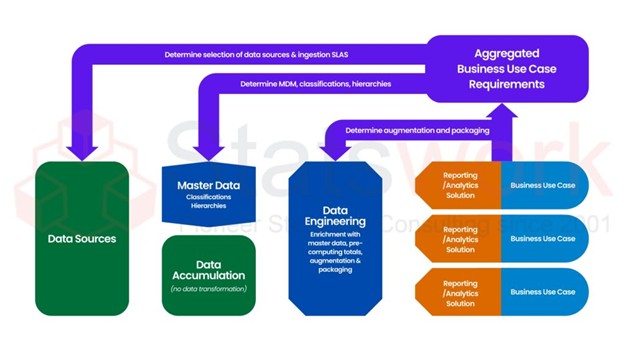
Figure 1: HL7 Data Integration Architecture
Ways in Which HL7 Is Utilized in Data Integration
HL7 is used in the integration of healthcare data in several ways.
1. System to System Data Exchange
HL7 facilitates the seamless exchange of information between different healthcare systems, including electronic health records, laboratory systems, and pharmacy systems. For instance, once a laboratory test is done, the results are automatically sent to the electronic health record system.
2. Real-Time Data Integration
One of the major advantages of HL7 is its capability for real-time exchange of healthcare information. For instance, whenever there is a patient admission, discharge, or transfer, HL7 sends messages in real time.
3. Data Mapping and Transformation
HL7 interface engines map and transform information from one system into a format that can be used by another system. This helps with the exchange of information between two different systems with different data structures.
4. Workflow Automation
HL7 facilitates the automation of vital healthcare workflows like patient admissions, order management, and billing.
5. Interoperability Across Platforms
HL7 ensures interoperability in the realm of healthcare information technology. It enables different systems to work together without the need for integration [3].

Figure 2: HL7 Data Flow in Healthcare Systems
HL7 Message Structure
HL7 messages have a defined message structure that facilitates the exchange of accurate information.
Key Components:
Segments – They are used for logical grouping of information.
Fields – They are used for representing information within segments.
Delimiters – They are used for representing the separation of fields.
The segments used in HL7 messages include:
- MSH – Message Header Segment
- PID – Patient Identification Segment
- OBR – Observation Request Segment
- OBX – Observation Result Segment
Benefits of HL7 in Data Integration
The implementation of HL7 standards has several advantages for healthcare organizations:
| Improved Interoperability | HL7 facilitates the seamless integration of various healthcare systems, thus improving the interoperation of different applications. |
| Enhanced Data Accuracy | HL7 improves the accuracy of exchanging messages in the healthcare domain. |
| Faster Decision-Making | HL7 facilitates real-time access to information, thus improving faster decision-making. |
| Cost Efficiency | HL7 improves efficiency in the healthcare domain by automating processes. |
| Scalability | HL7 has the capability of handling large-scale healthcare infrastructures, thus suitable for expanding networks. |
Applications for HL7 in Healthcare
HL7 is used in many areas within the healthcare industry. These areas include:
- EHR Integration for patient data management
- Laboratory Information Systems (LIS) for test results
- Radiology for data exchange
- Billing and insurance for claims processing
- Public health reporting for data analytics [5]
All these applications underscore the role of HL7 data integration in healthcare.
Tools and Technologies for HL7 Integration
Various tools are used for the implementation of HL7 integration. These tools include:
- HL7 interface engines like Mirth Connect and Rhapsody
- FHIR APIs for new-age healthcare applications
- Data mapping tools
- Healthcare integration platforms
These tools make the implementation of healthcare interoperability easier.
Challenges in HL7 Data Integration
Although the use of HL7 has several advantages, the implementation of HL7 has faced several challenges:
- Complexity in the structure of HL7 messages
- Variability in the implementation of HL7 systems
- Integrating HL7 systems with legacy health systems
- Data mapping and transformation challenges
- Ensuring the security of health data exchange [3]
Solving the challenges in HL7 data integration requires the application of knowledge in health IT integration.
Conclusion
HL7 is an essential component in the integration and interoperability of healthcare data. It facilitates communication and interaction among various healthcare systems. This leads to an efficient and effective healthcare system with minimal errors and maximum patient benefits. Therefore, HL7 is an essential tool in the healthcare sector [5].
HL7 is continually improving with the development and implementation of other modern standards, including FHIR. This enables it to accommodate various technologies, including cloud computing, mobile health, and AI-based analytics. This means that organizations can realize the potential of their healthcare data with HL7 integration solutions.
Partner with Statswork for expert HL7 Data Integration Services—get a FREE consultation today and streamline your healthcare systems!
Reference
- González-Ferrer, A., Peleg, M., Verhees, B., Verlinden, J. M., & Marcos, C. (2012, September). Data integration for clinical decision support based on openEHR archetypes and HL7 virtual medical record. In International Workshop on Process-oriented Information Systems in Healthcare(pp. 71-84). Berlin, Heidelberg: Springer Berlin Heidelberg. https://link.springer.com
- Bezerra, C. A. C., de Araújo, A. M. C., & Times, V. C. (2020, May). An hl7-based middleware for exchanging data and enabling interoperability in healthcare applications. In 17th International Conference on Information Technology–New Generations (ITNG 2020)(pp. 461-467). Cham: Springer International Publishing. https://link.springer.com