
What is Video Tracking and How is it Used in Computer Vision?
- Home
- Insights
- Article
- What is Video Tracking and How is it Used in Computer Vision?
Qualitative Research Service
News & Trends
Recommended Reads

Data Collection
As the data collection methods have extreme influence over the validity of the research outcomes, it is considered as the crucial aspect of the studies
- 1. Introduction
- 2. DeepHealth’s Diagnostic Suite™: Revolutionizing Radiology Workflows
- 3. Key Features
- 4. AI Impact on National Screening Programs
- 5. SmartMammo™: Enhancing Breast Cancer Screening
- 6. DeepHealth AI Use Cases Across Specialties
- 7. Strategic Collaborations and Ecosystem Expansion
- 8. Impact and Adoption of DeepHealth’s AI Solutions
- 9. Conclusion: The Future of Radiology with AI
- 10. References
Introduction
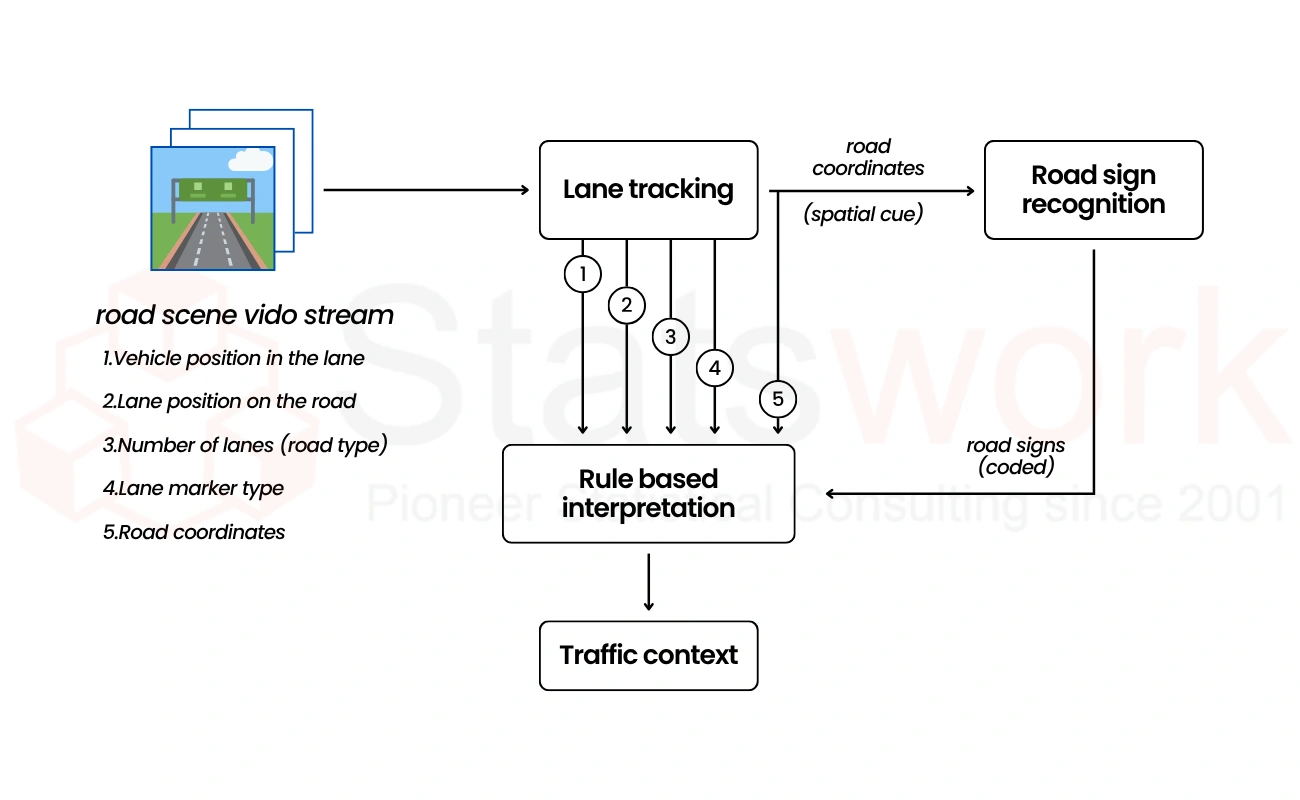
Video Tracking is a crucial computer vision technology that allows the detection and identification of objects in videos and their subsequent tracking. The ability to detect, analyze, track and monitor objects can be implemented in different industries such as autonomous driving and retail, sport broadcast, healthcare monitoring, etc [1].
The effectiveness of Video Tracking systems depends greatly on the quality of data annotation. Data annotation is an important step in training machine learning models to recognize and track people, cars, products, animals, and other objects on video footage.
The Need for Video Tracking
Video Tracking is one of the most significant techniques in the development of intelligent visual systems. Automated detection and tracking play a central role in converting raw video data into valuable insights.
Video tracking is different from image detection in that it involves analyzing multiple frames rather than a single image.
Video tracking begins with detecting an object in the first frame and predicting or confirming its location in the next frame. In the subsequent frames, the system monitors how the tracked object moves.
Objects that can be tracked using the technique may include:
- People in public places
- Vehicles on highways
- Athletes in sport games
- Products at production facilities
- Wildlife animals
- Medical equipment in surgeries
Video Tracking combines Object Detection, Motion Estimation, and Temporal Analysis to ensure smooth and accurate tracking.
How Video Tracking Takes Place in Computer Vision
Video Tracking Systems rely on AI Models and Computer Vision Algorithms that analyze video data frame by frame.
Step 1: Object Detection
To start tracking, the system needs to identify objects of interest in the video. Objects might include individuals, cars, faces, devices, and any other target objects determined by users.
Step 2: Object Initialization
After detecting the objects of interest, the system will assign each of them unique identification so that the tracking could occur independently for each of them.
Step 3: Object Motion Prediction
Based on previous movement patterns, the algorithm predicts future motion of the object, including its future coordinates.
Step 4: Frame Matching
After that, the algorithm will match predictions about object motion with the following frame of video.
Step 5: Object Re-identification
In cases when the object is either concealed or disappears off-screen and then appears back on, some more advanced tracking algorithms will identify the object again.
Step 6: Continuous Learning
Modern AI Systems improve tracking accuracy through training on annotated datasets and
performance feedback [4].
Importance of Data Annotation for Video Tracking
Data Annotation forms the crux of good Video Tracking Models. For training of AI models, the annotation of objects takes place in a continuous manner through different video frames.
There are several types of annotations such as:
| Bounding Box Annotation | Objects are placed inside a rectangle box within a video frame. |
| Polygon Annotation | An irregular shape object is annotated through polygon annotation |
| Key Point Annotation | Body key points and other points on the object are labeled for movement |
| Pixel-wise Annotation / Semantic Segmentation | Each pixel within an object is annotated. |
| Object ID Tagging | A unique ID is assigned to each object within the video. |
Application of Video Tracking Technology
| Autonomous Cars | Video Tracking technology is utilized in self-driving vehicles for monitoring pedestrians, surrounding cars, bicycles, and road obstructions. |
| Security and Surveillance | Video tracking technology monitors unusual movements, crowds, trespassing, and any abandonment of items. |
| Retail Analysis | Retail businesses monitor customers’ movement patterns, traffic flow, queuing lines, and interaction within the store premises. |
| Sports Analysis | Video tracking technology tracks the movements of players, ball trajectories, game strategies, and other metrics. |
| Healthcare Management | Video Tracking technology is applied in healthcare facilities for patient monitoring, movement analysis, and surgeries. |
| Manufacturing Processes | Video tracking technology is used to monitor product movement, robotic arm movements, and workflow operations in factories. |
Advantages of Video Tracking
- Real-Time Monitoring Gives immediate insight into the movements of objects and events.
- Enhanced Decision-Making Delivers information on motion, traffic, and behavior that informs planning decisions.
- Greater Safety Identifies dangers, collisions, abnormal behavior, or unauthorized area access.
- Automation Saves time by eliminating the need for constant human observation.
- Increased Precision Artificial intelligence technologies can provide continuous surveillance without deterioration.
- Enhanced Customer Service Enterprises leverage motion analysis to optimize their service flow, design, and personnel management.
Importance of Quality Data Annotation Services
A professional team ensures:
- Consistent ID numbers for objects
- Precise frame-to-frame labeling
- Proper management of occlusions
- Quality of multi-object tracking
- Faster data delivery times
- Scalability for big projects
Quality annotated data has a direct impact on improving model performance in the real world.
Future of Video Tracking in Computer Vision
Upcoming trends involve:
- Multi-camera video tracking
- 3D object tracking
- Drone-based surveillance tracking
- Models to predict behavior
- Edge AI models
- Privacy-friendly AI tracking
Conclusion
Video Tracking is an important computer vision technology that helps machines track the motion of objects quickly and accurately. This can be used for important applications in areas like security, retail, healthcare, manufacturing, and transport [4].
Statswork provides quality video annotation and data labeling services that assist in training machine learning models for video tracking applications.
Reference
- Coifman, B., Beymer, D., McLauchlan, P., & Malik, J. (1998). A real-time computer vision system for vehicle tracking and traffic surveillance. Transportation Research Part C: Emerging Technologies, 6(4), 271-288. https://www.sciencedirect.com/
- Hammoudeh, M. A. A., Alsaykhan, M., Alsalameh, R., & Althwaibi, N. (2022). Computer Vision: A Review of Detecting Objects in Videos–Challenges and Techniques. International Journal of Online & Biomedical Engineering, 18(1). https://openurl.ebsco.com/