



Q & A
Meta Analysis
Q: How do Study Size and Sample Characteristics Influence The Reliability of Meta-analysis Findings?

1. Impact of Small vs. Large Study Sizes on Effect Estimates
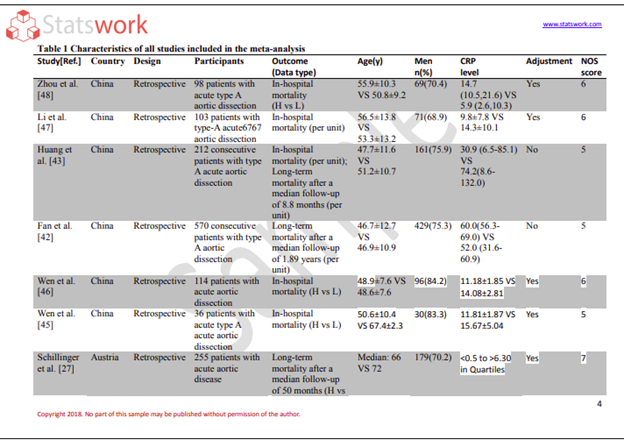
- It is important to recognize that the sample size of a study will determine the amount of random error, thus causing a small study to generate a less accurate estimate than a large study.
- The instability and/or extreme nature of small study results may lead to inaccurate pooled estimates in a meta-analysis.
- A large study provides the greatest level of statistical power and therefore produces the most accurate and stable pooled estimates resulting from a meta-analysis.
2. Weighting of Studies and Its Influence on Reliability
- The relative sizes and variances of the studies used for meta-analysis were weighted, thus providing greater influence for studies with larger sizes.
- Weighting of studies will enhance the reliability of estimates; however, improper weighting or extreme heterogeneity will cause misleading estimates of pooled results.
- By choosing the correct model (e.g., fixed-effect or random-effect), it will allow for equal contributions from both small and large studies.
3. Sample Diversity and Generalized Results
- The characteristics of participants (age, gender, ethnicity, severity, location) also affect how generalizable the findings will be.
- Results from narrowly defined or unrepresentative samples may contain lower external validity and therefore may have limited generalizability.
- Meta-analyses that contain diverse samples must be careful to evaluate the differences across sub-groups, as this may obscure the differences when all sub-groups are pooled together.
4. Risk of Bias Associated with Sample Characteristics
- Bias can be created because of sample characteristics; this includes an uneven distribution of volunteers, e.g., volunteer bias or the potential for selective inclusion.
- The application of inconsistent definitions or criteria introduces a systematic error into studies.
- Similar biases present in multiple studies can limit the reliability of a meta-analysis.
5. Heterogeneity Caused by Study Size and Samples
Variation in studies | Differences between methods, characteristics of samples, and size of the study can create heterogeneity. |
Impact on pooled estimates | High levels of heterogeneity indicate that studies may not identically effects, which results in less stable estimates. |
Impact on pooled estimates | The reliability of the estimates is improved by evaluating the heterogeneity of the data, with subgroup analyses and meta-regression. |