Data Analysis services

Meta-Analysis Research Services
Data Collection Services
Statistical Programming & Biostatistics services
Data Management Services
Research methodology services
Tool development services
Statistical Interpretation services
Statistical Interpretation services
Sample Size Calculation Services
Sample Size Calculation Services
Artificial Intelligence and Machine Learning Services
Artificial Intelligence and Machine Learning Services
Report generation Service

Report generation Services

Data Analysis services

Meta-Analysis Research Services

Data Collection Services

Statistical Programming & Biostatistics services

Data Management Services

Research methodology services

Tool development services
Statistical Interpretation services

Statistical Interpretation services
Sample Size Calculation Services

Sample Size Calculation Services
Artificial Intelligence and Machine Learning Services

Artificial Intelligence and Machine Learning Services
Report generation Service

Report generation Services
The blog provides an insight into the basics of methodology in quantitative research. Research designs, sampling approaches, data collection tools and methods, and analytical methods are discussed in the blog. Moreover, a proper step-by-step framework for methodology is discussed in order to ensure that valid and reliable results are produced. The blog compares quantitative and qualitative methodology and provides useful guidance on which type of methodology should be chosen.
The validity of all quantitative dissertation, thesis, and business research papers lies in one chapter only – methodology. It is the section where the audience will know whether you have given valid numbers to them or not. If it is done in the right way, the research becomes credible and defensible. But, if it is done wrong way, even the data collected in a proper manner becomes questionable.
Here we will find out what research methodology is, the types of research methodologies for a quantitative researcher and how to structure the methodology chapter [1].
Research methodology refers to a theory-based approach which the researcher uses in gathering, measuring and analyzing data to find an answer to the research question. Methodology differs from “method of research” in the sense that the latter refers to the instruments used for the study (survey, experiment, statistical analysis) while methodology refers to the reasons behind the choice of those instruments [2].
The components of an effective methodology section include:
Well-crafted methodology serves as the justification of the entire research [3].
Before diving into structure, it helps to place quantitative research in context against its counterpart.
| Aspects | Quantitative Research Methodology | Qualitative Research Methodology |
| Basic philosophy | Positivist, deductive reasoning | Interpretivist, inductive reasoning |
| Type of data | Numerical data | Textual data |
| Objective | Testing of hypothesis and formulation of generalizations | Discovery of meaning and context |
| Sample size | Large sample | Selected sample |
| Techniques | Surveys, questionnaires, experiments | Interviews, focus groups, case studies |
| Techniques for data analysis | Use of statistical software (SPSS, R, Python) | Content or thematic analysis |
Quantitative research simply entails quantification of the research problem using numbers that will later be presented in statistical form. In quantitative research, there are standardized methods, clear research problems, and pre-designed procedures, largely because of the application of methods such as surveys, polls, and questionnaires [4].
Main characteristics of quantitative research include:
The “types of research methodology” that a quantitative researcher may adopt belong to the following groupings:
The above-mentioned research methods are based on a philosophic choice of whether the research will have positivist philosophy (objective, measurable, testing a hypothesis – which is the default philosophy of quantitative research) or interpretivist philosophy (subjective, meaning-oriented). The method of reasoning in a study can either be deductive (testing an existing theory) or inductive (developing a theory through observations)
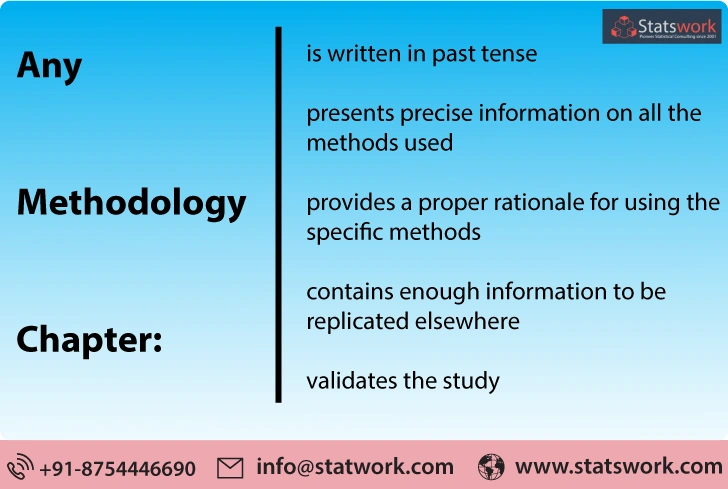
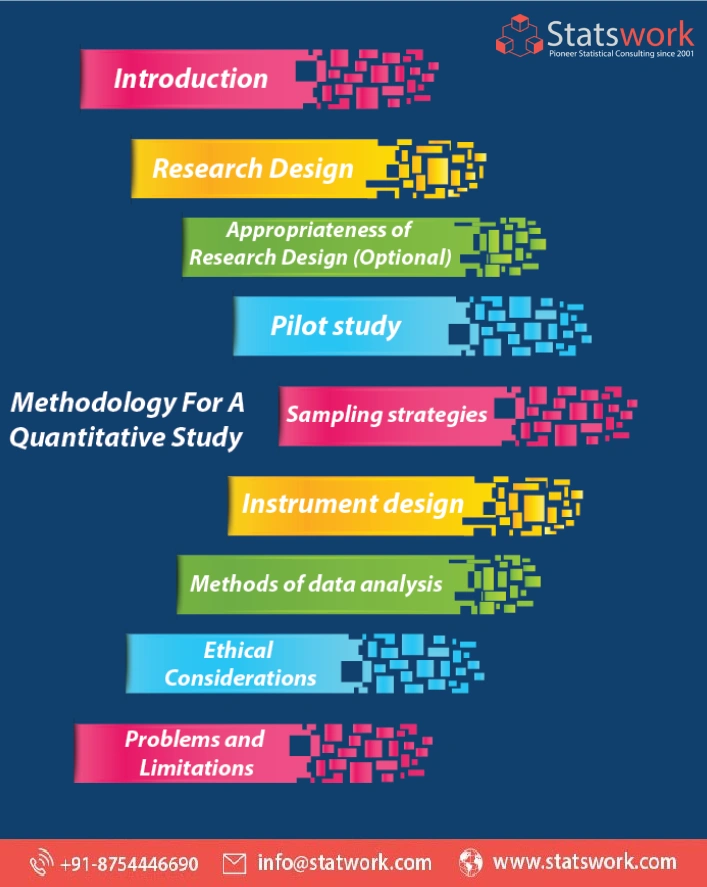
A methodology chapter for quantitative study should be written in the past tense and follow a logical, linear sequence. Below is the structure reviewers and supervisors expecting to see.
1. Repeat Research Question and Background
Start by repeating the research question, its background, and its significance to establish the context in which the research question has been answered.
2. Discuss Research Design and Methodology
Identify whether the study was carried out using an experimental, quasi-experimental, descriptive, correlational, cross-sectional or longitudinal approach, and give reasons as to why the design is most suitable for the research question. This is where the rationale for using the chosen quantitative research design needs to be established [2].
3. Discuss the Pilot Study (Where Relevant)
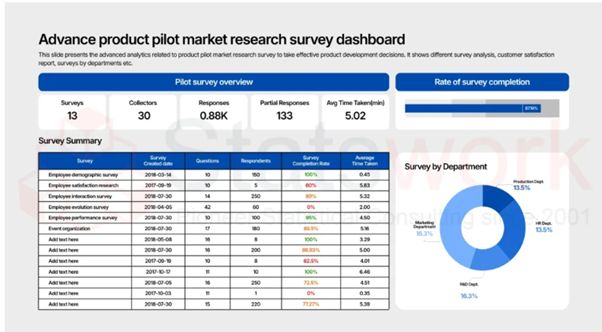
Any pilot tests conducted to improve the data collection instrument, to identify ambiguous questions or to predict the response rate before actual data collection takes place.
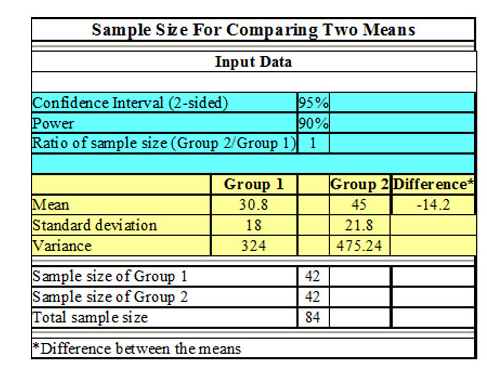
4. Sampling Procedure and Sample Size Determination
One of the most intensely examined areas in any methodology chapter should contain information about:
Probability vs non-probability sampling:
| Type of Sampling | Sampling Category | Uses Best |
| Simple random sampling | Probability | Every element of the population has an equal opportunity of being selected. |
| Stratified sampling | Probability | The population can be sub-divided into groups to be proportionately represented. |
| Cluster sampling | Probability | The population has clusters either naturally or through organization. |
| Systematic sampling | Probability | There is a frame from which elements can be selected systematically. |
| Convenience sampling | Non-probability | Time or access restricts the use of random sampling. |
| Purposive sampling | Non-probability | Respondents with certain qualities are needed for the study [3]. |
Detail the measurement tool used for collecting data, including types of questionnaires, structured interviews, observations, and other types of tools. Identify whether it is primary or secondary data and provide details on various aspects of the data collection tool such as Likert scale items and other related characteristics.
State exactly which statistical methods were used and why. This section should map cleanly onto your research questions and hypotheses.
| Analysis Type/Common Approaches | Approaches | Applications |
| Descriptive statistics | Mean, median, mode, standard deviation | Description of sample properties |
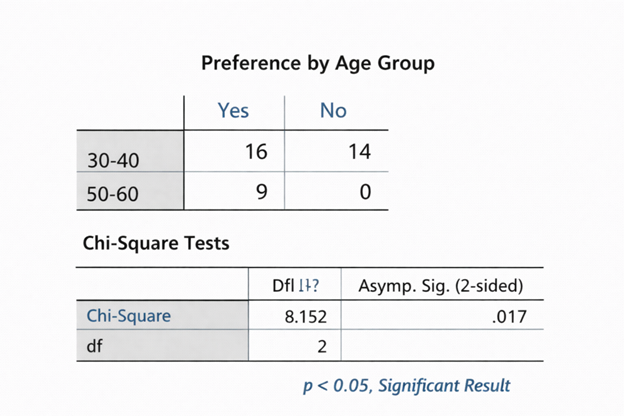
| Inferential statistics | t-tests, chi-squared, ANOVA | Test hypothesis or compare groups |
| Relationships analysis | Correlation and regression analysis | Magnitude and direction of relationship between variables |
| Comparison of categorical data | Cross tabulations | Comparison of frequencies of two or more categories |
| Hypothesis testing | P-value and statistical significance tests | Confirmation of rejection of null hypothesis |
| Tools | SPSS, R, Python | Application of the above-mentioned techniques |
Identify the approaches adopted to verify whether the instrument was measuring the variables it was meant to measure (validity) and reliability as well.
Identify all the ethical issues, which may include informed consent procedure, maintenance of confidentiality and anonymity, storage of data, and ethics review board approval, where applicable [5]
In any methodology section, there should be consideration of the following items:
The effects of those limitations on the study and any conclusions drawn from the study, including replication and data triangulation
The following should be included in your dissertation research methodology chapter as a final step of quality control prior to submission:
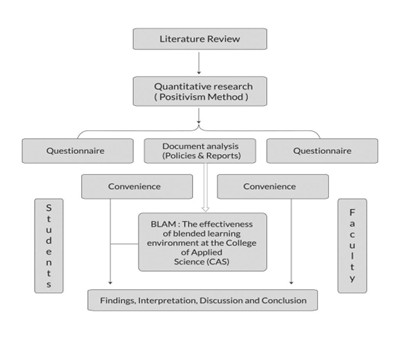
Example of research methodology used in quantitative research regarding the employee job satisfaction:
The methodology chapter is not merely an exercise; it is the process through which the reader validates your entire study. Reiterate the problem statement, explain the rationale behind the chosen design, justify your sampling and instrumentation decisions with clarity, outline your analysis procedures, discuss the ethical considerations, and enumerate your limitations. Follow this procedure, and you will ensure the legitimacy of your quantitative study [5].
In case you are writing up a dissertation chapter, market research report, or business analytics study and seek a professional opinion regarding your research methodology, sample size calculation, and/or statistical analysis plan, Statswork Research Methodology Services can assist you in creating a methodology chapter that is credible and review ready. Our consultancy also extends to Quantitative Data Collection, Sample Size Calculation, and Statistical Data Analysis.
Quantitative research methodology is a systematic approach that uses numerical data, structured data collection methods, and statistical analysis to test hypotheses, identify relationships, and draw objective conclusions.
According to Clifford Woody, research methodology involves defining and redefining problems, formulating hypotheses, collecting, organizing, and evaluating data, making deductions, and reaching valid conclusions.
A methodology should clearly describe the research design, sampling method, data collection instruments, data analysis techniques, validity and reliability measures, ethical considerations, and study limitations.
To write a research methodology, explain your research design, justify your sampling approach, describe the data collection methods, outline the statistical analysis techniques, and discuss ethical practices and research limitations.
The five common research methodologies are experimental, descriptive, correlational, exploratory, and explanatory research, each designed to address different research objectives.
The five main parts of a research methodology are the research design, sampling strategy, data collection methods, data analysis techniques, and validity, reliability, and ethical considerations.
WhatsApp us