



Finance research

CHAPTER III - Research Methodology
Introduction
In the present section, researcher explains the research process adopted in the study with proper explanation of the research approach, strategy, data collection and analysis methods used for the study along with appropriate justification. Silverman defined the pure research methodology (as cited in Hussey & Hussey, 1997) as “Methodologies refer to the overall approach to the research process, from the theoretical underpinning to the collection and analysis of data. Like theories, methodologies cannot be true or false, only more or less useful”. (p.54)
3.1 Research Designs
For the solution of managerial problems information is provided by a systematic enquiry known as business research. This was mentioned by Cooper and Schindler (2003). Exploratory, descriptive and explanatory are the three different kinds of research design. The definitions are given below.
Exploratory: This design aims at assessing phenomena, questioning and seeking new insights to the happenings in the business.
Descriptive: The situation or events and persons are described by this design. Sekaran U (2000) argues that ‘descriptive study is undertaken in order to ascertain and be able to describe the characteristics of the variables of interest in a situation’.
Explanatory: To explain the relationship between variables the emphasis is on the study of the situation or a problem (Saunders et al, 2007) The present study adopted exploratory study design in order to assess cause and effect. In the present study, researcher wanted to test the hypothesis on whether the merger and acquisition of the companies increases the share holder effect.
3.1.1 Research Approach
“The research approach indicates whether the use of... theory is explicit within the research design” (Saunders, et al., 2000, p.87). Mason (2002, p.179) describes the research approach as “deciding what theory does for your arguments”. This enables the researcher to”
- “Take a more informed decision on the research design
- Support the researcher in the decision-making process as to what will work and what not and
- Adapt the research design to cater for constraints, for example insufficient understanding of the topic to form a hypothesis” (Sauders et al, 2008, p.89)
Inductive versus deductive approach
Inductive approach:
This approach intends to build a theory or theory building process. Further where there is predefined objective set up for the research, it is an organized procedure for analysing data. It is emerged from the frequent, foremost or significant themes inherent in raw data, without the restraint imposed by prepared research methodologies is the primary objective of the inductive approach. According to Saunders et al (2000), rather than perceived thinking the findings from this research are based on unbiased observations. Further, Hyde (2000) reports that inductive approach start with specific instance observation and seeks to establish generalization about the phenomena under investigation.
Deductive approach
According to Saunders et al (2000), researcher develops a hypothesis and theory and tests it through empirical data collection method. Since it begins with an established theory or hypothesis and tested through empirical data collection, generalizability of the research would be reliable and valid. According to Hussey and Hussey (1997), ‘it is dominant research approach in the natural sciences where the laws provide the basis for explanation, permit the anticipation of phenomena, predict their occurrence and therefore allowed them to control. Deduction involves the gathering of facts to confirm or disprove hypothesized relationship among variables that have been deduced from existing knowledge’ (Ghauri and Gronhaung, 2005).’
The present study used deductive approach rather than inductive approach. First, researcher could not get an opportunity to interview company shareholders about the performance and profit of the company. Secondly, it is beyond the expertise of the researcher to develop hypothesis. Thirdly, already studies have proved that merger and acquisition improved the company’s shareholder wealth. Hence with the above following points, researcher adopted deductive approach for the present study.
Qualitative versus quantitative study
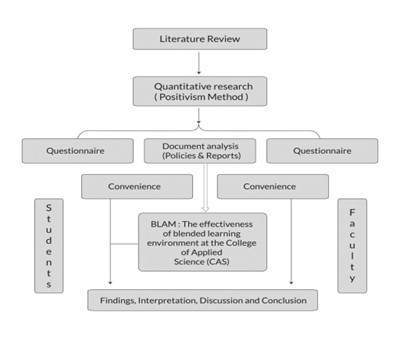
In the research approach there are two different ways which include quantitative and qualitative approach. According to Malhotra and Birks (2003, p.133) ‘the nature of the primary data can be quantitative or qualitative’. Cooper and Schindler (2003) stated that ‘quantity depicts the amount and the essential nature or characteristic of anything is the quality’. Merriam (1998, p.27) defined a qualitative case study as “A qualitative case study is an intensive holistic description and analysis of a single instance, phenomenon, or social, unit”. In the present study researcher used quantitative study as the data are expressed in numerical rather than text, as researcher did not get any opportunity to interview investors or shareholders of the companies
Research Design
In order to complete the study quantitative approach was used. The present thesis aimed to investigate the cause and effect between merger and acquisitions and value of shareholder in the short run with particular reference to selected Indian companies. In the preset research, the analyses considered for merger and acquisitions are
- Tata Steel
- Tata Motors
- Hindalco