statswork

Meta Analysis Research: How It Improves Evidence-Based Decision Making

Introduction to Meta-Analysis and Evidence-Based Research

In the current data-driven world, it is no longer possible to make decisions based solely on individual research; instead, decisions are required to be made based on robust and consolidated research [1]. This is where the importance of meta-analysis comes into play. This statistical tool helps make more accurate decisions by pooling research findings together.

At the same time, the importance of evidence-based research lies in the fact that it allows for decisions to be made based on verified facts and not based on assumptions.

Understanding Meta-Analysis and Systematic Review

To appreciate meta-analysis in totality, it is important to begin by understanding the difference between meta-analysis and systematic reviews. Though they are two key concepts in evidence-based research, they have differing applications.

While systematic reviews are focused on the evaluation and summary of existing research studies, meta-analysis is an extension of this in that it seeks to combine numerical data using statistical analysis.

Aspect

Systematic Review

Meta-Analysis

Approach

Qualitative

Quantitative

Function

Evaluation of studies

Combination of data

Output

Thematic analysis

Statistical output

Key Concepts: Pooled Data, Effect Size, and Statistical Synthesis

The strength of meta-analysis is rooted in the fundamental statistical concepts. Understanding statistical concepts helps one grasp the role of meta-analysis in supporting evidence-based research [2].

Pooled Data refers to the collection of data from multiple studies, resulting in a large sample size for more accurate results.

Effect Size is a statistical concept that refers to the measurement of results, allowing for comparison of results from different studies.

Statistical Synthesis refers to the integration of results using mathematical models.

Concept

Role in Meta-Analysis

Impact

Pooled Data

Combines study results

Higher reliability

Effect Size

Quantifies outcomes

Better comparison

Statistical Synthesis

Integrates findings

Stronger conclusions

How Meta-Analysis Improves Healthcare and Social Science Decisions

One of the most important uses of meta-analysis is in the decision-making process for different industries.

How Meta-Analysis Improves Healthcare Decisions

Meta-analysis helps in the effective evaluation of treatments in the healthcare industry by using data from clinical trials [3]. It also helps in the reduction of uncertainty, diagnosis, and the development of clinical guidelines.

Benefits of Meta-Analysis in Social Sciences

Meta-analysis helps in the understanding of human behavior, policy, and trends. It also helps with the reliability of research, which is useful for policymakers for effective decision-making.

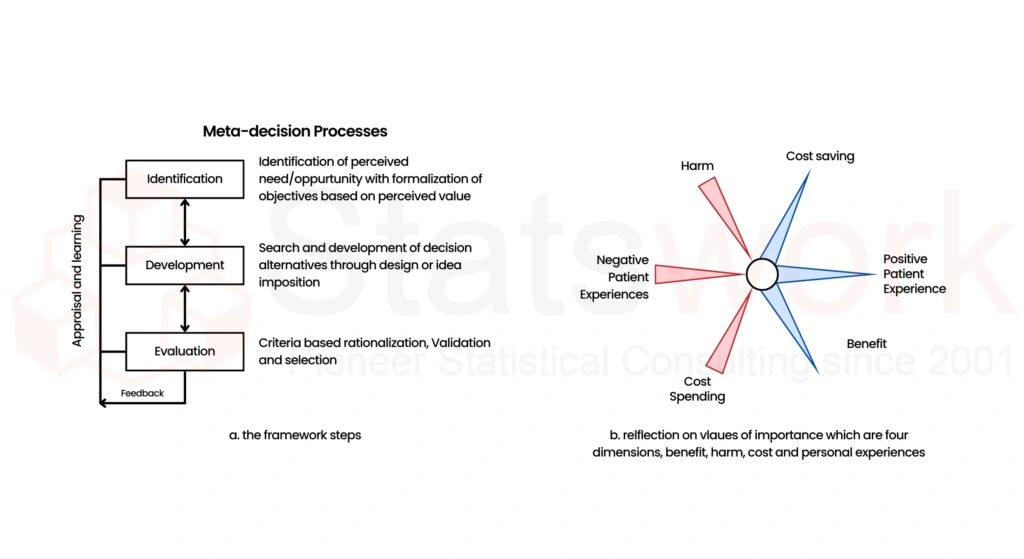
Evidence-Based-Decision-Making

Figure 1: Meta-Decision Framework in Evidence-Based Research

Importance and Interpretation of Meta-Analysis Results

The significance of the result obtained in the process of meta-analysis lies in the fact that the evidence obtained is stronger in nature compared to the evidence obtained in the studies conducted individually [4]. However, the interpretation of the result obtained in the process of meta-analysis is equally important.

Some of the important factors that need consideration are as follows:

  • Effect size, which reflects the strength of the evidence obtained
  • Consistency, as reflected in the data obtained from the studies
  • Presence of bias in the studies conducted, which reflects the variability in the studies conducted
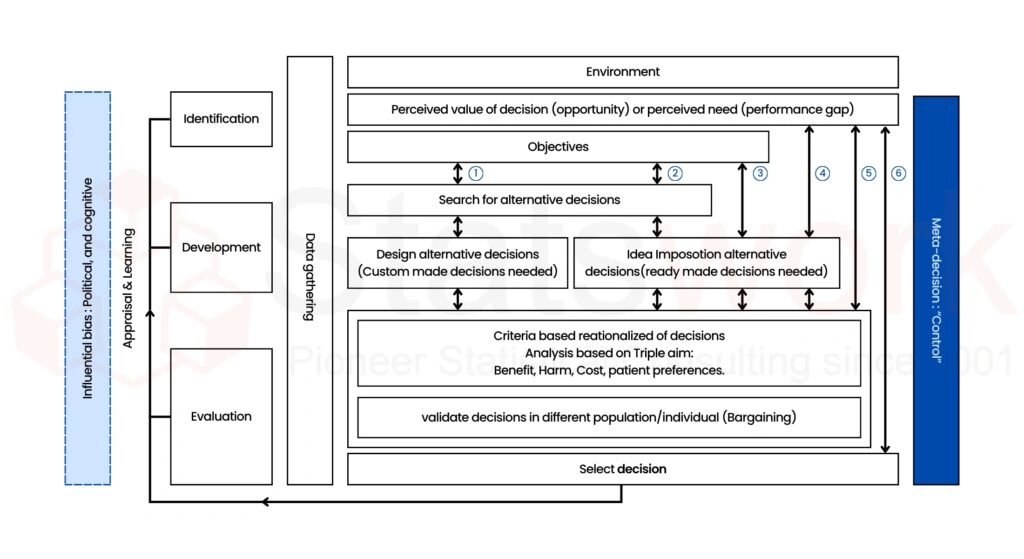
Evidence-Based-Decision-Making

Figure 2: Application of Meta-Decision Framework in Healthcare Using Evidence-Based Research

When and Why to Use Meta-Analysis in Research

The importance of knowing the use of meta-analysis in research is vital for researchers and organizations seeking quality research findings.

The use of meta-analysis is important in the following cases:

  • There are multiple studies conducted on the same research topic
  • Research findings are conflicting
  • The research findings are required for decision-making [5]

The benefits of using meta-analysis include:

  • Statistical power is increased
  • Bias and accuracy are minimized
  • Strong support for research findings

Scenario

Benefit

Multiple datasets

Improved reliability

Conflicting studies

Clear conclusions

Policy decisions

Strong evidence base

Conclusion: Applying Meta-Analysis for Better Decision Making

In an age where data is the key to strategy formulation, meta-analysis is an essential element in the improvement of evidence-based research. This is because it utilizes data, effect size, and statistical analysis to create meaningful insights [3]. Today, many researchers and organizations rely on a professional meta-analysis services to streamline this process and ensure accuracy.

In the field of medicine as well as the social sciences, the importance of meta-analysis is undeniable. It increases the level of accuracy and reduces uncertainty. At the end of the day, the key to understanding how meta-analysis improves decision-making is to help organizations act confidently.

Not sure how to apply meta-analysis to your research or business strategy?
Connect with our experts to transform complex data into clear, actionable decisions.

References:

  1. Tavakoli, M., Davies, H. T. O., & Thomson, R. (2000). Decision analysis in evidence‐based decision making.Journal of evaluation in clinical practice6(2), 111-120. https://onlinelibrary.wiley.com/doi/abs/10
  2. Shackelford, G. E., Martin, P. A., Hood, A. S., Christie, A. P., Kulinskaya, E., & Sutherland, W. J. (2021). Dynamic meta-analysis: a method of using global evidence for local decision making. BMC biology19(1), 33. https://link.springer.com/article/10.1186
  3. Cimen, F., & Secer, I. (2025). Evidence‐Based Decision Making in Psychological Research: A Network Meta‐Journal of Evaluation in Clinical Practice31(1), e14302. https://onlinelibrary.wiley.com/doi/abs/10
  4. Bello, A., Wiebe, N., Garg, A., & Tonelli, M. (2015). Evidence-based decision-making 2: systematic reviews and meta-analysis. In Clinical Epidemiology(pp. 397-416). Humana Press, New York, NY. https://link.springer.com/protocol/10.1007
  5. Sauerland, S., & Seiler, C. M. (2005). Role of systematic reviews and meta-analysis in evidence-based medicine. World journal of surgery29(5), 582-587. https://link.springer.com/article/10.1007/s

Contact us